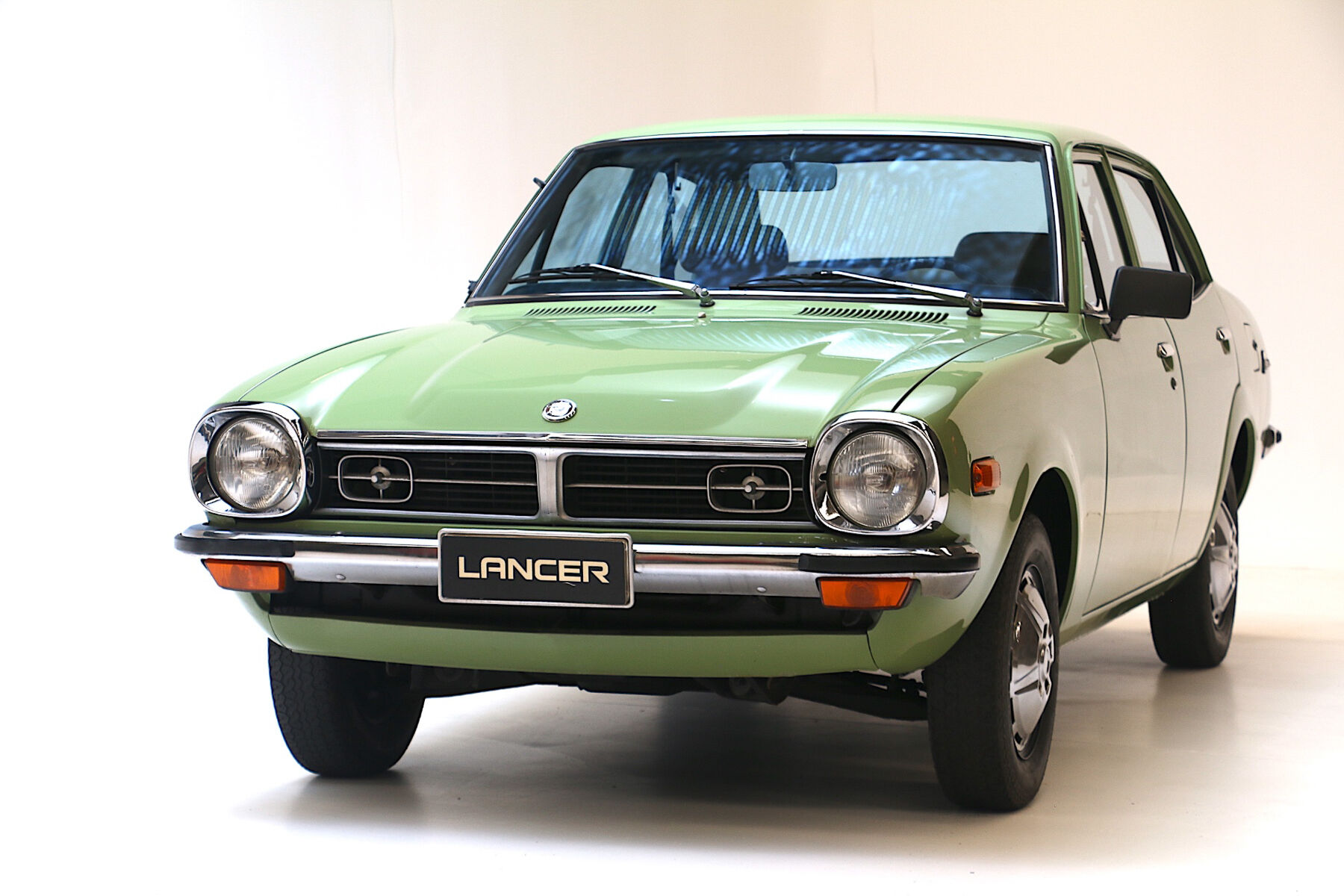
Launched in 1973, the Mitsubishi Lancer appeared as a global compact car intended to complement the Colt and offer a light, simple and sporty platform, available depending on the market as a 2- or 4-door sedan, coupe and later wagon. The first generation, known by the A70/A71/A72 codes depending on engines and body styles, quickly stood out in competition: from the mid-1970s, the Lancer 1600 GSR made a name for itself in rallying, notably at the Safari, which firmly established the lineage’s reputation for toughness. Over the decades, the Lancer evolved through successive generations, moving from a light rear-wheel-drive car to a modern front-wheel-drive compact, with very wide global distribution and names that sometimes differed by country. The mainstream versions mainly existed as family sedans, but some sporty derivatives left a mark far beyond their segment.
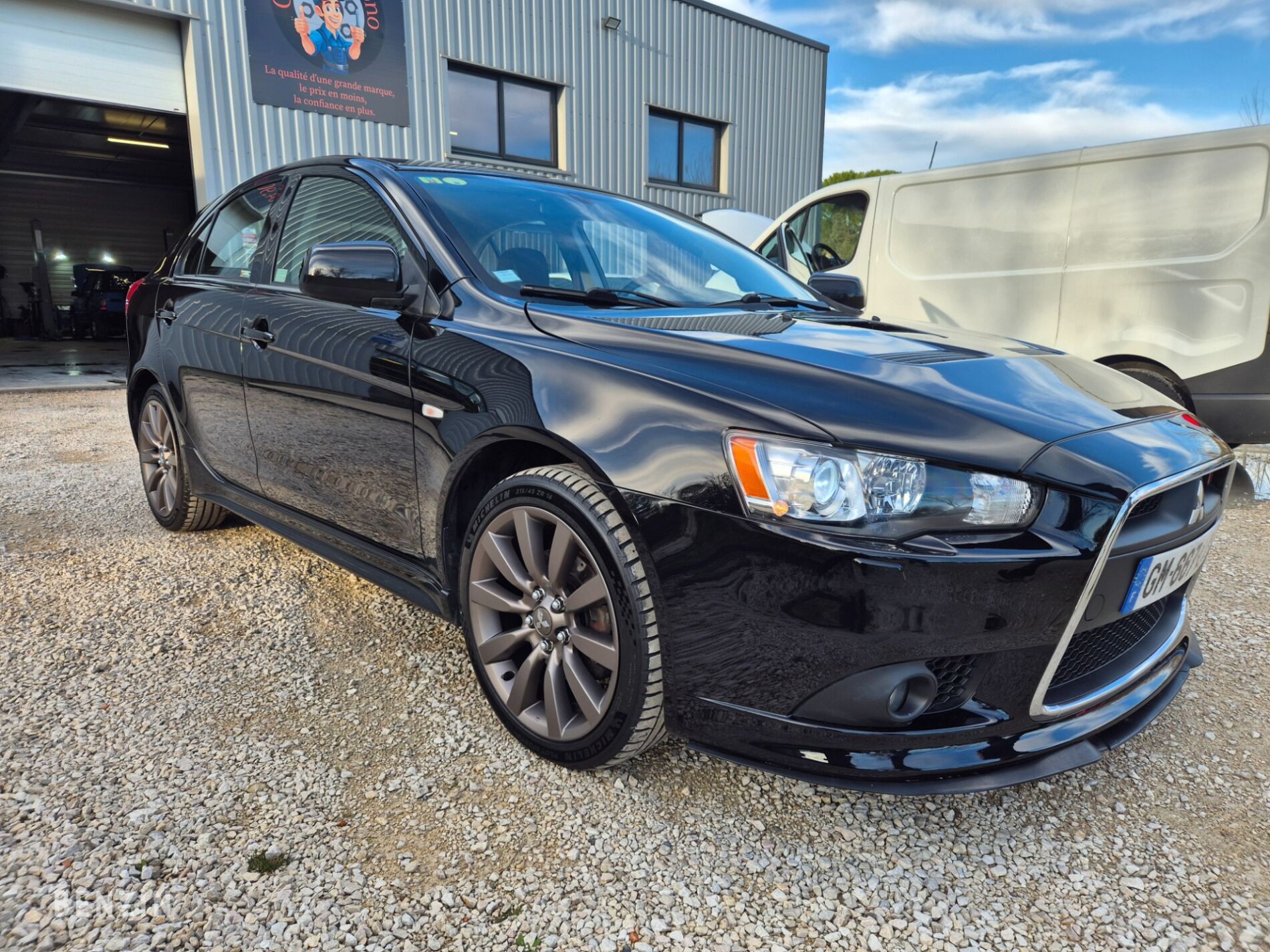
The Lancer’s reputation rests mainly on two branches: on one side the early A70s, now rare in good original condition, and on the other the Lancer Evolution models born in 1992 on the compact Lancer platform, powered by the 2.0-liter turbo 4G63 and then, in the last generation, by the 4B11T. From the Evolution I to the Evolution X, Mitsubishi evolved the all-wheel-drive system, active differentials, aerodynamics and chassis, with highly sought-after special editions such as the Evolution VI Tommi Mäkinen Edition, VIII MR or IX. At the same time, the “CX/CY” generation launched in 2007 gave rise to the hatchback Lancer Sportback, and the Ralliart sold from 2008 offered a more civilized take on the Evolution X: 2.0 turbo, all-wheel drive and a dual-clutch TC-SST automated gearbox. The Lancer’s European career ended during the 2010s, in a context of declining demand for compact sedans and tightening regulations.
Today, enthusiasts clearly distinguish the eras: the A72 appeals for its mechanical simplicity and its historical importance in Mitsubishi’s sporting beginnings, while the Evolution has become the absolute icon of the lineage thanks to the WRC, JDM culture and video games. The Sportback Ralliart, less radical than an Evolution X but more discreet and more versatile, is also starting to attract connoisseurs looking for a high-performance all-wheel-drive car without the price tag or stiffness of an Evo. Original examples, lightly modified and properly maintained, are by far the most appreciated, as many sporty Lancer models have been prepared, driven hard or maintained only minimally.
Technical data
| Feature | Lancer A70/A72 (1st generation) | Lancer Evolution VI | Lancer Sportback Ralliart |
| Production years | 1973-1979 | 1999-2001 | 2008-2015 |
| Body style | 2- or 4-door sedan, coupe depending on market | 4-door sedan | 5-door hatchback |
| Engine(s) | Naturally aspirated 4-cylinder petrol engines, approx. 1.2 to 1.6 liters depending on version | 2.0 turbo 4-cylinder 4G63 | 2.0 turbo 4-cylinder 4B11 |
| Power | Depending on engine and market | 280 hp | 240 hp |
| Transmission | Rear-wheel drive, manual gearbox | All-wheel drive, 5-speed manual gearbox | All-wheel drive, 6-speed TC-SST automated gearbox |
| Weight | Around 800 to 950 kg depending on version | Around 1,360 kg | Around 1,550 to 1,600 kg |
| 0-100 km/h | Depending on engine | Around 4.5 s | Around 7.0 s |
| Top speed | Depending on engine | Around 240 km/h | Around 230 km/h |
Buyer’s guide
For collector use, the early original A70/A72 cars, especially in sporty trim or with the 1.6-liter engine, are the most interesting because they have become rare and tell the story of Mitsubishi’s early rally days. For regular driving, the Sportback Ralliart offers the best compromise between performance, discretion and versatility, while an Evolution is more desirable but also more exposed to modifications, hard use and maintenance costs. The cars to avoid are mainly those that are heavily modified, remapped without a precise file, or converted from a more ordinary version.
Points to watch
- A70/A72 body corrosion : frequent attacks on wheel arches, sills, floors, windshield frame and trunk surrounds on 1970s cars; check the quality of bodywork repairs and the availability of specific body panels.
- TC-SST gearbox : on Ralliart, harsh shifts, limp mode, transmission warning lights or slipping when hot indicate wear in the clutches, sensors or mechatronics; ask for very regular gearbox oil changes with the correct fluid and any recalibration history.
- AYC pump/all-wheel-drive control : on modern all-wheel-drive Lancer models, especially those used in humid or salty climates, corrosion of the pump and lines can lead to AWC/AYC faults; check for warning lights and for invoices showing replacement or overhaul.
- Manual gearbox and Evolution synchros : on Evo driven hard, crunching when cold or during quick 2-3 and 3-4 shifts, as well as drivetrain noises, reveal worn synchros or bearings; a spirited but clean road test is essential.
- Turbo 4G63 engines : on Evolution, smoke, crankcase overpressure, knocking or uneven compression can reveal an engine that has been remapped or poorly cooled; many forums recommend a compression test and checking the map if the car is no longer strictly original.
- 4B11T timing chain : on Ralliart, noises at startup or irregular operation can indicate a neglected chain, tensioner or lubrication; frequent oil maintenance matters more than mileage alone.
- Differentials, transfer case and couplings : humming, vibrations at steady speed or when getting back on the throttle on Evolution and Ralliart can come from the transfer case, rear differential or bearings; check for transmission oil changes, which are often neglected.
When buying
On an Evolution or a Ralliart, priority should be given to a file showing gearbox, transfer case and differential oil changes, as well as any diagnostic scans for the all-wheel-drive system and the TC-SST. A compression test, confirmation of a proper engine tune, and a precise inventory of modifications are particularly important on turbo versions. On an A72, inspection on a lift of the body shell and the search for structural repairs often matter more than the mechanicals, which are generally simpler to restore.
1 of the 4 Mitsubishi Lancer listed on Benzin found a buyer — 25 % of completed sales.
No Mitsubishi Lancer is for sale at the moment. Follow the model to be notified as soon as a new one is listed.
Every vehicle comes with a detailed photo report, its history and the public exchanges between seller and community. You bid online; if you win, Benzin secures the payment and supports you through to delivery.
Follow the model from this page and you will get an e-mail as soon as a Mitsubishi Lancer is listed on Benzin.
 English
 Français
 Español
 Italiano
 Deutsch
 Polski
 Magyar
