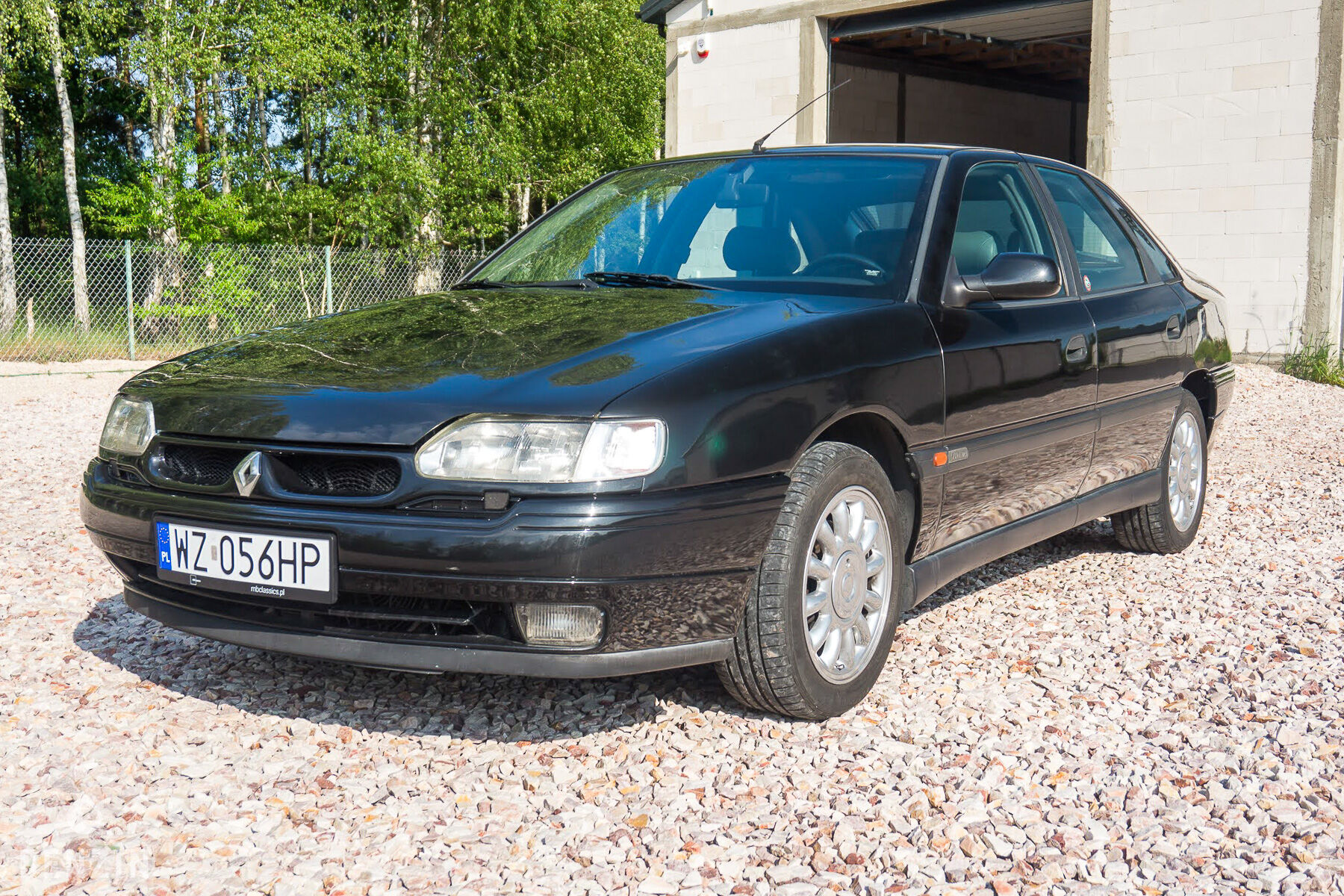
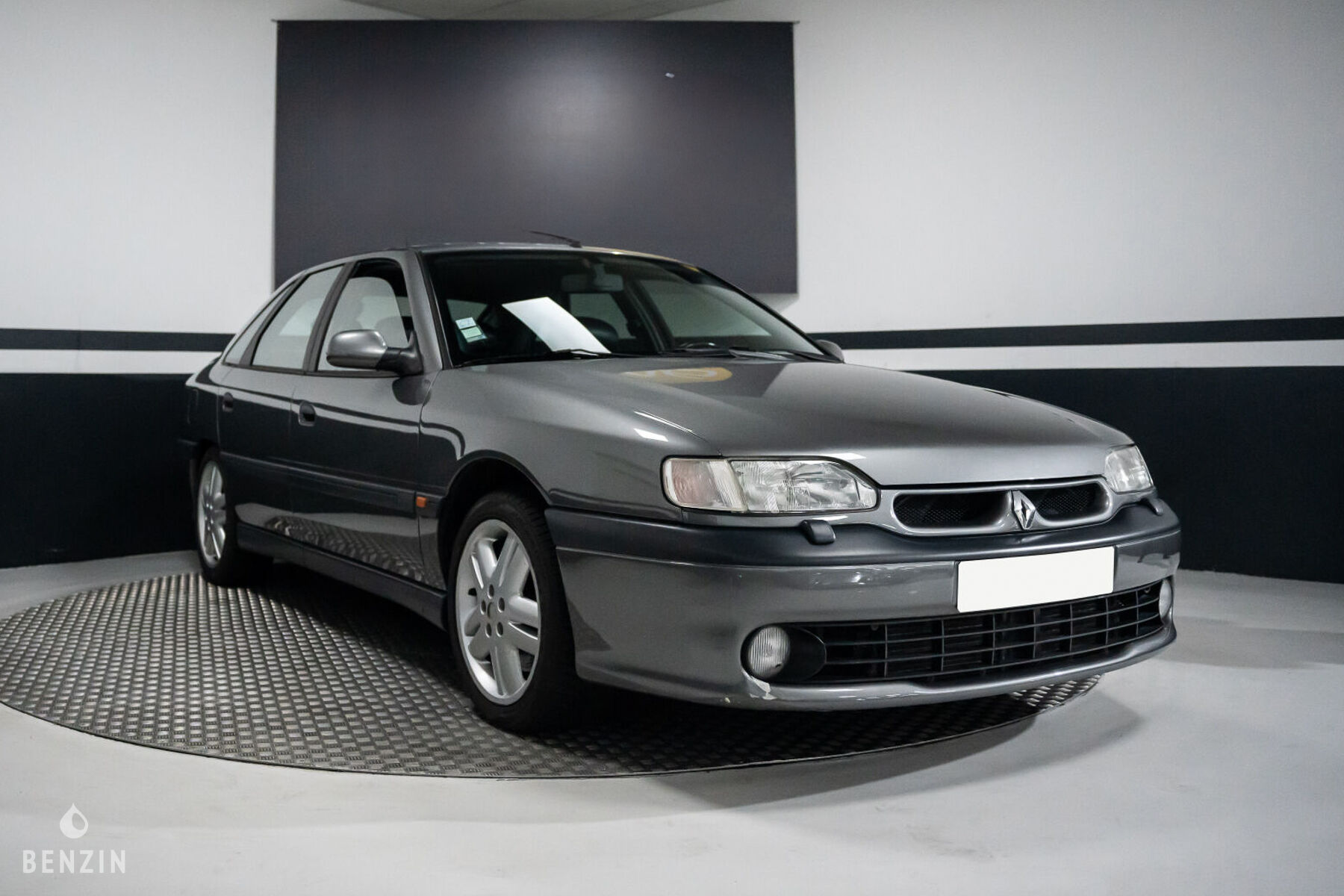
Presented in the summer of 1992 and launched in the autumn, the Renault Safrane succeeded the Renault 25 at the top of the brand’s range. Produced in Sandouville, this large five-door sedan retained Renault’s favored hatchback architecture, with a much more prestigious positioning, a more refined interior presentation and extensive work on sound insulation and safety. Its deliberately understated, rounded styling reflects Renault’s design school of the early 1990s, with a wide cabin, excellent visibility and a clear ambition to compete with German touring cars on comfort. From launch, the range extended from four-cylinder petrol and diesel engines to the V6, with trim levels ranging from sensible versions to the very luxurious RXE and then Baccara.
The Safrane’s career is divided into two main phases: phase 1 from 1992 to 1996, then phase 2 from 1996 onward, recognizable by its redesigned front end and dashboard, as well as a revised engine range. Among the standout versions are the 2.2 Si, the V6 3.0s, the turbo diesels for high-mileage drivers, and the top-end Baccara trims, known for their very complete equipment, leather upholstery and sophisticated seat adjustments. The Biturbo, launched in 1994, remains the most spectacular Safrane: developed on the basis of the V6 3.0 with two turbochargers, permanent all-wheel drive and a six-speed manual gearbox, it was partly assembled in Germany by Hartge and Irmscher from shells sourced from Sandouville. With around 268 hp and a top speed limited to 250 km/h, it is one of Renault’s most ambitious attempts in the segment of high-performance large sedans.
At the end of its career, the Safrane notably received the 24-valve V6, special editions such as Fidji, and continued its role as a large touring car until 2000, before the arrival of the Vel Satis. Total production exceeded 300,000 units, but the higher-end versions and especially the Biturbo remained rare. Long underestimated, the Safrane now appeals to fans of large French cars from the 1990s for its remarkable comfort, generous equipment and, in its best versions, its real collector appeal.
Technical sheet
| Version | Safrane 2.2 Si | Safrane V6 3.0 Baccara | Safrane Biturbo |
| Production years | 1992-1996 | 1992-1996 | 1994-1996 |
| Body style | 5-door sedan | 5-door sedan | 5-door sedan |
| Engine | Naturally aspirated inline 4-cylinder, 2,165 cc | Naturally aspirated V6, 2,975 cc | Twin-turbo V6, 2,963 cc |
| Power | approx. 140 hp | approx. 170 hp | 268 hp |
| Transmission | Front-wheel drive, manual gearbox | Front-wheel drive, automatic gearbox | All-wheel drive, 6-speed manual gearbox |
| Weight | approx. 1,400 kg | approx. 1,500 kg | approx. 1,700 kg |
| 0-100 km/h | approx. 11 s | approx. 9.5-10 s | approx. 7.2 s |
| Top speed | approx. 200 km/h | approx. 210 km/h | 250 km/h |
| Notable versions | RN, RT, RXE | Baccara | Biturbo, Biturbo Baccara |
| Model production | Around 310,000 units in all versions combined |
Buyer’s guide
For a collector’s car to enjoy, well-maintained and properly equipped V6s, especially in Baccara trim, are the most appealing, while a sound 2.2 Si remains a coherent and easier car to live with. The phase 2 is generally preferable for its updated styling and certain tuning improvements, but the Biturbo is the true enthusiast’s car, to be reserved for a buyer capable of handling a complex mechanical package and rare specific parts. Cars that have been bodged, misidentified in trim level, or mixed with interior elements from other versions deserve particular caution.
Points to watch
- Automatic gearbox : hesitant shifts, slipping, jerks when cold or hot on the V6 and some larger versions; the question of an automatic transmission fluid change is central on a Safrane, even though many were wrongly presented as “maintenance-free”.
- PRV V6 timing system : chain noise at startup, persistent ticking or unclear invoices on the 3.0 V6 phase 1; you need to ask precisely what has been done to the tensioners, guides and related components.
- Cooling system : abnormal temperature rise, coolant smell, uneven heating or temperamental fans on the 2.2 and V6; the radiator, expansion tank, hoses and any signs of previous work must be inspected carefully.
- Idle control and intake : idle speed too high or unstable, especially on the 2.2 Si and some high-mileage petrol engines; check the idle control valve, air leaks, throttle body condition and smooth running when hot.
- Electrical comfort equipment : air conditioning, electric/Ergo-Matic seats, memory functions, displays and central locking are recurring issues on higher-end versions; everything must be tested one by one, as faults often come from motors, controls or ECUs that have become specific to these versions.
- Biturbo and all-wheel drive : on the Biturbo, any transmission noise, damaged boot, vibration under load or leak in the drivetrain should raise concern; parts specific to this version are rare and repairs can become very costly.
- Authenticity of trim levels : some Safrane have received a leather interior, wood trim or wheels from a Baccara without actually being one; the advertised trim level must be compared with the type approval, original equipment and the consistency of the configuration.
- Specific appearance parts : bumper covers, trim pieces, seat controls, wood trim and accessories specific to Baccara or Biturbo may be missing or may have been replaced; these details do not prevent use, but they make a proper restoration much more difficult.
When buying
On a Safrane, you need to ask for more than a simple technical inspection: automatic gearbox invoices, work on the V6 timing system, air conditioning repairs, and proof of electrical repairs are particularly important. For a Baccara or a Biturbo, the exact identification of the version, the presence of the correct equipment, and the car’s consistency with its original configuration are essential. A long test drive, with the engine fully warmed up, checking all comfort equipment and, if possible, a diagnostic scan on the most highly equipped versions, is strongly recommended.
On Benzin a Renault Safrane has sold for 5 950 € on average, with a median price of 3 200 €. Based on the 5 sales completed on the platform.
The 5 Renault Safrane sold on Benzin changed hands for between 950 € and 20 200 €, depending on condition, mileage and version.
5 of the 6 Renault Safrane listed on Benzin found a buyer — 83 % of completed sales.
No Renault Safrane is for sale at the moment. Follow the model to be notified as soon as a new one is listed.
Every vehicle comes with a detailed photo report, its history and the public exchanges between seller and community. You bid online; if you win, Benzin secures the payment and supports you through to delivery.
Follow the model from this page and you will get an e-mail as soon as a Renault Safrane is listed on Benzin.


 English
 Français
 Español
 Italiano
 Deutsch
 Polski
 Magyar
