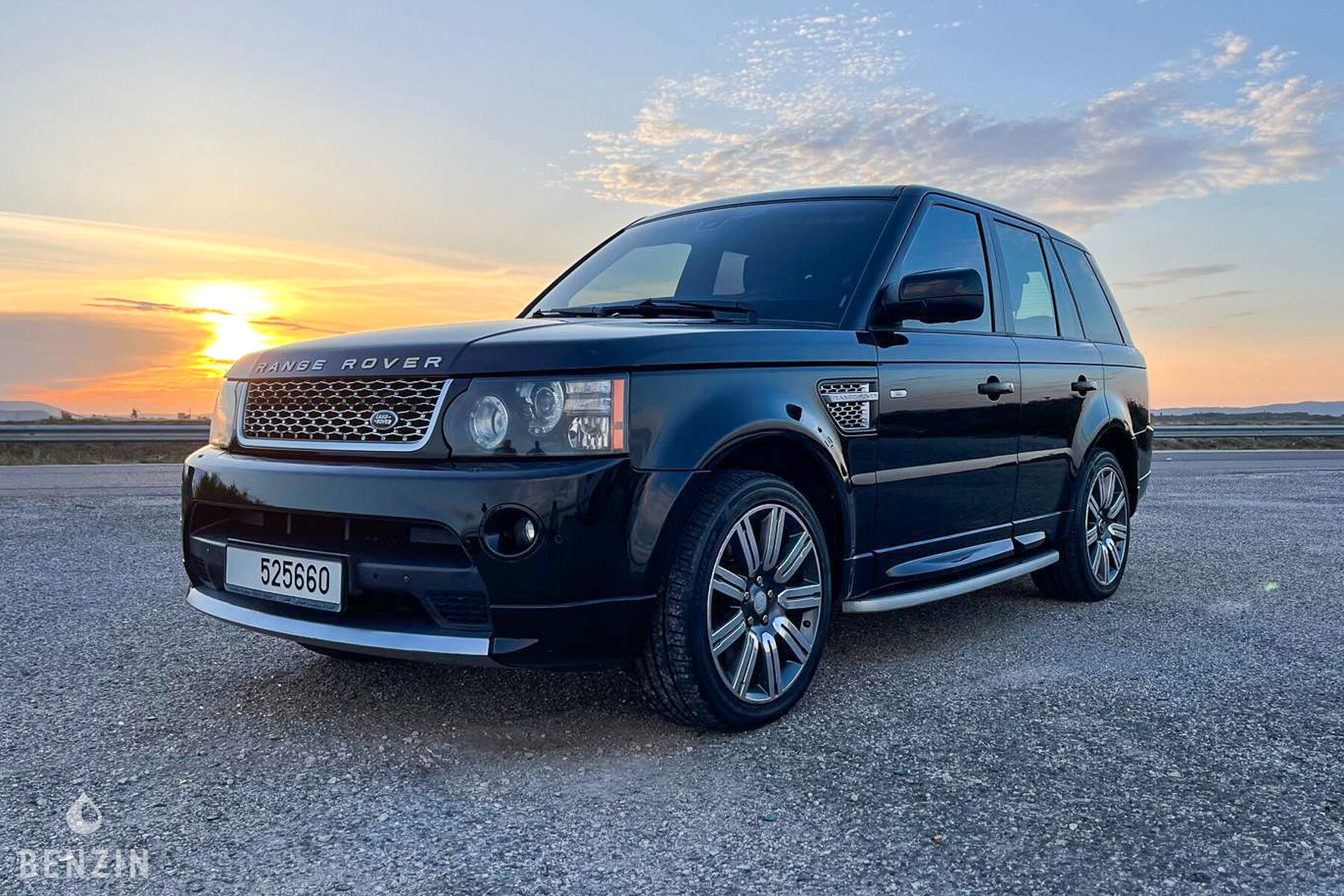
The Range Rover Sport appeared in 2005 as the more dynamic derivative of the Range Rover, at a time when Land Rover was under Ford control, and it was technically based on the integrated platform of the Discovery 3 rather than that of the Range Rover L322. Its styling, overseen within Land Rover’s design department at the time, takes up the tall silhouette and front end of the Range Rover family, but with a lower roofline, tighter glazing, and a sportier presentation. Initially launched with naturally aspirated or Supercharged petrol V8s, as well as the TDV6 diesel, it introduced the brand to a unique compromise between genuine off-road ability, a large SUV driving position, and road manners that were markedly sharper than those of a classic Range Rover. The first Range Rover Sport, code L320, then evolved in stages, with the arrival of the 3.6 TDV8, followed by a major facelift in 2009 that brought, among other things, the modernized front end, the naturally aspirated 5.0-liter V8, and especially the 5.0 V8 Supercharged, as well as the 3.0 TDV6/SDV6 diesel.
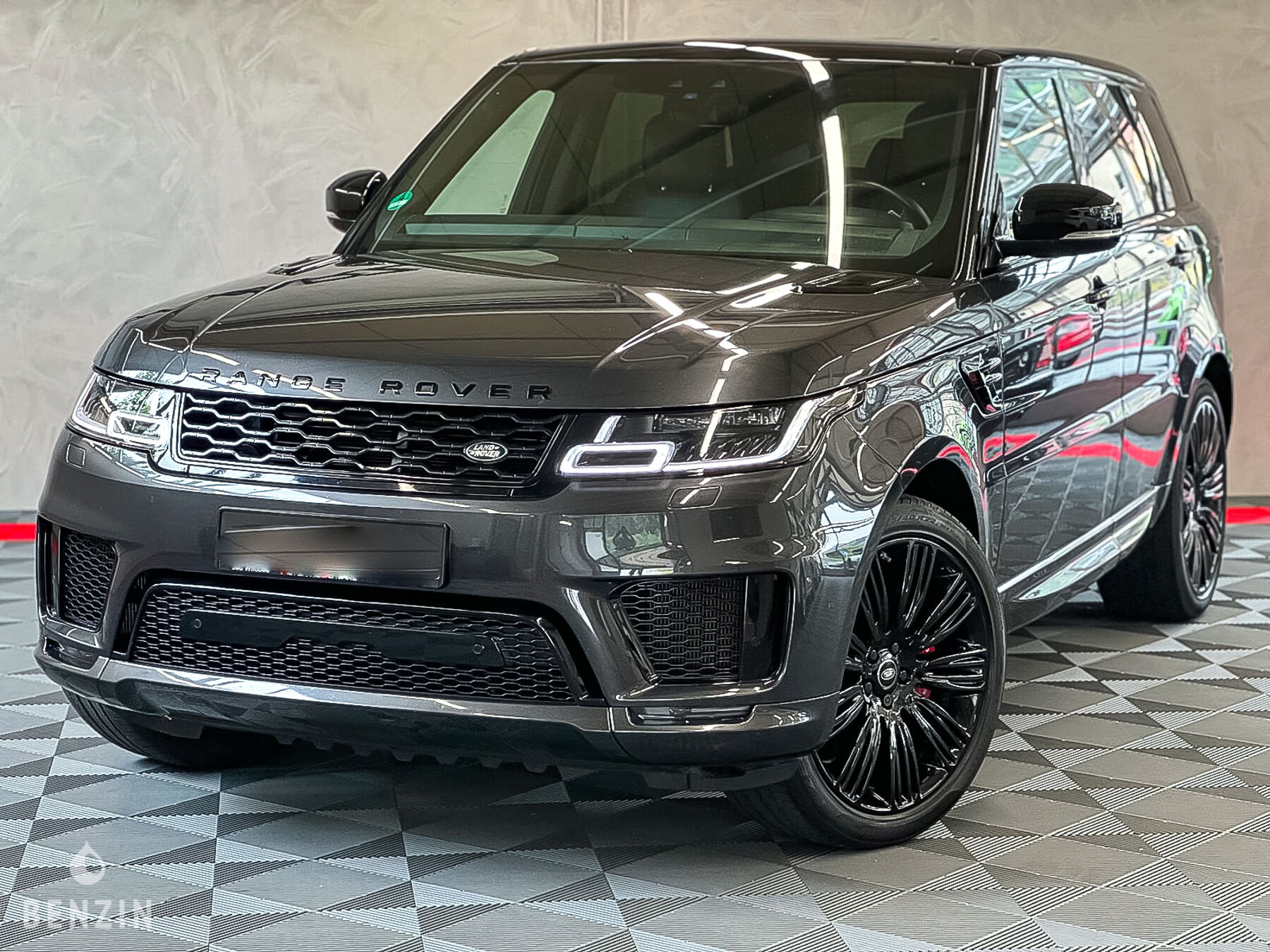
In 2013 came the second generation, L494, lighter thanks to an aluminum structure derived from the contemporary Range Rover, more spacious, more economical, and much more modern in appearance. It was launched with the TDV6 and SDV6 diesel V6s, the 510 hp Supercharged petrol V8, then expanded with diesel hybrids, SVR supercharged versions intended to represent the peak of performance, and later with Ingenium four-cylinders, mild-hybrid inline sixes, and plug-in hybrids. The 2017 facelift revised the cabin, infotainment, and engine lineup, and the P525, HSE, and Autobiography versions clearly reflect the model’s move upmarket toward the end of its life. In car culture, the Range Rover Sport has stood out mainly as a high-performance luxury SUV rather than for any true sporting record, even if its most powerful versions have served extensively as a technological and image showcase.
Today, enthusiasts’ interest is focused on three distinct families: the L320 5.0 Supercharged for its mechanical character, the L494 SDV6 for its versatility, and the P525 or SVR for their blend of luxury and performance. However, knowledgeable buyers remain very attentive to maintenance costs and known weaknesses, especially on the 3.0-liter V6 diesels, whose reputation has been damaged by documented cases of crankshaft failure. The most sought-after examples are therefore those with a clear history, maintained by marque specialists, with electronic updates, preventive replacement of certain peripheral components, and a consistent record of gearbox, differential, and air suspension oil changes. It is not yet a collector car in the strict sense in its mainstream versions, but it is already a model for informed enthusiasts, especially in its high-spec, well-optioned, and strictly original configurations.
Technical data
| Range Rover Sport 5.0 V8 Supercharged (L320) | Range Rover Sport SDV6 3.0 (L494) | Range Rover Sport P525 / HSE MHEV (L494) |
| Production years | 2009-2013 | 2013-2020 | P525: 2018-2022
HSE MHEV 6-cyl.: from 2020 depending on market |
| Body style | 5-door SUV | 5-door SUV | 5-door SUV |
| Engine(s) | Supercharged petrol V8, 4,999 cc | Twin-turbo diesel V6, 2,993 cc | Supercharged 4,999 cc petrol V8 / 6-cylinder petrol or diesel mild-hybrid depending on version |
| Power | 510 hp | 306 hp | P525: 525 hp
MHEV: depending on engine |
| Transmission | 6-speed automatic, all-wheel drive | 8-speed automatic, all-wheel drive | 8-speed automatic, all-wheel drive |
| Weight | About 2,580 kg | About 2,110 to 2,200 kg | About 2,200 to 2,400 kg depending on version |
| 0-100 km/h | About 6.2 s | About 7.2 s | P525: about 5.3 s
MHEV: depending on engine |
| Top speed | 225 km/h | 210-222 km/h depending on version | P525: 250 km/h
MHEV: depending on engine |
| Features | Air suspension, Eaton compressor | Aluminum structure, Terrain Response 2 depending on version | Facelift, modernized safety and multimedia equipment |
Buyer’s guide
For classic-car enjoyment, the L320 5.0 Supercharged is the most appealing, provided you accept its size, fuel consumption, and the need for serious cooling-system maintenance. For regular use, a well-documented L494 SDV6 remains the best compromise, but you need to be much more selective because of the known crankshaft risk on the 3.0 diesel. Late P525s are highly desirable for their performance and refinement, while poorly maintained diesels, especially those used for short trips, are the versions to approach with the greatest caution.
Points to watch
- 3.0 TDV6/SDV6 crankshaft : sudden bottom-end failure reported on many diesel L494s, especially around model years 2013-2017; ask whether the engine has been replaced, whether the crankshaft has already failed, or whether an inspection/compression test and bottom-end noise check has been carried out.
- Cooling system on the 5.0 Supercharged V8s : leaks in hoses and plastic fittings, water pump issues, or V-shaped engine components on supercharged petrol L320 and L494; check for any smell of coolant, crystallization traces, and recent invoices for the pump, thermostat, or pipes.
- Air suspension : tired compressor, slow rise, warning message, or one corner sagging after parking on both L320 and L494; check the rise time, the different height settings, and the condition of the compressor and air springs.
- ZF automatic gearbox and transfer case : jerking when cold, vibrations under acceleration, or transfer case rumble, especially on heavy vehicles that have towed; insist on proof of gearbox and transfer case oil changes, even if the car was long described as “sealed for life”.
- Electric parking brake : severe squealing or seizure on L320, sometimes after irregular use; test several engage/disengage cycles and check whether the module or cables have already been replaced.
- EGR valves, DPF and AdBlue : clogging, limp mode, or NOx/AdBlue faults on Euro 5 and Euro 6 diesels, more common on city-driven vehicles; ask whether the EGR valves, DPF, AdBlue injector, or NOx sensors have been replaced.
- Cabin electronics and multimedia : black screens, sluggish operation, cameras, electric tailgate, or keyless locking/unlocking acting up on L494; a JLR diagnostic scan will reveal stored faults and verify module updates.
- Sunroof and water drains : leaks into the cabin or boot, with moisture that can affect certain control units; check for traces of water under the carpets, in the spare wheel well, and ask whether the drains have ever been cleaned.
When buying
On a 3.0 SDV6 diesel, the absolute priority is a full electronic diagnostic at Land Rover or a specialist equipped with JLR, along with a precise service history and, ideally, information on engine health if it has covered high mileage. On the V8 Supercharged models, you need detailed invoices for the cooling system and a test both cold and hot to detect overheating, misfires, or abnormal noises. In all cases, it is wise to check the operation of the entire air suspension, the transfer case, the tailgate, and the electrical equipment, as intermittent faults are common on this model.
2 of the 7 Land Rover Range Sport listed on Benzin found a buyer — 29 % of completed sales.
No Land Rover Range Sport is for sale at the moment. Follow the model to be notified as soon as a new one is listed.
Every vehicle comes with a detailed photo report, its history and the public exchanges between seller and community. You bid online; if you win, Benzin secures the payment and supports you through to delivery.
Follow the model from this page and you will get an e-mail as soon as a Land Rover Range Sport is listed on Benzin.
 English
 Français
 Español
 Italiano
 Deutsch
 Polski
 Magyar
