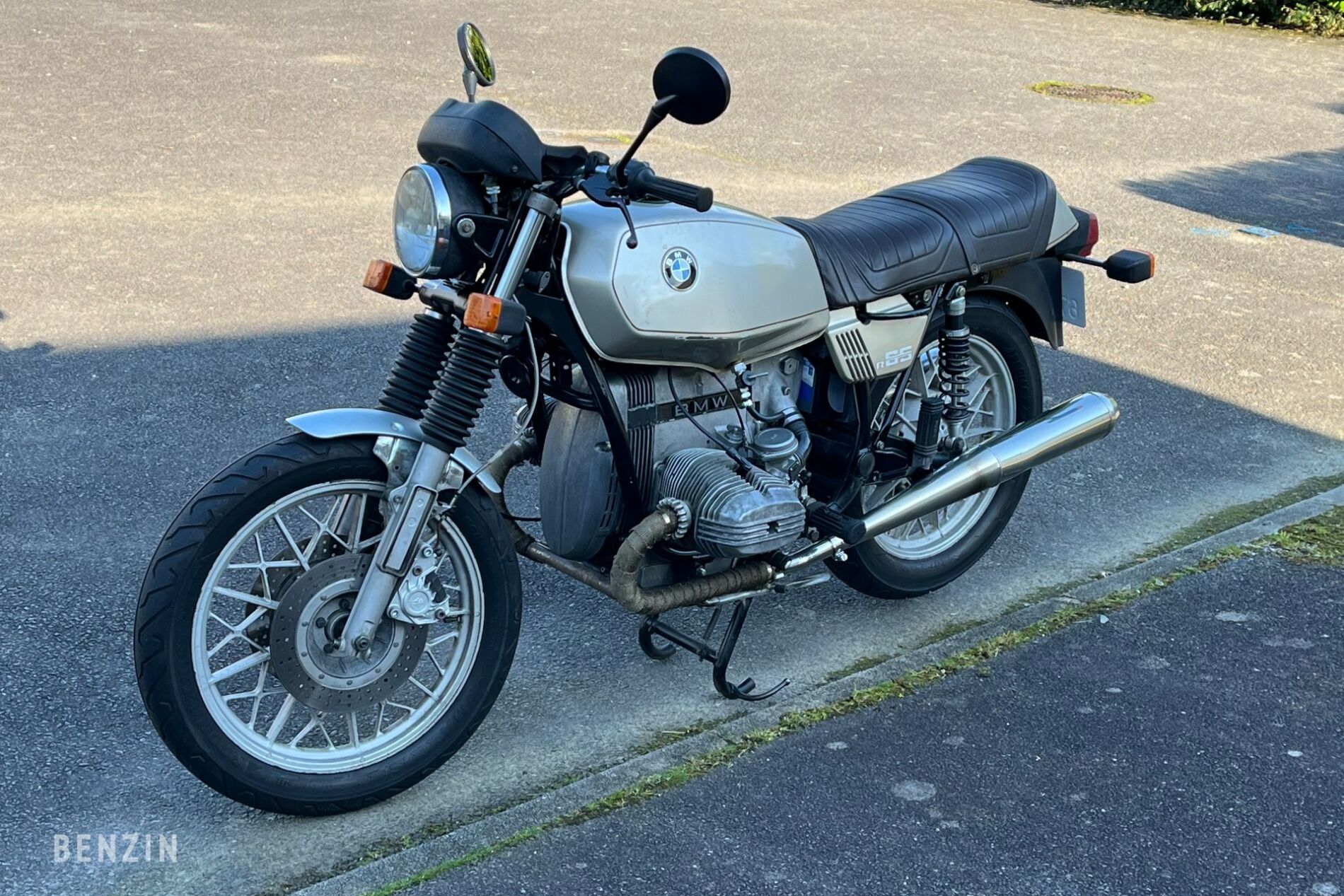
BMW Motorrad refers to BMW’s motorcycle division, active since 1923 with the R 32 by Max Friz, the first BMW with a transverse flat-twin engine and shaft drive, an architecture that became one of the brand’s signatures. For French collectors, the name mainly covers three major families well represented on the market: the classic boxers of the /2, /5, /6 and /7 series, the four- and three-cylinder inline K series launched in the early 1980s, and then more modern BMWs with 4-valve boxer or multi-cylinder engines, from the R 1100/R 1150 and R 1200 GS to the K 1600, nineT, G 310 R and S 1000 R. The R60/2 models of the 1960s embody postwar BMW: solid, built to go the distance and often fitted with a sidecar, before the technical break represented by the /5 series in 1969, then the /6 and /7 in the 1970s with widespread electric starters, modernized brakes and engine capacities ranging from 450 to 1000 cc. The R100 RS of 1976 made history as one of the first mass-produced motorcycles to feature a full fairing extensively developed in a wind tunnel, and it remains one of BMW’s most iconic models. The R45, R65, R80/7, R100RT and R100R then carried the air-cooled flat-twin lineage into the 1990s, with many detail changes to the gearboxes, cylinder heads, ignition, finish and, on some series, Nikasil cylinder treatment.
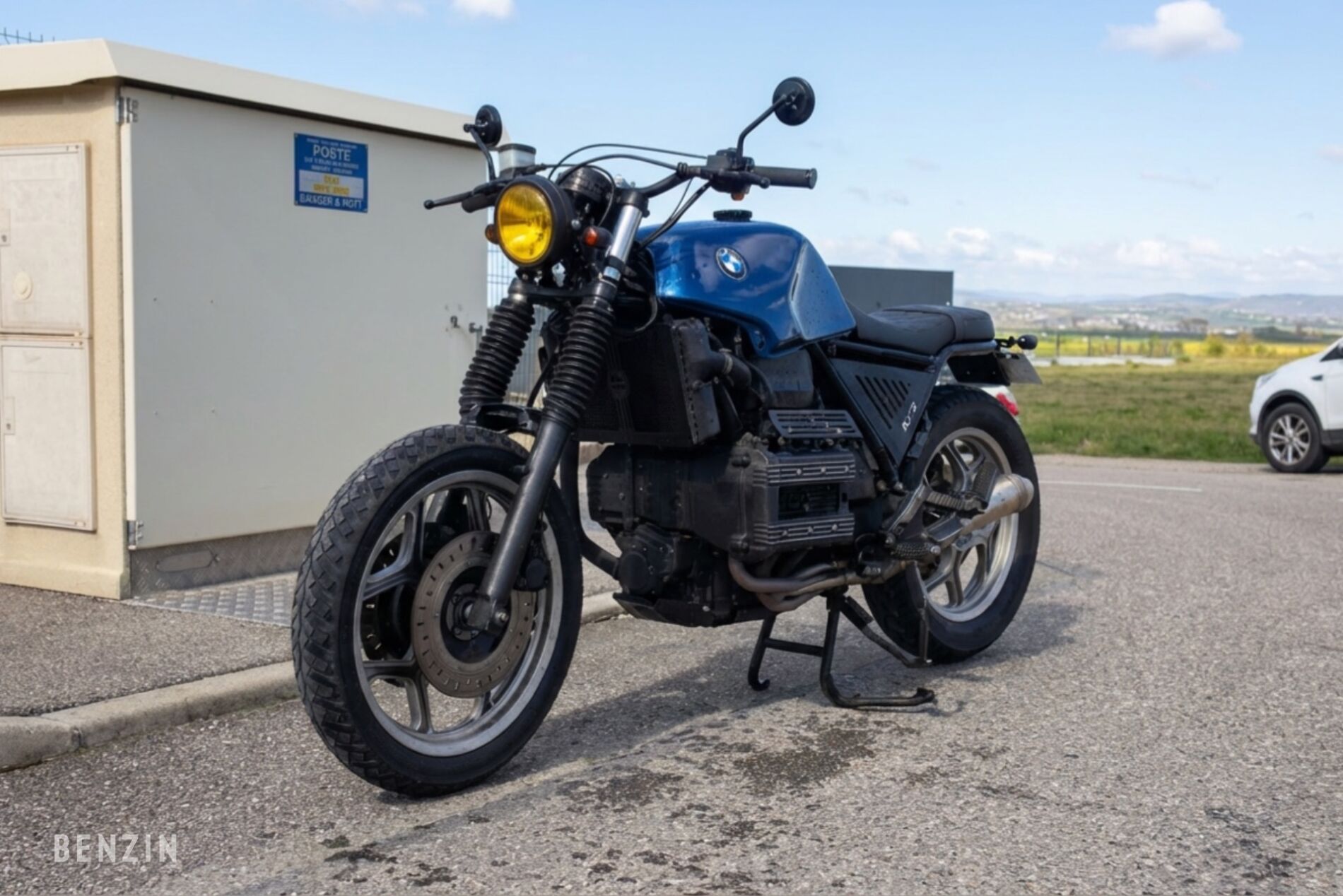
In 1983, BMW changed direction with the K100, nicknamed the “brick” for its longitudinal inline engine, then with the three-cylinder K75, renowned for its smoothness, longevity and touring ability. The 1988 K1, heavily faired and technically ambitious, gave the range a futuristic image, while the K100RS and K75RT remain today highly regarded classic touring bikes. In 1993, the R1100GS introduced the 4-valve flat-twin with fuel injection, Telelever and a new generation of BMW touring models, soon followed by the R1100R, R1100RT, R1150GS and R1150RS, then by the R1200GS, which became one of the brand’s major modern successes. More recently, the nineT family brought the air/oil-cooled boxer back into the spotlight in a neo-retro vein, while the K1600 GT and GTL took BMW touring to six-cylinder level, and the S1000R and G310R broadened the range toward the sporty roadster and entry-level segment. For enthusiasts, the appeal of BMW Motorrad lies in a rare mix of mechanical character, high-mileage durability and a strong riding culture, but desirability varies greatly by generation: the /2 and some /7 models are highly sought after for their authenticity, the “brick” K models for their robustness, and the boxer GS models for their versatility and place in motorcycle touring history.
Technical sheet
| Feature | BMW R60/2 | BMW R100 RS | BMW K100 |
| Production years | 1960-1969 | 1976-1984 then later RS-derived evolution | 1983-1992 |
| Type | Classic boxer touring bike | Fully faired sport-GT | Touring / GT with inline engine |
| Engine | Flat-twin, 594 cc, 4-stroke, air-cooled | Flat-twin, 980 cc, 4-stroke, air-cooled | Inline transverse 4-cylinder, 987 cc, 4-stroke, water-cooled |
| Fuel system | Carburetors | Carburetors | Electronic fuel injection |
| Power | Around 30 hp | Around 70 hp depending on year/version | Around 90 hp |
| Transmission | Shaft, 4-speed gearbox | Shaft, 5-speed gearbox | Shaft, 5-speed gearbox |
| Dry weight | Around 195 kg | Around 236 kg | Around 239 kg |
| Top speed | Around 140 km/h | Around 200 km/h | Around 215 km/h |
| Notable feature | Earles frame, a common sidecar base | Wind-tunnel-designed fairing | Very durable “brick” engine |
Buyer’s guide
For collector use, well-preserved and correct R60/2 models and early R100 RS are the most iconic, while a well-maintained K75 RT or K100 often offers the best compromise between maintenance budget, comfort and reliability. Among 4-valve boxers, the R1100/R1150 and R1200GS appeal for their versatility, but it is best to favor bikes with documented history for the major known issues of each generation; major modifications or incomplete bikes should be examined with caution, especially on older series.
Points to watch
- Oil slingers and bottom end of /2 flat-twins : on R50/R60/R69 models with a bearing-supported crankshaft, clogged oil slingers can deprive the engine of lubrication after high mileage or long periods of inactivity; ask whether the engine has been opened and whether the oil slingers have been cleaned.
- Frame and geometry of sidecar-equipped R60/2 : many have towed a sidecar, which wears the frame, Earles fork, wheels and final drive differently; check for sidecar mounting marks, added brackets, uneven wear and the suitability of the handlebars or settings.
- 5-speed gearbox on /6 and /7 series : on R60/6, R60/7, R75/7, R80/7 and R100 models, owners watch the bearings and the output shaft circlip on some gearboxes, as well as stiff shifting or gear jumping; ask whether the gearbox has been rebuilt or at least inspected.
- Nikasil cylinders and top end of airhead boxers : on several R80 and R100 models from the 1980s, cylinder/piston replacements with Nikasil units are common and generally desirable, but they sometimes obscure mileage history; check invoices, consistency of numbers, and the absence of excessive oil consumption.
- Final drive and splines : on older shaft-drive boxers as on K models, wear in the splines of the driveshaft, final drive or clutch shaft can become costly if lubrication has been neglected; look for abnormal play, clunking when getting back on the throttle, and invoices for transmission rebuilds.
- Water pump and seals on K100/K75 : the K series is very robust, but the water/oil pump and its seals can leak with age, as can various oil seals after long periods of inactivity; inspect for traces under the engine, fluid level and operating temperature.
- First-generation ABS : on R1100GS, R1100RT, R1150GS and some K models from the 1990s-2000s, ABS warning lights that alternate or stay on often point to a weak battery, a faulty sensor or a temperamental modulator; insist on a test ride with a normal self-test sequence and a diagnostic check if in doubt.
- Electronic equipment on recent BMWs : on recent K1600, R1200GS, nineT or S1000R models, check precisely the advertised options (Keyless, ESA, shifter, central locking, pre-wired GPS) and that they work properly, as the wiring looms, switchgear or equipment modules can represent a significant part of the bike’s value.
When buying
On older BMWs, the frame and engine numbers, the presence of the correct manufacturer’s plate, 6 V or 12 V electrical compliance depending on the year, and invoices for engine or gearbox rebuilds are more important than an indicated mileage that is often hard to verify. On K series and 4-valve boxer models, a full test ride must confirm the ABS, charging system, fuel injection operation, and the absence of play in the driveshaft; a diagnostic scan is useful on newer models. For an imported motorcycle, you must also ensure that the registration documents are present, along with the customs clearance certificate or proof of import duty payment if required and, depending on the case, the certificate of conformity.
On Benzin a BMW Motorad has sold for 4 509 € on average, with a median price of 4 550 €. Based on the 17 sales completed on the platform.
The 17 BMW Motorad sold on Benzin changed hands for between 1 200 € and 10 000 €, depending on condition, mileage and version.
17 of the 50 BMW Motorad listed on Benzin found a buyer — 34 % of completed sales.
No BMW Motorad is for sale at the moment. Follow the model to be notified as soon as a new one is listed.
Every vehicle comes with a detailed photo report, its history and the public exchanges between seller and community. You bid online; if you win, Benzin secures the payment and supports you through to delivery.
Follow the model from this page and you will get an e-mail as soon as a BMW Motorad is listed on Benzin.
 English
 Français
 Español
 Italiano
 Deutsch
 Polski
 Magyar
