The Suzuki Vitara appeared in 1988 as a light 4x4 that was more civilized than the Jimny/Samurai, while still retaining a true off-road layout with a separate chassis, transfer case and rigid rear axle. Developed in Japan by Suzuki and sold depending on the market as the Escudo, Sidekick or Geo Tracker, it was aimed as much at leisure use as at everyday driving, with a more road-friendly presentation, easier steering and clearly improved comfort for the class. In Europe, it was first offered as a 3-door with closed or open bodywork, with the 1.6-liter 8-valve petrol engine, then the 16-valve took over on later versions. The stretched 5-door later broadened its family appeal, while some markets also received Peugeot- or Mazda-origin diesels depending on the year and the importer.
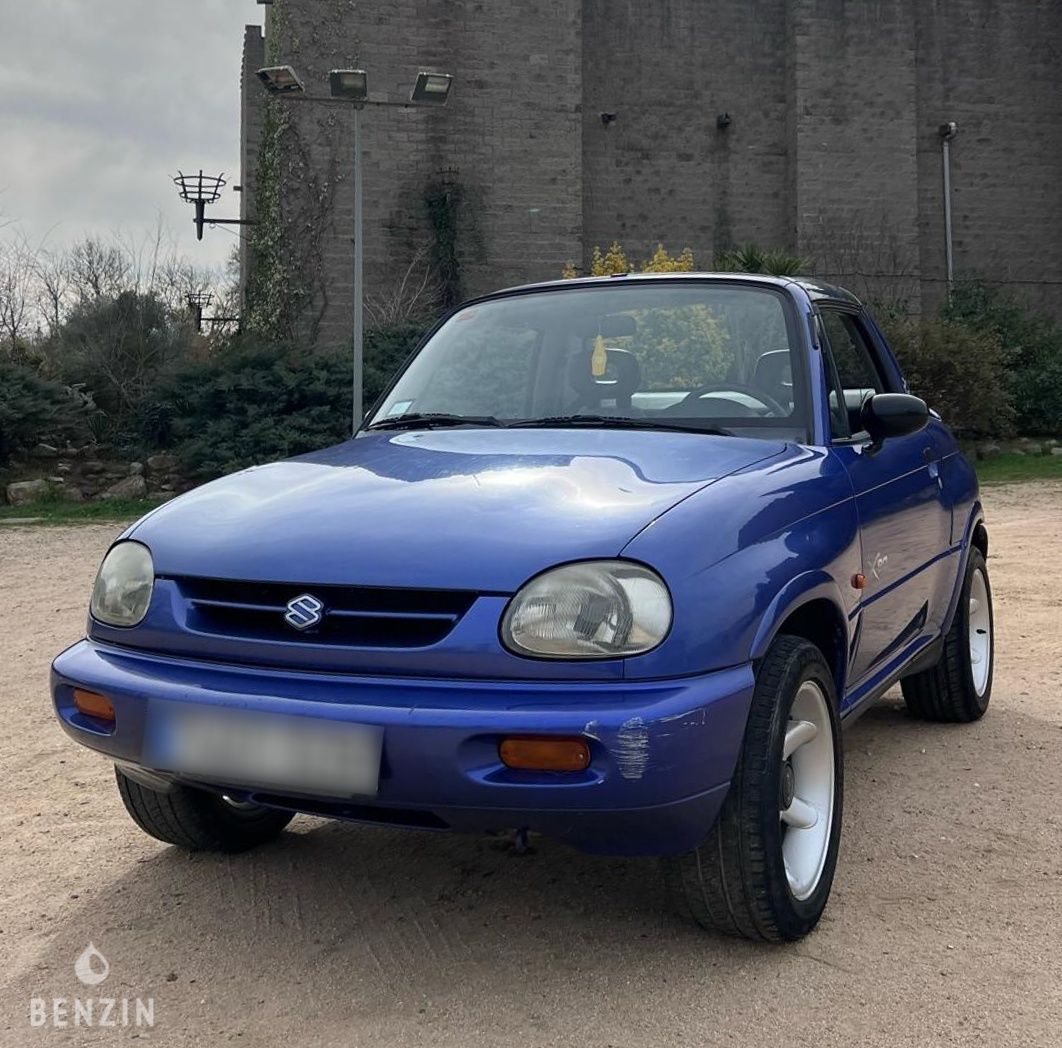
The first generation evolved in small steps rather than through a clean break, with updates to equipment, trim and engines, while retaining its simple, robust character. Among the notable variants is the X-90, launched in the mid-1990s on the short-wheelbase Vitara platform, a curious two-seat coupé with a removable roof that has now become a rarity in its own right. In France and a few European markets, the Philippe Cousteau special series also left a lasting impression, especially on convertibles, with a specific presentation that is highly sought after when complete and original. The Vitara also had a real off-road and rally-raid competition career, with Suzuki entering much more radical prototypes under this name, which helped maintain the image of a surprisingly capable small 4x4. Worldwide production of the first Vitara runs into the hundreds of thousands, but attractive survivors that are unmodified, rust-free and still original are becoming much less common. Since 1998, the Vitara name has continued through more road-oriented generations, up to modern compact SUVs, but among enthusiasts the “real” Vitara is often still the first one, especially in 3-door, convertible or X-90 form.
Today, its appeal lies in this now rare mix of compact size, simple mechanics and genuine off-road ability. Collectors favor cars that have been little modified, with the original hard-top or soft top, correct wheels and upholstery, and a four-wheel-drive system that works perfectly. Well-documented special series, especially Philippe Cousteau, are among the most desirable, provided their specific accessories have not disappeared through beach or off-road use.
Technical data
| Version | Vitara 1.6 8v 3 portes | Vitara 1.6 16v Cabrio | X-90 1.6 16v |
| Production years | 1988-1998 | 1991-1998 | 1995-1997 |
| Body style | 3-door 4x4, hardtop | 3-door convertible 4x4 | 2-seat coupé with removable roof panels |
| Engine(s) | 4-cylinder inline 1,590 cc petrol, 8 valves | 4-cylinder inline 1,590 cc petrol, 16 valves | 4-cylinder inline 1,590 cc petrol, 16 valves |
| Power | 80 hp | 95-97 hp | 95-97 hp |
| Transmission | Switchable 4x4, transfer case, 5-speed manual | Switchable 4x4, transfer case, 5-speed manual | Switchable 4x4, transfer case, 5-speed manual or automatic depending on market |
| Curb weight | approx. 980-1,050 kg | approx. 1,000-1,080 kg | approx. 1,050-1,100 kg |
| 0-100 km/h | approx. 14-15 s | approx. 12-13 s | approx. 13 s |
| Top speed | approx. 140-145 km/h | approx. 150-155 km/h | approx. 145-150 km/h |
| Features | Simplest and most rugged version | Highly sought after in special-series form and with hard-top | Rare variant derived from the short-wheelbase Vitara |
Buyer’s guide
For classic-use enjoyment, the 1.6 16-valve in 3-door or convertible form generally offers the best balance of appeal, performance and parts availability. Philippe Cousteau series are to be preferred when they have retained their specific items, because many have been mixed, incomplete or reconfigured with standard Vitara parts. The X-90 appeals through its rarity, but you have to accept that some body and trim parts are less widely available.
Points to watch
- Chassis and body : corrosion on the frame rails, body mounting points, rear floor, sills and suspension mounts, especially on cars that have towed, been used near the sea or gone off-road; inspect the underside very carefully and look for disguised major repairs.
- Soft top, hard-top and sealing : on convertibles, wear on the fabric top, tired fasteners, dull rear window and leaks in the rear corners; also check for the presence of the hard-top or the correct soft top if the car was delivered with one or the other.
- Philippe Cousteau series : specific accessories and presentation items are often missing or replaced over the years; check the consistency of the upholstery, trim, side steps, exterior accessories and, ideally, period documents confirming the special series.
- Odometer : on early Vitara models, the 5-digit odometer has often already rolled over; the condition of the driver’s seat, steering wheel, pedals and door hinges must be consistent with the stated mileage.
- Front axle and steering : play in the steering, wandering and imprecision are common with wear in the ball joints, steering box, idler arm or front axle bushes; on the road, the car should not wander or clunk over joints.
- 4x4 transmission and front hubs : on versions with freewheeling hubs or automatic engagement depending on the year, failure to engage the front axle, inconsistent warning lights or a transmission that binds; try shifting into 4H and 4L and make sure everything works without abnormal crunching.
- 1.6 petrol engine : solid base, but sensitive to overheating if poorly maintained; look for signs of mayonnaise, pressure in the system, unusual smoke and a history of timing belt replacement, especially on the 16-valve versions.
- X-90 : roof panels, specific seals and body parts unique to the model can be hard to find; check the fit, water leaks and the condition of unobtainable parts before committing.
When buying
On a Vitara, inspection on a lift is far more important than on many cars of the same age, because the car’s value depends first and foremost on the actual condition of the chassis. You also need to check that the transfer case works properly in 4H and 4L, the presence of the specific items if you are looking for a Philippe Cousteau series or an X-90, and the consistency of the mileage when the odometer may have rolled over to zero. Invoices for timing, cooling and properly documented rust repair work are worth more than a merely flattering presentation.
2 of the 4 Suzuki Vitara listed on Benzin found a buyer — 50 % of completed sales.
No Suzuki Vitara is for sale at the moment. Follow the model to be notified as soon as a new one is listed.
Every vehicle comes with a detailed photo report, its history and the public exchanges between seller and community. You bid online; if you win, Benzin secures the payment and supports you through to delivery.
Follow the model from this page and you will get an e-mail as soon as a Suzuki Vitara is listed on Benzin.


 English
 Français
 Español
 Italiano
 Deutsch
 Polski
 Magyar
