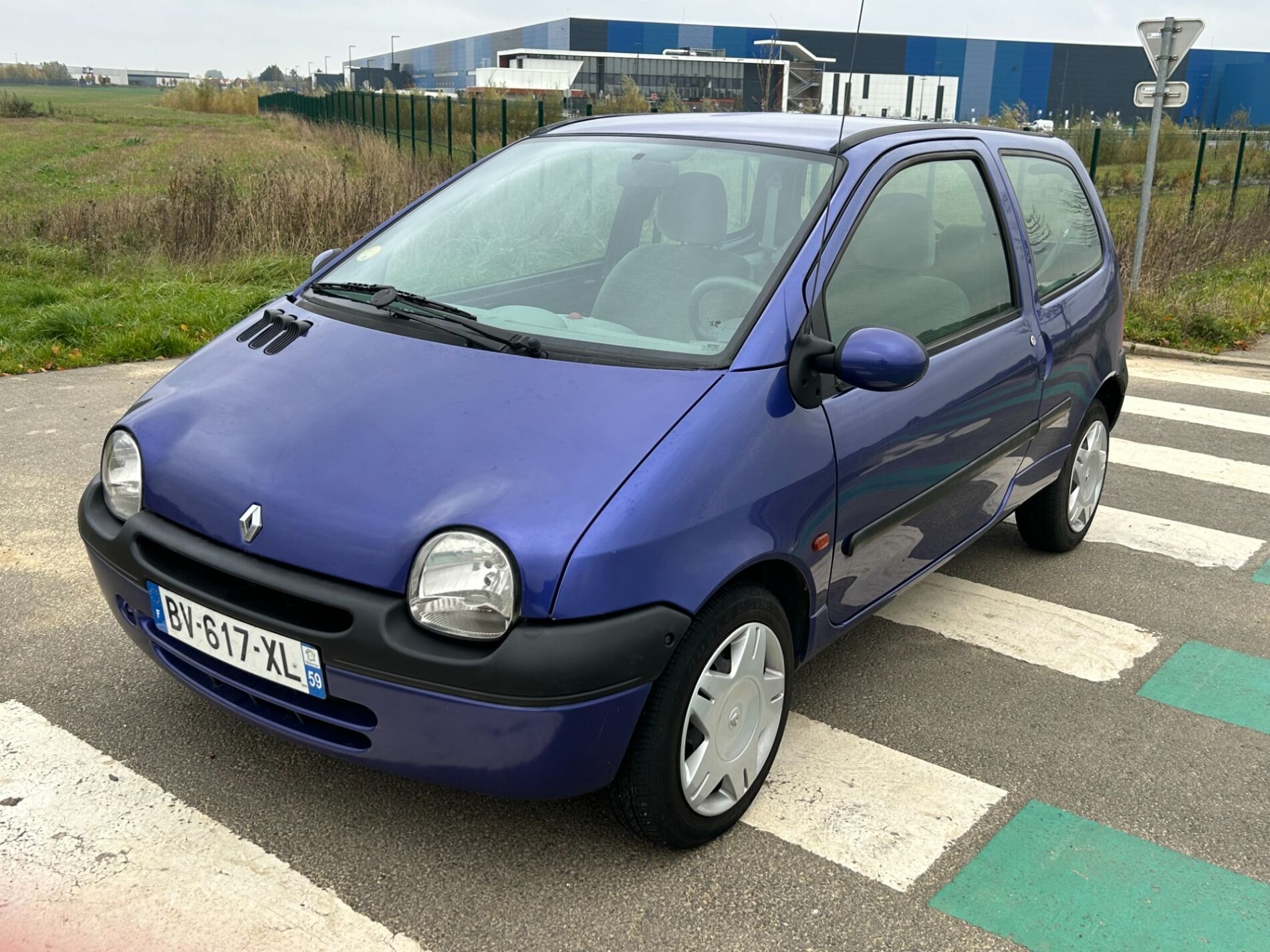
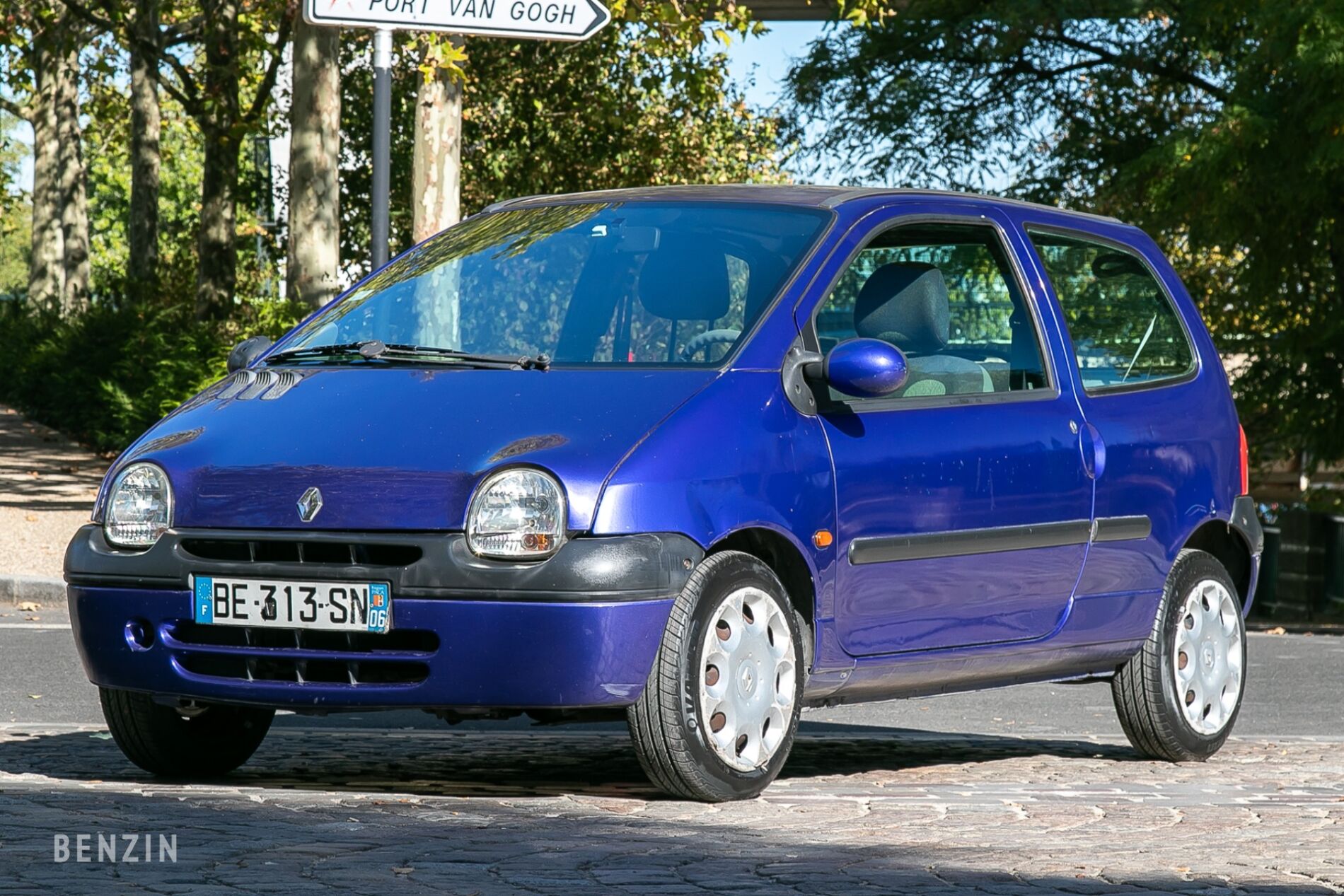
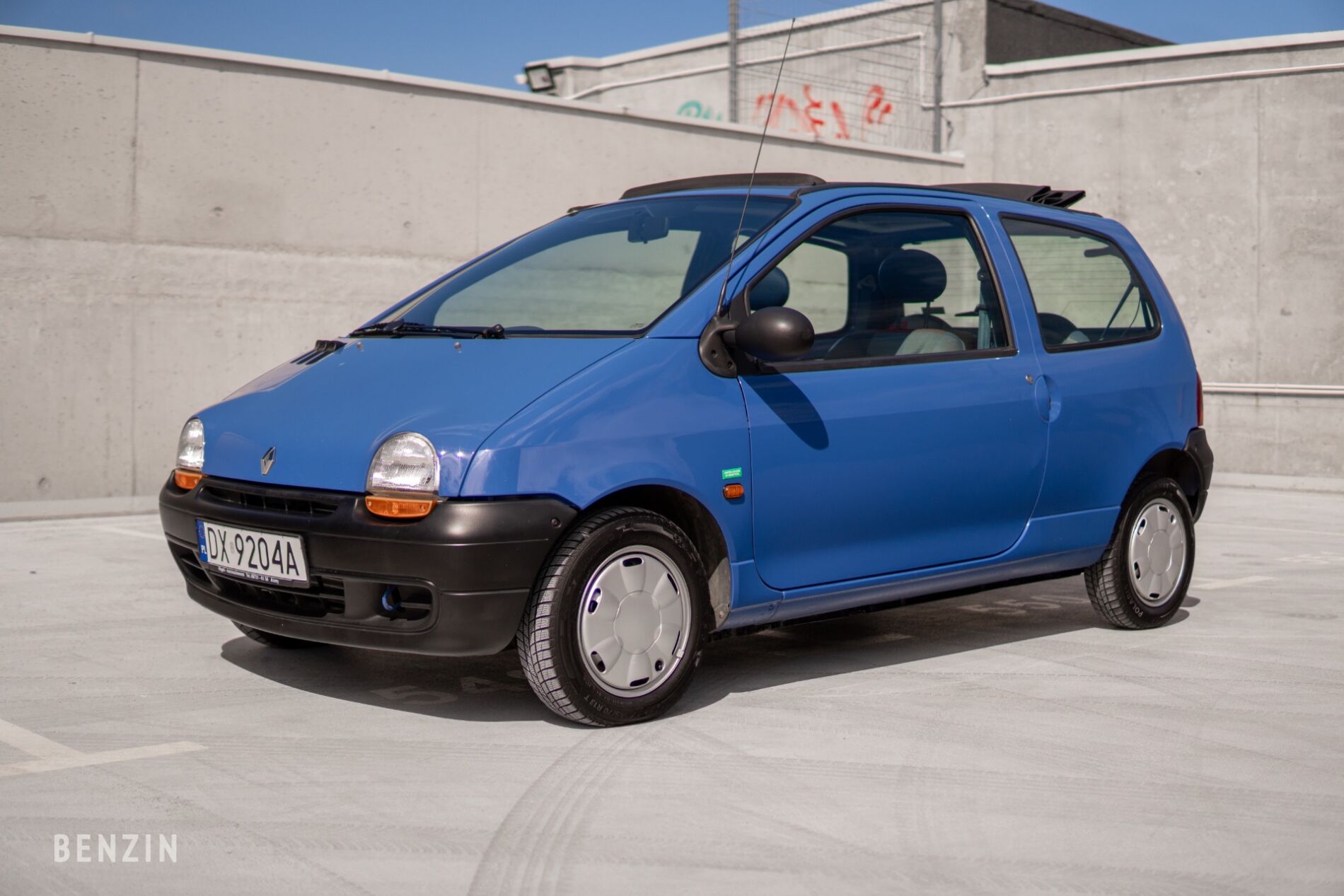
Unveiled at the 1992 Paris Motor Show and launched in spring 1993, the Renault Twingo I was designed as a clever small one-box car, halfway between a city car and a mini-MPV. Its styling, developed under the direction of Patrick Le Quément, broke with the segment’s usual codes through its one-box silhouette, smiling front end and modular interior with sliding rear bench. Renault initially launched it with a deliberately simple offering: a single 3-door body style, few options and the 1.2-liter “Cléon” C3G engine with 55 hp, in the spirit of a car to live with rather than a conventional city car. Success was immediate in France and Europe, thanks to its compact dimensions, excellent front-to-rear space and original interior presentation with central instrumentation. Very quickly, the range was expanded with special editions that became emblematic, such as Benetton, Kenzo, Liberty or Initiale Paris, as well as the Open Air version with a large fabric sunroof. The Easy automated transmission, then the Matic variant depending on markets and years, sought to broaden its customer base, but it was the manual versions that built most of its reputation.
The career of the Twingo I was marked by several evolutions rather than real breakpoints, with a major facelift in 1998 and a final phase around the turn of the 2000s. The old C3G engine was gradually replaced by the 1.2-liter 60 hp D7F, more modern and more economical, before the arrival of the 75 hp 1.2 16V D4F on the last model years, which were noticeably livelier. Equipment improved over time with airbags, power steering, air conditioning, plusher upholstery and higher trims such as Initiale Paris, while the original practical spirit remained intact. Produced in more than 2.4 million units, the first Twingo long since went beyond the status of a simple city car to become an icon of 1990s French automotive design. It never had a real competition career, but its place in popular culture is considerable, and enthusiasts now seek both the very pure early cars and the last well-preserved 16-valve versions. Sound, unmodified examples free of corrosion are becoming significantly harder to find, especially in special editions and Open Air versions.
Technical data
| Version | Twingo 1.2 C3G | Twingo 1.2 D7F | Twingo 1.2 16V D4F |
| Production years | 1993-1996/1997 | 1996/1997-2004 depending on market | 2001/2002-2007 |
| Body style | 3-door city car | 3-door city car | 3-door city car |
| Engine(s) | Inline 4-cylinder, 1239 cc, 8 valves | Inline 4-cylinder, 1149 cc, 8 valves | Inline 4-cylinder, 1149 cc, 16 valves |
| Power | 55 hp | 60 hp | 75 hp |
| Transmission | Front-wheel drive, 5-speed manual gearbox, Easy depending on version | Front-wheel drive, 5-speed manual gearbox, Easy/Matic depending on version | Front-wheel drive, 5-speed manual gearbox |
| Curb weight | approx. 790 kg | approx. 800-820 kg | approx. 850-870 kg |
| 0 to 100 km/h | approx. 15 s | approx. 14.5 s | approx. 11.5-12 s |
| Top speed | approx. 150 km/h | approx. 152 km/h | approx. 168 km/h |
| Features | Early phases, the most stripped-down presentation | Core range, reliability and easy use | Later phases, significantly improved performance |
| Production | More than 2.4 million units produced across all versions |
Buyer’s guide
For worry-free use, phase 2 or 3 Twingos with a manual gearbox and the D7F 60 hp engine are generally the most recommendable: they retain the original spirit while avoiding some of the quirks of the very first models. The 1.2 16V D4F versions are the nicest to drive, while special editions such as Benetton, Initiale Paris or the Open Air appeal more to enthusiasts; on the other hand, Easy and Matic versions should only be bought with a very solid history, as their transmission can become expensive to restore.
Points to watch
- Body corrosion : classic rust spots at the bottom of the front wings, sills, door thresholds, around the fuel flap and the right rear wheel arch near the filler neck; an issue found on all phases, especially on cars kept outdoors. You should closely inspect the lower edges, the inside of the wings and ask for photos of the underside of the sills.
- Open Air sunroof : water leaks, tired fabric, stiff runners or operating cables; specific to open-top versions. Check full opening, proper closing, the condition of the seals and the absence of moisture in the headliner trim and carpets.
- Easy / Matic gearbox : jerks, refusal to engage gears, warning light on, or erratic operation of the automated clutch; concerns versions with assisted transmission. Demand proof of recent work on the actuator, sensors or clutch, and test the car both cold and hot.
- Cooling system and head gasket : warm-up issues, mayonnaise, coolant consumption or a fan that does not switch on properly; be especially vigilant on poorly maintained cars, including C3G and D7F. Check the condition of the expansion tank, hoses, radiator and invoices for the water pump and timing components when the engine is equipped with them.
- Rear axle : worn trailing arm bearings, causing abnormal rear camber or squeaks; a known wear issue on small Renaults of this era, including Twingo. Check the position of the rear wheels from the front and rear, and verify whether the axle has already been rebuilt or replaced.
- Dashboard and cabin electronics : central display fading, erratic fuel gauge, central locking or infrared remote/immobilizer acting up; fairly common on early cars. Test all functions, with both keys if possible, as an immobilizer fault can immobilize the car.
- Manual gearbox and shift mechanism : vague shift action, crunching or droning on deceleration, especially on high-mileage cars or those abused in city driving. Check the precision of the lever, the absence of marked noise in the gears, and ask whether the engine/gearbox mounts or linkage have been renewed.
When buying
On a Twingo I, the most useful documents are proof of replacement of the timing belt and water pump on D7F and D4F engines, as well as invoices related to the Easy or Matic gearbox if the car is equipped with one. An inspection on a lift is particularly important to confirm the condition of the sills, jacking points, right rear wheel arch and rear axle. On an Open Air, you should also test the roof several times and look for the slightest sign of water ingress or makeshift repairs around the aperture and roof panel.
On Benzin a Renault Twingo 1 has sold for 4 326 € on average, with a median price of 3 400 €. Based on the 9 sales completed on the platform.
The 9 Renault Twingo 1 sold on Benzin changed hands for between 1 400 € and 8 687 €, depending on condition, mileage and version.
9 of the 13 Renault Twingo 1 listed on Benzin found a buyer — 69 % of completed sales.
No Renault Twingo 1 is for sale at the moment. Follow the model to be notified as soon as a new one is listed.
Every vehicle comes with a detailed photo report, its history and the public exchanges between seller and community. You bid online; if you win, Benzin secures the payment and supports you through to delivery.
Follow the model from this page and you will get an e-mail as soon as a Renault Twingo 1 is listed on Benzin.
 English
 Français
 Español
 Italiano
 Deutsch
 Polski
 Magyar
