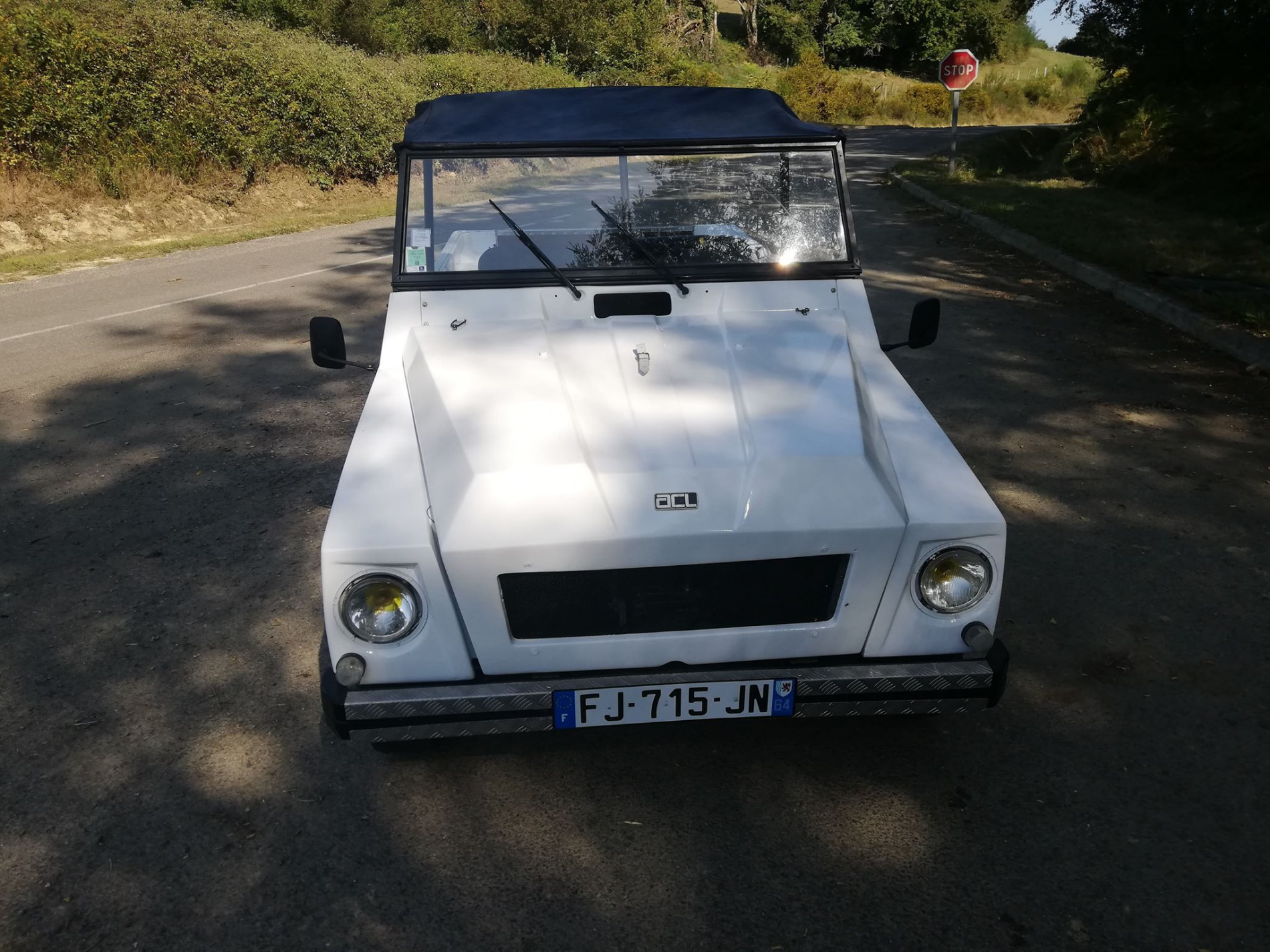
The Renault Rodéo was born at the very beginning of the 1970s to give the Régie a direct answer to the Citroën Méhari, based on the idea of a simple, washable, lightweight leisure car derived from mass-produced mechanical components. The project was entrusted to ACL, for Ateliers de Construction du Livradois, an Auvergne-based company that fitted a Renault 4 base with a polyester body, reinforced chassis, and stripped-down presentation suited to beach, rural, or utility use. The first Rodéo, soon called Rodéo 4, appeared in 1970 with the small 845 cm³ “Billancourt” engine and front-wheel drive derived from the 4L. The range then expanded with the Rodéo 6, more powerful and better equipped, which took up the spirit of the Renault 6 with the 1108 cm³ “Cléon-Fonte”. Very rare Sinpar 4x4 conversions also existed on Rodéo bases for agricultural, mountain, or service uses.
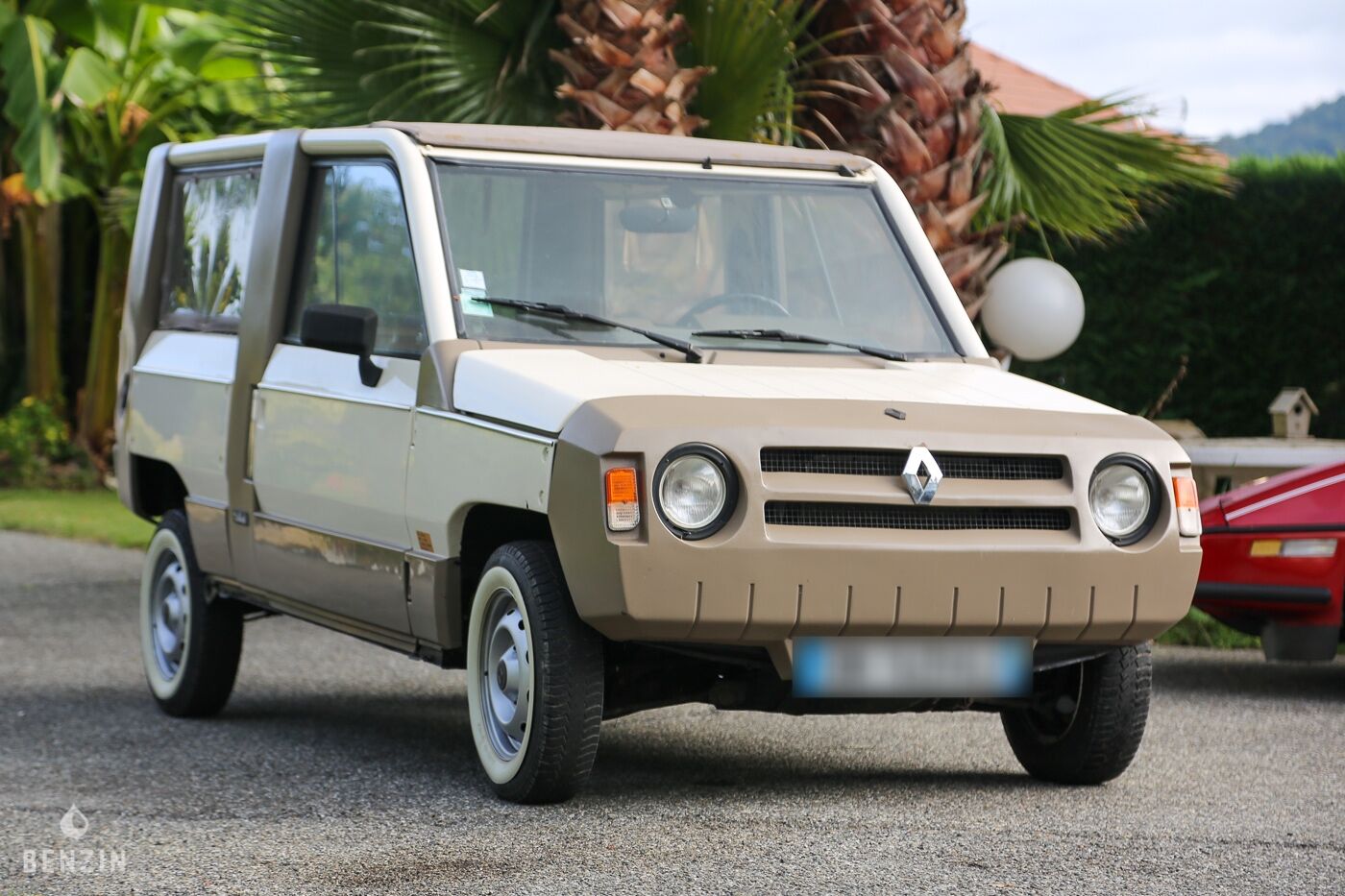
At the end of the 1970s, ACL became Teilhol, and the Rodéo gradually changed identity while remaining linked to Renault. The Rodéo 5, launched in the early 1980s, adopted a more angular and modern body, still in polyester, with a more accomplished presentation than that of the early versions. It retained the very simple architecture that makes the model so charming: easy-to-maintain Renault mechanics, folding windshield depending on the series, removable soft top, and spartan cabin. Depending on the year and market, the Rodéo 5 mainly received the 1108 cm³ engine from the Renault 4 GTL, making it the most versatile variant for occasional road use. The model’s career continued until the mid-1980s, without mass-market success but with a real niche clientele loyal to its concept.
Today, the Rodéo is sought after for its playful character, its close link with the Renault 4, and its ease of use, but its survival depends heavily on the condition of the chassis, which is far more critical than that of the polyester body. Enthusiasts clearly distinguish the early ACL cars, closer to the original spirit, the Rodéo 6 for their mechanical appeal, and the Rodéo 5 Teilhol for their easier use and more contemporary style. The Sinpar 4x4 versions occupy a special place, highly coveted by collectors of French leisure vehicles and fans of rare technical variants. Less publicized than a Méhari, the Rodéo nevertheless benefits from a solid core of enthusiasts, clubs, and specialists familiar with parts shared with the Renault 4, 5, and 6.
Technical data
| Version | Rodéo 4 | Rodéo 6 | Rodéo 5 |
| Production years | 1970 - late 1970s | Mid-1970s - early 1980s | 1981 - 1986 |
| Body | Convertible in polyester, 2 or 4 seats depending on version | Convertible in polyester, 4 seats depending on version | Convertible in polyester, 2 or 4 seats depending on approval |
| Mechanical base | Renault 4 | Renault 6 / Renault 4 | Renault 4 GTL |
| Engine(s) | 4 cyl. 845 cm³ | 4 cyl. 1108 cm³ | 4 cyl. 1108 cm³ |
| Power | approx. 34 hp | approx. 45 hp | approx. 34 hp DIN |
| Drivetrain | Front-wheel drive, very rare Sinpar 4x4 | Front-wheel drive, very rare Sinpar 4x4 | Front-wheel drive |
| Gearbox | 4-speed manual | 4-speed manual | 4-speed manual |
| Curb weight | about 650 kg | about 720 kg | about 720 kg |
| Top speed | about 100 km/h | about 120 km/h | about 115 km/h |
Buyer’s guide
For enjoyable classic use without complications, the Rodéo 5 Teilhol is often the best choice: it is more accomplished, more spacious, and benefits from the well-known 1108 cm³ engine familiar to Renault specialists. Purists prefer the early ACL cars or a well-preserved Rodéo 6, while Sinpar 4x4s are for those who accept the rarity of specific parts and the need for a much more thorough technical inspection. The least attractive examples are those whose polyester looks good but whose chassis, suspension mountings, or 4x4 conversion have been repaired superficially.
Points to watch
- Chassis and side members : structural corrosion is the real weak point, often hidden by a presentable polyester body. On all Rodéo models, and especially those left outside or used by the sea, check the side members, crossmembers, floors, jack points, and suspension mounting points.
- Body mountings and frame : gaps at the doors, hood, or misaligned panels may reveal a distorted frame or a repair after a crash; on ACLs as well as on Teilhols, check the condition of the supports linking the polyester shell to the metal structure and look for cracks around the mounting points.
- Polyester body : the material does not rust, but it cracks, warps, and is sometimes repaired roughly; inspect the wings, front bulkhead, and windshield surrounds for resin blisters, star cracks, and differences in appearance that reveal an old impact, especially at the front.
- Sinpar 4x4 drivetrain : on the rare 4x4s, axle noise, play in the driveshaft, uncertain operation of the auxiliary transmission, or missing parts are major warning signs; you must verify the presence and correct installation of all Sinpar-specific components, which are much harder to find than basic Renault parts.
- “4L-type” gearbox and controls : the gear selection via the “paperclip” lever can become vague or sticky, especially on cars that have been immobilized for a long time; on all versions, check for excessive crunching, gear jumping out, and the condition of the control bushings.
- 845/1108 cm³ engine : these engines are robust, but Rodéo models often suffer from seasonal use and long-term storage; watch for leaks at the oil seals, smoke on restart, neglected cooling systems on the 1108s, and clogged carburetors on cars that are driven infrequently.
- Soft top, roll bars and sealing : on this leisure model, a non-compliant soft top, torn fasteners, or incomplete roll bars make a return to original configuration much more difficult; check for the presence of the full frame, soft openings, and fixing elements specific to the version.
- 2- or 4-seat approval : depending on the year, the body and the registration document do not always match; you must check that the number of seats shown on the papers corresponds to the actual layout, a sensitive point on former commercial vehicles and on some restorations.
When buying
On a Rodéo, inspection on a lift is essential, because the main issues are underneath the car: chassis corrosion, quality of repairs, and condition of the mounting points. On a Sinpar 4x4, also ask for detailed photos of the specific drivetrain and invoices clearly identifying Sinpar parts, not just Renault mechanical components. Finally, check that the chassis number, type mine, number of seats on the registration document, and the car’s actual configuration all match, because mixed parts between Rodéo, Renault 4, and old conversions are not uncommon.
2 of the 4 Renault Rodeo listed on Benzin found a buyer — 50 % of completed sales.
No Renault Rodeo is for sale at the moment. Follow the model to be notified as soon as a new one is listed.
Every vehicle comes with a detailed photo report, its history and the public exchanges between seller and community. You bid online; if you win, Benzin secures the payment and supports you through to delivery.
Follow the model from this page and you will get an e-mail as soon as a Renault Rodeo is listed on Benzin.

 English
 Français
 Español
 Italiano
 Deutsch
 Polski
 Magyar
