Introduced in 1956, the Renault Dauphine was designed to replace the 4CV by moving upmarket without changing the technical formula: a small rear-engined, four-door sedan with four real seats. The project was developed at Renault under the direction of Fernand Picard, with bodywork of very soft lines often associated with the work of the Italian coachbuilder Ghia around Luigi Segre. Commercial launch first took place in France, then very quickly for export, with Renault making the Dauphine a global model assembled or produced under license in several countries, including Spain by FASA. Its 845 cc water-cooled “Ventoux” engine layout and more modern presentation than the 4CV explain its immediate success.
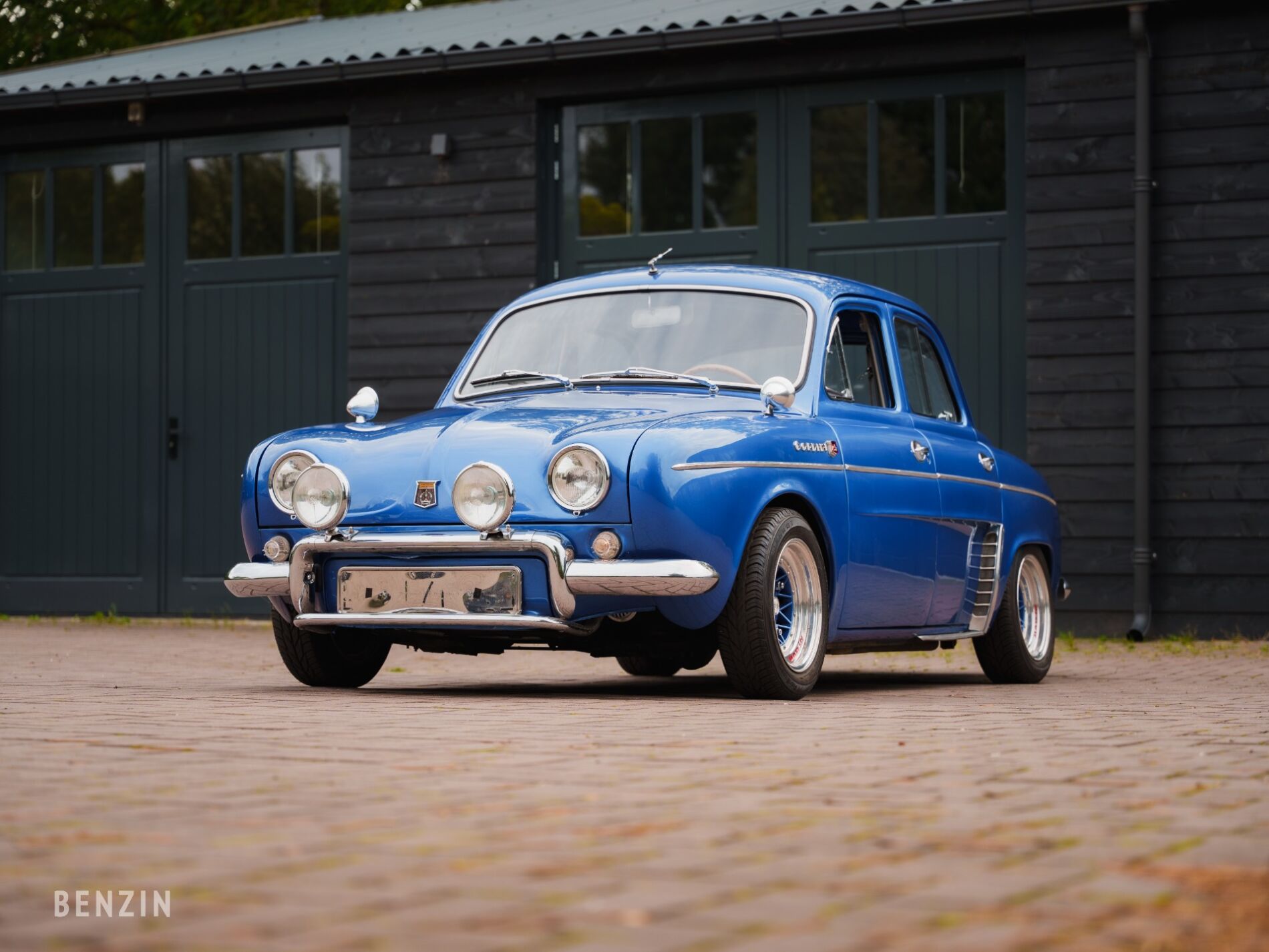
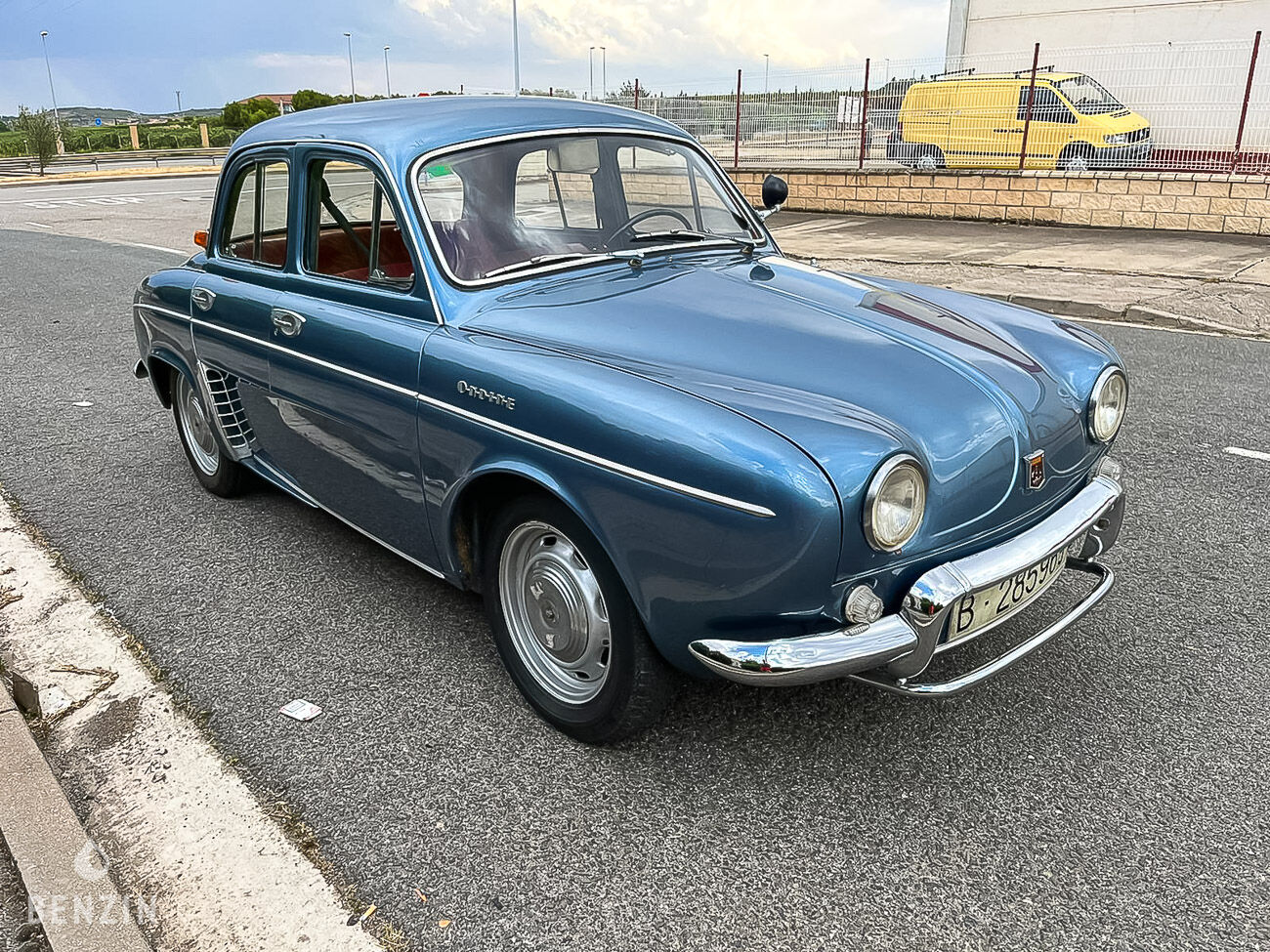
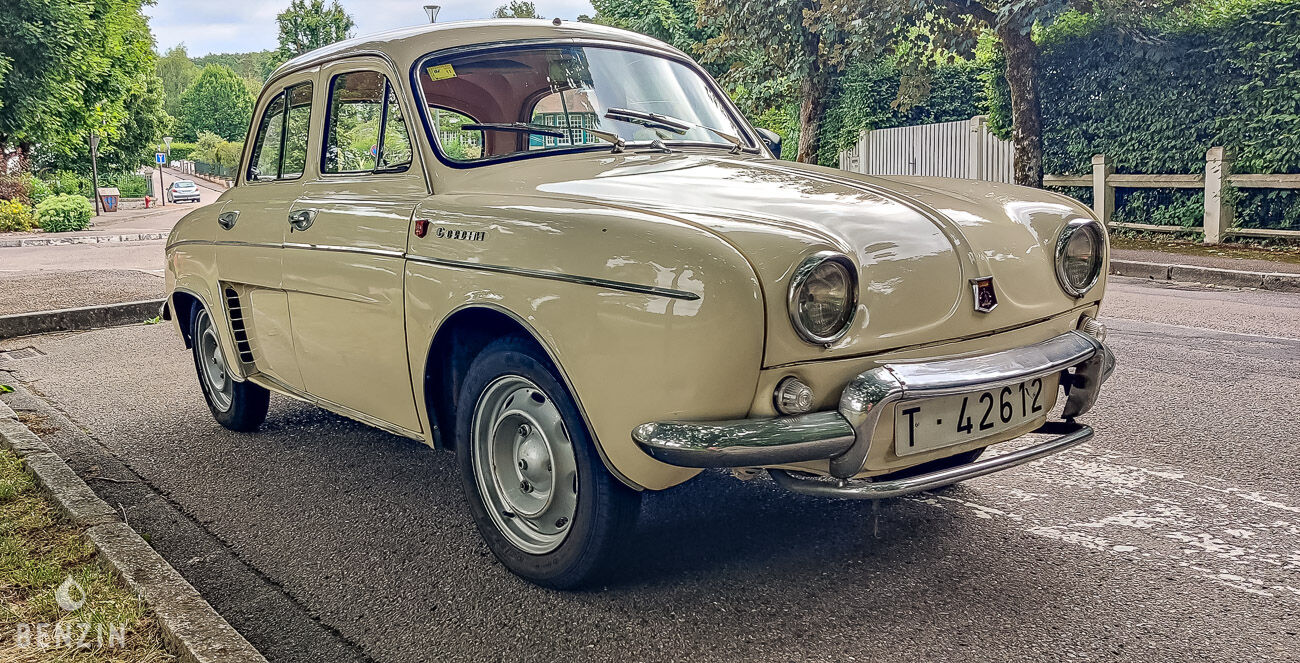
The base version carries the R1090 type and initially received a 3-speed gearbox, before the range evolved over the model years with detail, trim and transmission improvements. In 1961, the Ondine appeared, more upscale, bringing above all a more pleasant-to-use 4-speed gearbox and a richer presentation. The Dauphine Gordini, type R1091 in French production, uses the same 845 cc engine but in a livelier tune, with revised cylinder head and carburation, making it the most sought-after version in the family of production sedans. Spanish FASA production sometimes complicates the reading of plates and names, with some local Gordini models not exactly matching the French codes known to collectors.
The Dauphine also had a real sporting career and a strong popular presence, to the point of becoming one of the iconic Renaults of the 1950s and 1960s. Its production was massive, at more than 2 million examples across all versions, which long made it one of the most-produced French cars. Its rear-engine, swing-axle handling now calls for adapted driving, but its light weight, mechanical simplicity and the charm of a period small sedan still appeal. Among enthusiasts, the Gordini and certain well-documented FASA versions are the most sought after, while the R1090 and Ondine appeal to those looking for a classic that is usable and still technically well known to specialists.
Technical specifications
| Characteristic | Dauphine R1090 | Ondine | Dauphine Gordini |
| Production years | 1956-1967 | 1961-1962 | from 1957, depending on market until the end of production |
| Body | 4-door sedan, 4 seats | 4-door sedan, 4 seats | 4-door sedan, 4 seats |
| Engine | Rear inline 4-cylinder, 845 cc, liquid cooling | Rear inline 4-cylinder, 845 cc, liquid cooling | Rear inline 4-cylinder, 845 cc, liquid cooling |
| Power | approx. 30 hp | approx. 30 hp | approx. 37 hp |
| Transmission | Rear-wheel drive, 3-speed manual gearbox then 4-speed depending on version | Rear-wheel drive, 4-speed manual gearbox | Rear-wheel drive, 4-speed manual gearbox |
| Curb weight | approx. 650 kg | approx. 660 kg | approx. 670 kg |
| Top speed | approx. 115 km/h | approx. 115 km/h | approx. 125-130 km/h |
| Production | More than 2.1 million examples of all Dauphine versions combined | Included in total production | Included in total production |
Buyer’s guide
The Dauphine Gordini is the most desirable for its superior driving pleasure and its place in the model’s sporting history, but a sound and correct Ondine is often the best compromise thanks to its 4-speed gearbox. An original R1090 remains very interesting, provided you accept modest performance and carefully check structural corrosion. On a FASA, the priority is a very clear example in terms of identification, because the plates and types do not always match French conventions.
Points to watch
- Structural corrosion : the side members, floors, sills, body mounting points, front spare-wheel well and especially the suspension mounting areas can be badly affected on cars restored long ago or left unused for a long time; it is necessary to inspect underneath visually, with a light hammer tap, and with restoration photos if the car has been rebuilt.
- Cooling system : on this rear-mounted 845 cc engine, a clogged radiator, a tired water pump or old hoses encourage overheating; on cars that are rarely driven, ask what has been replaced recently and check for any trace of overheating, dirty coolant or overflow.
- Head gasket and liner sealing : the “Ventoux” engine does not tolerate neglected cooling or long periods of storage well; mayonnaise, bubbles in the system, white smoke or abnormal pressure when cold should raise concern, especially on engines rebuilt long ago without regular use.
- Gearbox : the gearboxes in Dauphine models, particularly the early 3-speed units and hard-used 4-speed units, can suffer from weak synchros and gears that crunch or jump out; when warm, 2nd gear, reverse, and the absence of rumbling on deceleration should be checked.
- Swing-axle rear suspension : very pronounced camber, worn silent blocks, or worn gaiters and joints greatly degrade handling; on the road, the car should not float or sway excessively, and documentation of rear suspension refurbishment is a real plus.
- Braking : wheel cylinders and hoses age poorly after long periods of inactivity, with a tendency to seize or become unbalanced; on a car brought back into service after several years, it is important to know whether the hydraulic system has been fully overhauled or merely bled.
- Identification of FASA versions : on Gordini and Ondine assembled in Spain, the plates, stampings and designations may differ from the French types known to clubs; it is necessary to compare the chassis number, manufacturer’s plate, registration document and the car’s actual features rather than relying on the badge alone.
When buying
On a Dauphine, the most useful documents are invoices for major bodywork, cooling system overhauls, and gearbox refurbishment, far more revealing than a simple mention of “old restoration.” A compression test, inspection of the underside on a lift, and verification that the type, plate, and registration document match are particularly important, especially for a Gordini FASA. On a car presented as a Gordini, it is also necessary to check that the mechanical and visual details are consistent with the version claimed, without relying solely on the commercial name.
On Benzin a Renault Dauphine has sold for 5 200 € on average, with a median price of 6 700 €. Based on the 3 sales completed on the platform.
The 3 Renault Dauphine sold on Benzin changed hands for between 1 100 € and 7 800 €, depending on condition, mileage and version.
3 of the 7 Renault Dauphine listed on Benzin found a buyer — 43 % of completed sales.
No Renault Dauphine is for sale at the moment. Follow the model to be notified as soon as a new one is listed.
Every vehicle comes with a detailed photo report, its history and the public exchanges between seller and community. You bid online; if you win, Benzin secures the payment and supports you through to delivery.
Follow the model from this page and you will get an e-mail as soon as a Renault Dauphine is listed on Benzin.
 English
 Français
 Español
 Italiano
 Deutsch
 Polski
 Magyar
