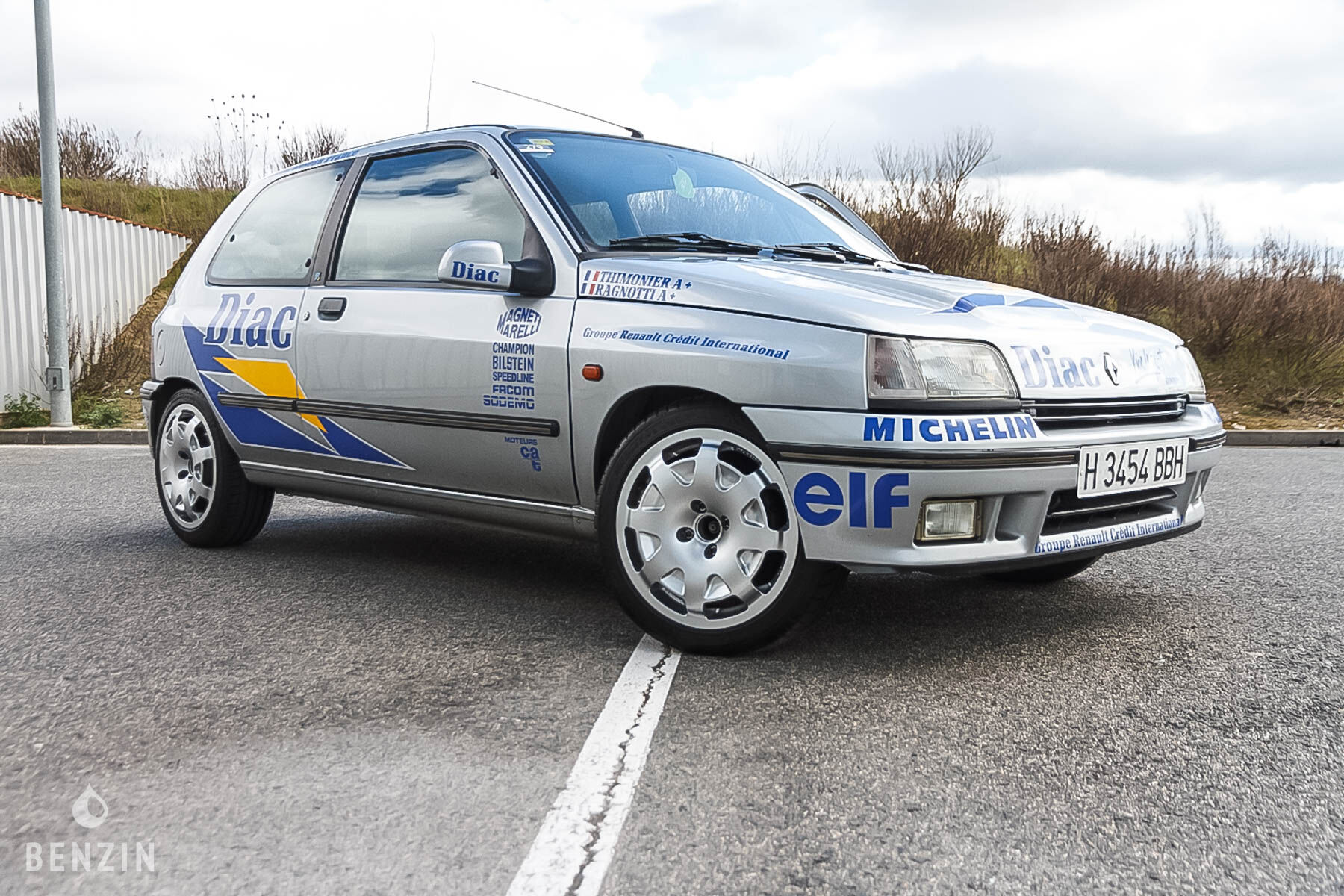
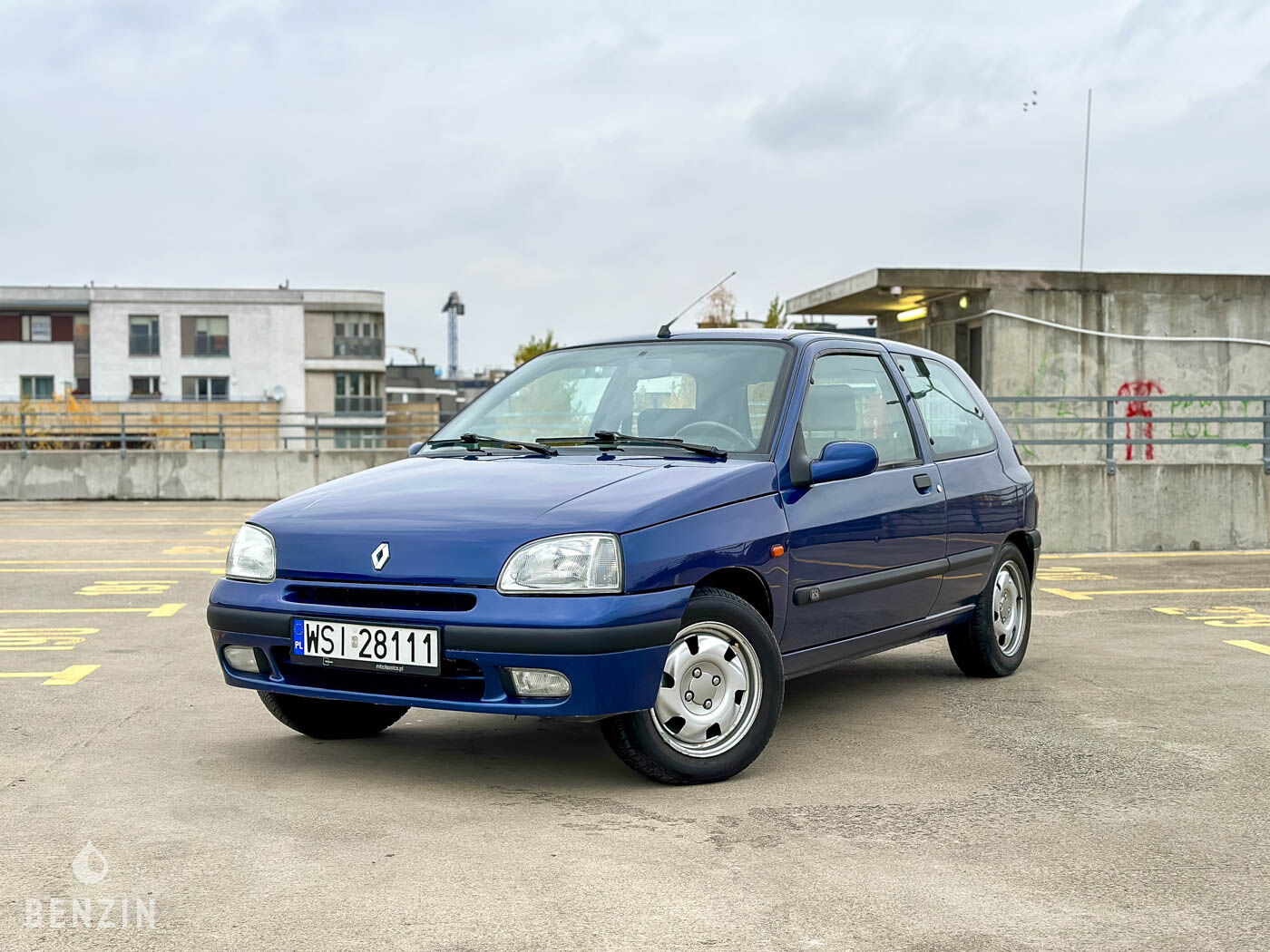
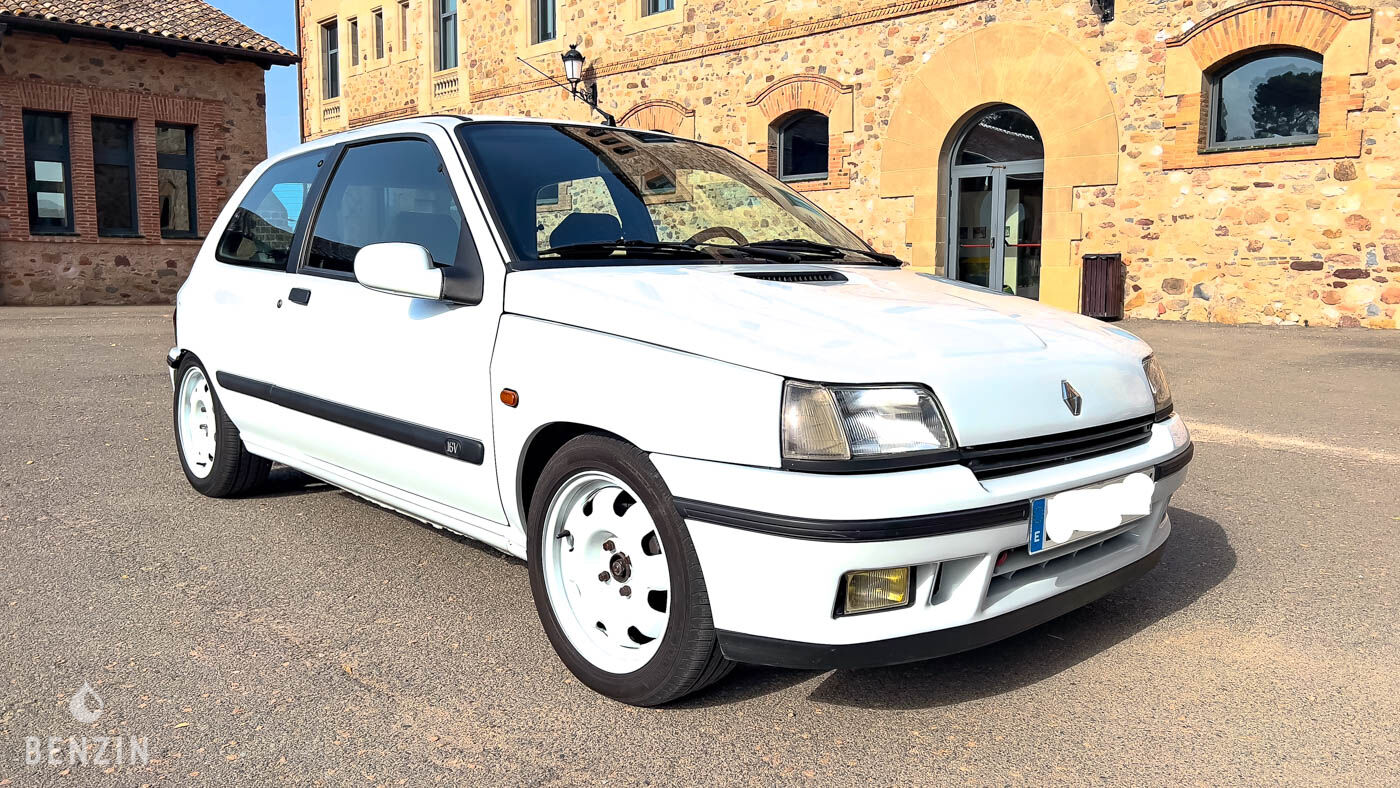
Introduced in 1990 to replace the Supercinq, the Renault Clio I quickly received sporty derivatives intended to carry on the legacy of small French GTIs, with the 16S from 1991 and then the RSi, more discreet and more versatile. Styled under the direction of Patrick Le Quément for Renault’s late-1980s design language, the Clio retained a simple front-wheel-drive layout with a transverse engine, but the sporty versions received a much sharper chassis setup, a precise front end and braking that was significantly improved over the regular versions. The Clio 16S adopted the 1.8-liter 16-valve F7P already known from the Renault 19 16S, with specific styling, widened composite fenders, dedicated bumpers and the “turbine” wheels that are now part of its identity. The RSi, which appeared later depending on the market in the early 1990s, used the 1.8-liter F3P with multipoint injection and 110 hp, in a less radical formula than the 16S but livelier than a simple RT or S. In France, the 16S is sometimes referred to as 16V in some countries or in some listings, and the names are still mixed up today, especially on phase 2 cars.
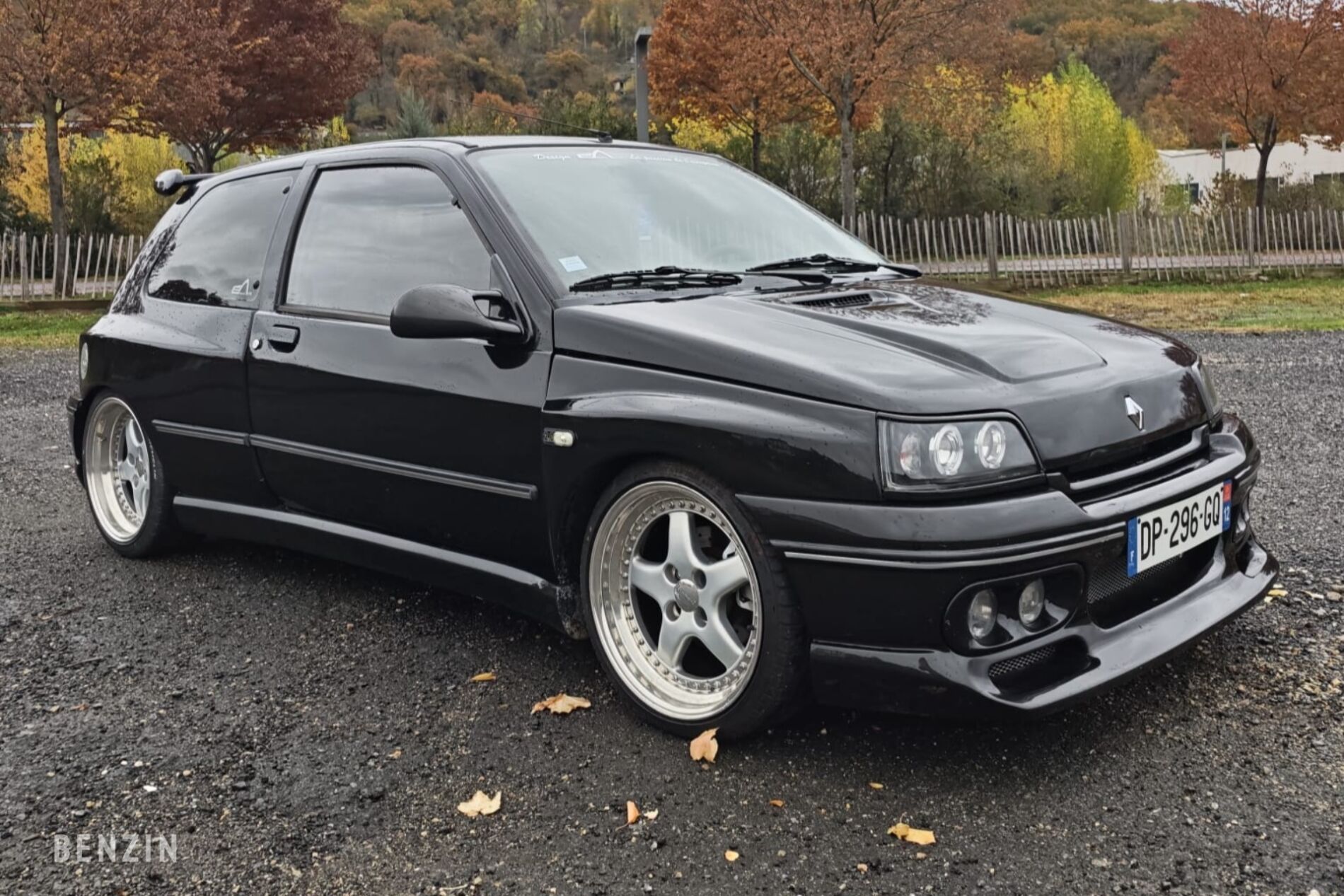
Over the course of the Clio I’s career, these versions evolved with the 1994 and then 1996 facelifts, a revised interior presentation, equipment that varied by model year and, for the 16-valve, power that could differ slightly depending on the catalytic converter and market. The Clio 16S also served as the technical and image base for the famous Clio Williams, which explains why it was long sought after by enthusiasts who wanted the chassis without the extra cost or mythology of the Williams. Period conversions, body kits and specialist preparations also appeared, such as Esquiss Auto builds, now rare but to be examined as modified cars rather than official Renault series. Renault has not published a total as clear and universally repeated for the RSi and 16S alone as for the entire Clio I range, which was produced in several million units. The best original cars, not lowered, not “williamsized,” with their correct wheels, intake and upholstery, are now the most appreciated. The RSi appeals through its drivability and relative rarity, while the 16S remains the most iconic for its F7P engine, its front end and its place in the golden age of French hot hatches.
Technical sheet
| Clio RSi 1.8 | Clio 16S / 16V 1.8 16s |
| Production years | Early 1990s - 1996 depending on markets | 1991 - 1996 depending on phases and markets |
| Body style | 3-door hatchback | 3-door hatchback |
| Engine | Inline 4-cylinder, 1,794 cc, multipoint injection, 8 valves (F3P) | Inline 4-cylinder, 1,764 cc, injection, 16 valves (F7P) |
| Power | 110 hp | 137 to 140 hp depending on version/market |
| Torque | Around 15 mkg | Around 16 mkg |
| Transmission | Front-wheel drive, 5-speed manual gearbox | Front-wheel drive, 5-speed manual gearbox |
| Curb weight | Around 950 to 990 kg | Around 980 to 1,030 kg |
| 0-100 km/h | Around 9 s | Around 7.8 to 8.2 s |
| Top speed | Around 195 km/h | Around 205 to 210 km/h |
| Particularities | Intermediate version, less showy, often more civilized equipment | Widened composite fenders, specific presentation, technical base from the Clio Williams universe |
Buyer’s guide
The Clio 16S phase 1 is the most iconic, especially if it has remained close to original with its wheels and period airbox, but a healthy, unmodified phase 2 is often better than a tired phase 1. The RSi is preferable for more road use and for its better balance of performance, maintenance cost and rarity, provided you avoid modified cars or cars rebuilt from ordinary versions. Period conversions by a tuner can be interesting if their provenance is documented, but they must be judged as such, not as a Renault production series.
Points to watch
- F7P 16S/16V engine: bottom-end noise, knocking when hot or a vague rebuild history, especially on cars that have been driven hard or used on track; ask whether the connecting-rod bearings have already been replaced and with which invoices.
- Timing belt and water pump: service interval often overdue on cars that are driven little, even when mileage is low; on both RSi and 16S, you need a precise replacement date, not just a verbal claim.
- Head gasket and cooling system: no mayonnaise but abnormal pressure, overheating, a new expansion tank without proof, or an erratic fan; F7P engines that are poorly bled or rarely used do not like overheating.
- Manual gearbox: 2nd and 3rd gear synchros that catch, crunching when cold or a vague shifter, especially on 16S cars driven hard; also check for leaks at the differential outputs and the condition of the driveshafts.
- Rear axle: pronounced negative camber, squeaks or abnormal ride height, a classic sign of worn arm or axle bearings on Clio I; a proper repair should be documented.
- Front structure and subframe: imperfect alignment of the hood, fenders and headlights, bent tow rings or jacking points, notes of rail or subframe issues on the inspection; many examples have suffered minor front-end impacts, sometimes poorly repaired.
- Targeted corrosion: floors, jacking points, sills, rear wheel arches, windshield scuttle and battery area; cars that have been off the road for a long time are not necessarily the healthiest underneath.
- Original conformity: turbine or Maracana wheels missing, direct intake, coilovers, exhaust, upholstery or steering wheel changed; on these Clio, everyday value and collector interest depend heavily on the presence of the original parts.
When buying
On a 16S, the timing-belt invoices and, ideally, bottom-end invoices matter more than a simple low mileage reading; a compression test is relevant if the mechanical history is incomplete. The car should also be inspected on a lift, with underbody photos, to confirm the condition of the subframe, front rails and rear axle. Finally, check that the car matches its original configuration or its period preparation: engine code, specific bodywork elements, correct wheels and the presence of the original parts supplied with the car.
On Benzin a Renault Clio 1 RSi / 16s has sold for 5 356 € on average, with a median price of 5 500 €. Based on the 7 sales completed on the platform.
The 7 Renault Clio 1 RSi / 16s sold on Benzin changed hands for between 3 000 € and 7 600 €, depending on condition, mileage and version.
7 of the 12 Renault Clio 1 RSi / 16s listed on Benzin found a buyer — 58 % of completed sales.
Yes, 1 Renault Clio 1 RSi / 16s is currently for sale on Benzin.
Every vehicle comes with a detailed photo report, its history and the public exchanges between seller and community. You bid online; if you win, Benzin secures the payment and supports you through to delivery.
Follow the model from this page and you will get an e-mail as soon as a Renault Clio 1 RSi / 16s is listed on Benzin.
 English
 Français
 Español
 Italiano
 Deutsch
 Polski
 Magyar
