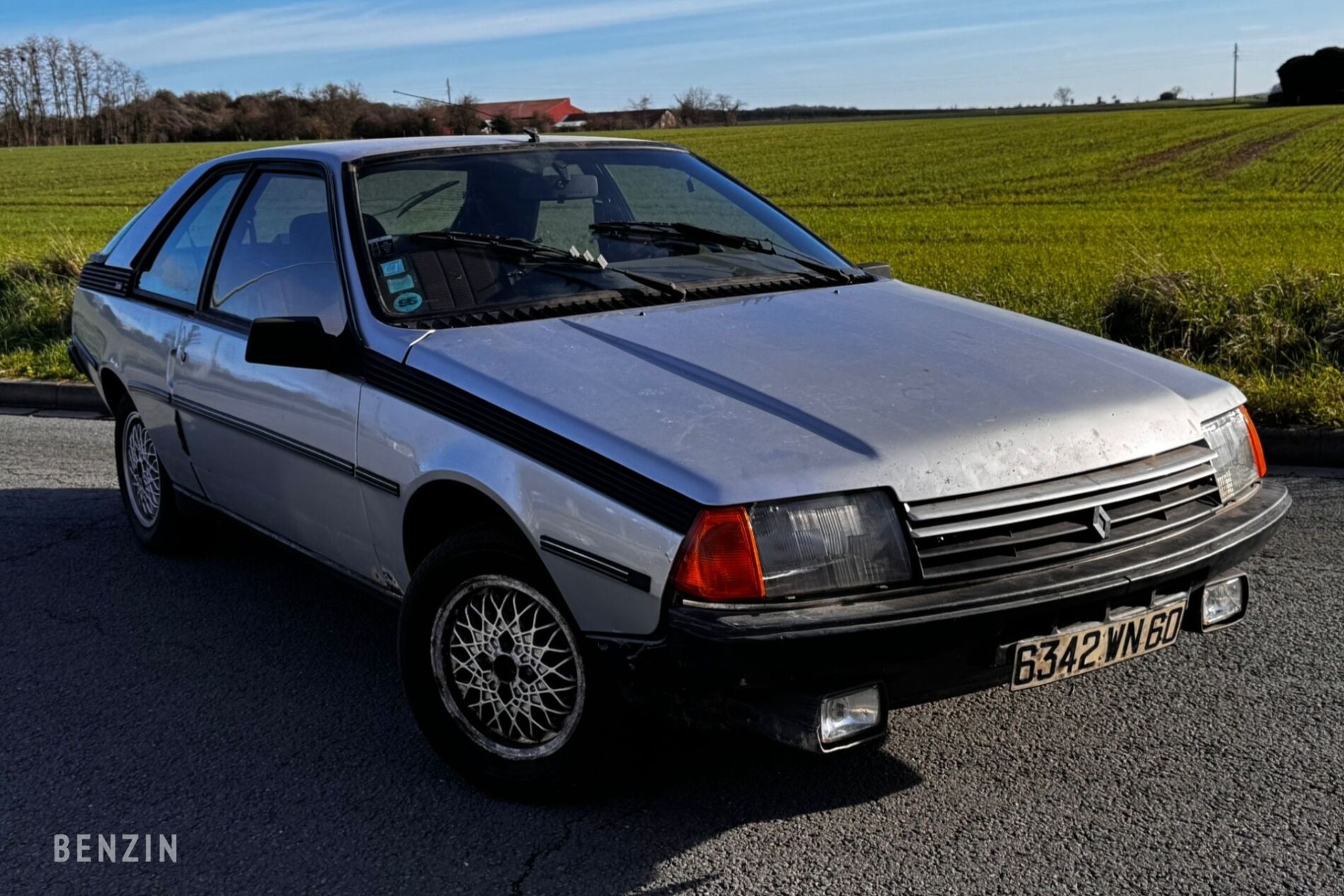
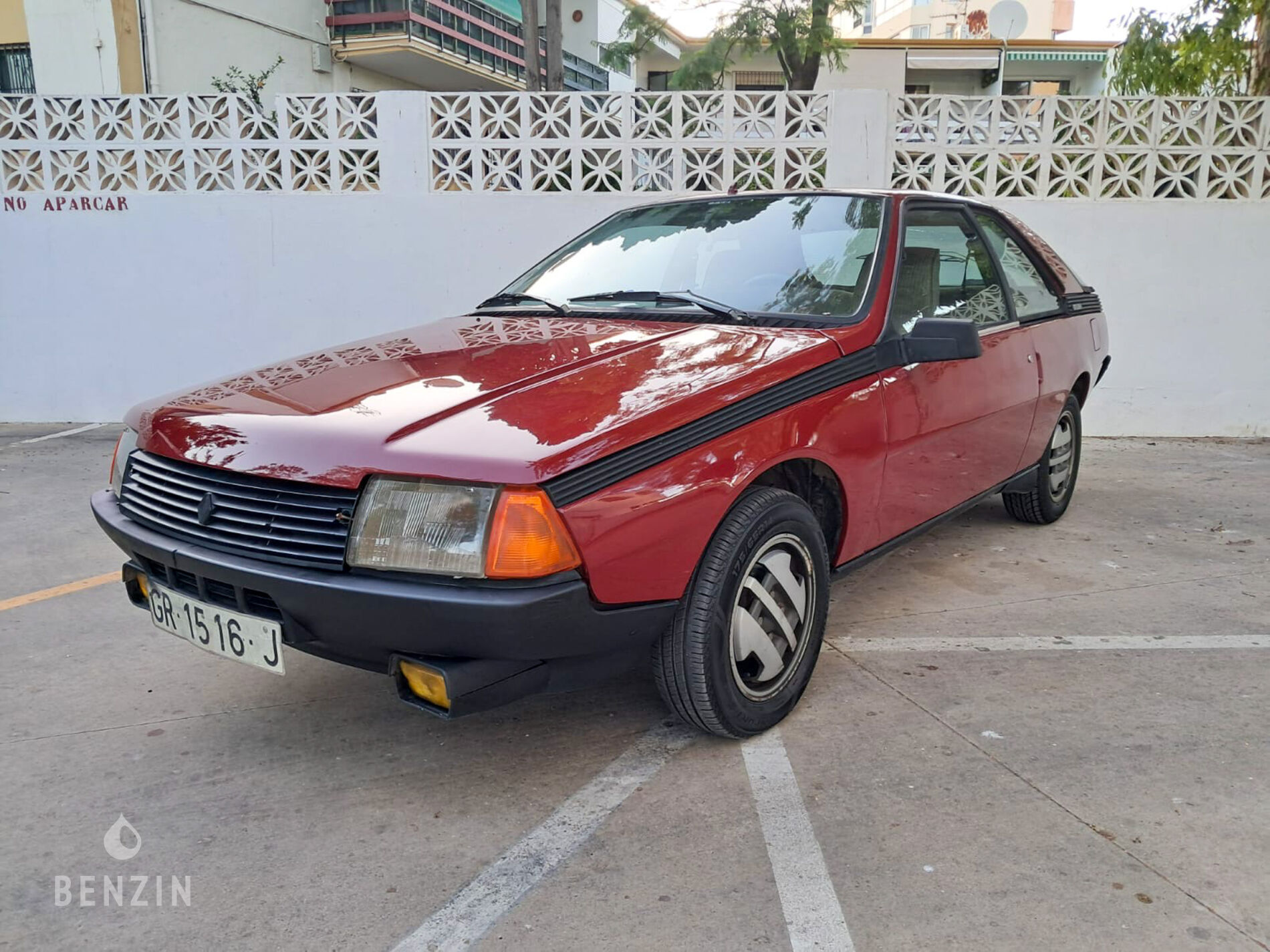
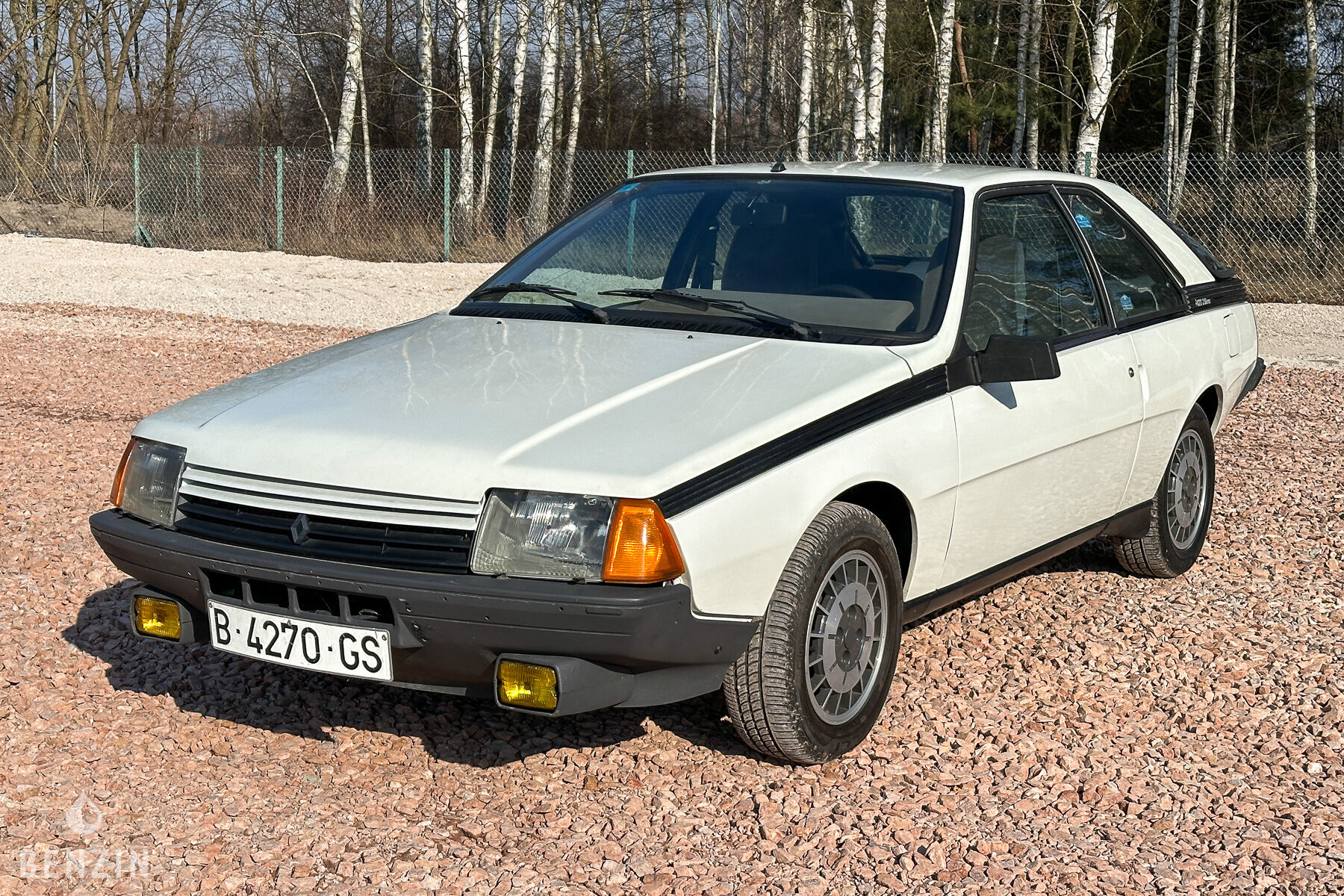
Unveiled at the 1980 Geneva Motor Show, the Renault Fuego replaced the Renault 15 and 17 coupés with a more modern, more aerodynamic and more upscale formula. Its styling is generally attributed to the Renault design team then led by Robert Opron, with the final design signed by Michel Jardin, and its technical base largely derives from the Renault 18, with front-wheel drive architecture and familiar suspension to the dealer network. Produced in Maubeuge for Europe, it first appeared with 1.4- to 2.0-liter petrol engines, in TL, GTL, TS, GTS, TX and GTX trims depending on the market, then with manual or automatic transmission. The Fuego stood out for its large glazed hatchback line, its very 1980s dashboard and equipment that was often generous for a French car in this class. It was also among the first European models widely sold to offer, on some higher-end versions, remote central locking via infrared plip.
Throughout its European career, the range evolved through styling and equipment updates rather than a clear design break, with enthusiasts mainly referring to first and second series. The best-known version on the French market remains the GTX with the 2-liter engine, appreciated for its refinement, while the Fuego Turbo, launched in 1983, became the most powerful in the line-up with its supercharged 1.6-liter engine. Diesel and turbo-diesel versions also existed in some markets, but they are much less sought after today than well-equipped petrol cars. The European career ended in the mid-1980s, but production continued in Argentina until the early 1990s, which explains the presence of South American-origin cars in current listings.
Total production exceeds 260,000 examples across all origins, making it a Renault coupé that is far from rare, even if surviving cars in good condition have become scarce. The Fuego did not build its reputation on a major sporting record, but it still holds a real place in French automotive culture as a high-end popular coupé of the 1980s. Among collectors, the GTX and especially the Turbo attract the most interest, provided they are complete, little modified and structurally sound. Its image has clearly improved among youngtimer enthusiasts, who now appreciate its styling as much as its comfort and the very Renault character of the period.
Technical data
| Feature | Fuego TL 1.4 | Fuego GTX 2.0 | Fuego Turbo 1.6 |
| Production years | 1980-1986 (Europe) | 1980-1986 (Europe) | 1983-1985/1986 depending on market |
| Body | 3-door hatchback coupé | 3-door hatchback coupé | 3-door hatchback coupé |
| Engine(s) | 4-cylinder petrol 1,397 cc | 4-cylinder petrol 1,995 cc | 4-cylinder turbo petrol 1,565 cc |
| Power | approx. 64 hp | approx. 110 hp | approx. 132 hp |
| Transmission | Front-wheel drive, 4- or 5-speed manual gearbox | Front-wheel drive, 5-speed manual gearbox or automatic depending on market | Front-wheel drive, 5-speed manual gearbox |
| Curb weight | approx. 980 kg | approx. 1,080 kg | approx. 1,120 kg |
| 0-100 km/h | approx. 14.5 s | approx. 9.5-10 s | approx. 8.5 s |
| Top speed | approx. 155-160 km/h | approx. 185-190 km/h | approx. 200 km/h |
| Production | More than 260,000 examples in total across all versions and production countries |
Buyer’s guide
For classic-car enjoyment, the GTX is often the best choice: it offers the right engine, an attractive presentation and mechanics that are easier to live with than a Turbo. The Turbo is the most desirable if it is complete and original and properly maintained, but it is also the most sensitive to bodged repairs and incomplete recommissioning. Late-imported or modified cars deserve more checks on their conformity and exact specification.
Points to watch
- Body corrosion : the sills, rear wheel arches, front floors, windscreen scuttle, tailgate surround and jacking points are known trouble spots on European cars that have been left outside; also check suspension mounting points and the condition under the seals.
- Cooling system : on the 2.0 GTX and even more so on the Turbo, any tendency to run hot, push coolant out or build abnormal pressure may indicate a head gasket or cylinder head problem; ask what has been replaced on the radiator side, hoses, thermoswitch and fan.
- Turbocharging : on the 1.6 Turbo, smoke on overrun, lack of power, abnormal whistling or makeshift pressure hoses should raise concern; check turbo play, the condition of the wastegate and the presence of the original specific components.
- Gearbox : manual gearboxes can show worn synchros, especially on 2.0 and Turbo cars if the car has been driven hard; check particularly when cold on 2nd/3rd gear changes and for any rumbling under load.
- Front seat tilt mechanism : the rear-seat access mechanism develops play, goes out of adjustment or breaks over time; this is a recurring issue on coupés that have been heavily used, and trim parts are not always easy to find.
- Cabin electrics : power windows, central locking, infrared plip on the versions concerned, steering-wheel controls and dashboard wiring looms suffer from aging connectors; everything must be tested, because faults are often diffuse rather than spectacular.
- Sunroof and sealing : on well-equipped versions, blocked sunroof drains cause leaks, damaged headliners and localized corrosion at the top of the windscreen frame or in the pillars; check for signs of moisture and repainting around the roof.
- Engine conformity : several Fuego have received a factory exchange unit, an engine from another Renault, or a refit after a long period of inactivity; the consistency between engine type, plate, carburetor or injection depending on version, and repair invoices must be checked.
When buying
On a GTX or a Turbo, it is useful to compare the serial number, engine type and actual equipment with the original specification, because mixed parts are not uncommon. A compression test and a check of the cooling system are particularly relevant on the 2-liter versions and essential on a Turbo that has been left standing for a long time. For a car advertised with very low mileage, successive technical inspections, service books, maintenance stickers and consistency of interior wear matter more than the odometer reading alone.
2 of the 6 Renault Fuego listed on Benzin found a buyer — 33 % of completed sales.
No Renault Fuego is for sale at the moment. Follow the model to be notified as soon as a new one is listed.
Every vehicle comes with a detailed photo report, its history and the public exchanges between seller and community. You bid online; if you win, Benzin secures the payment and supports you through to delivery.
Follow the model from this page and you will get an e-mail as soon as a Renault Fuego is listed on Benzin.
 English
 Français
 Español
 Italiano
 Deutsch
 Polski
 Magyar
