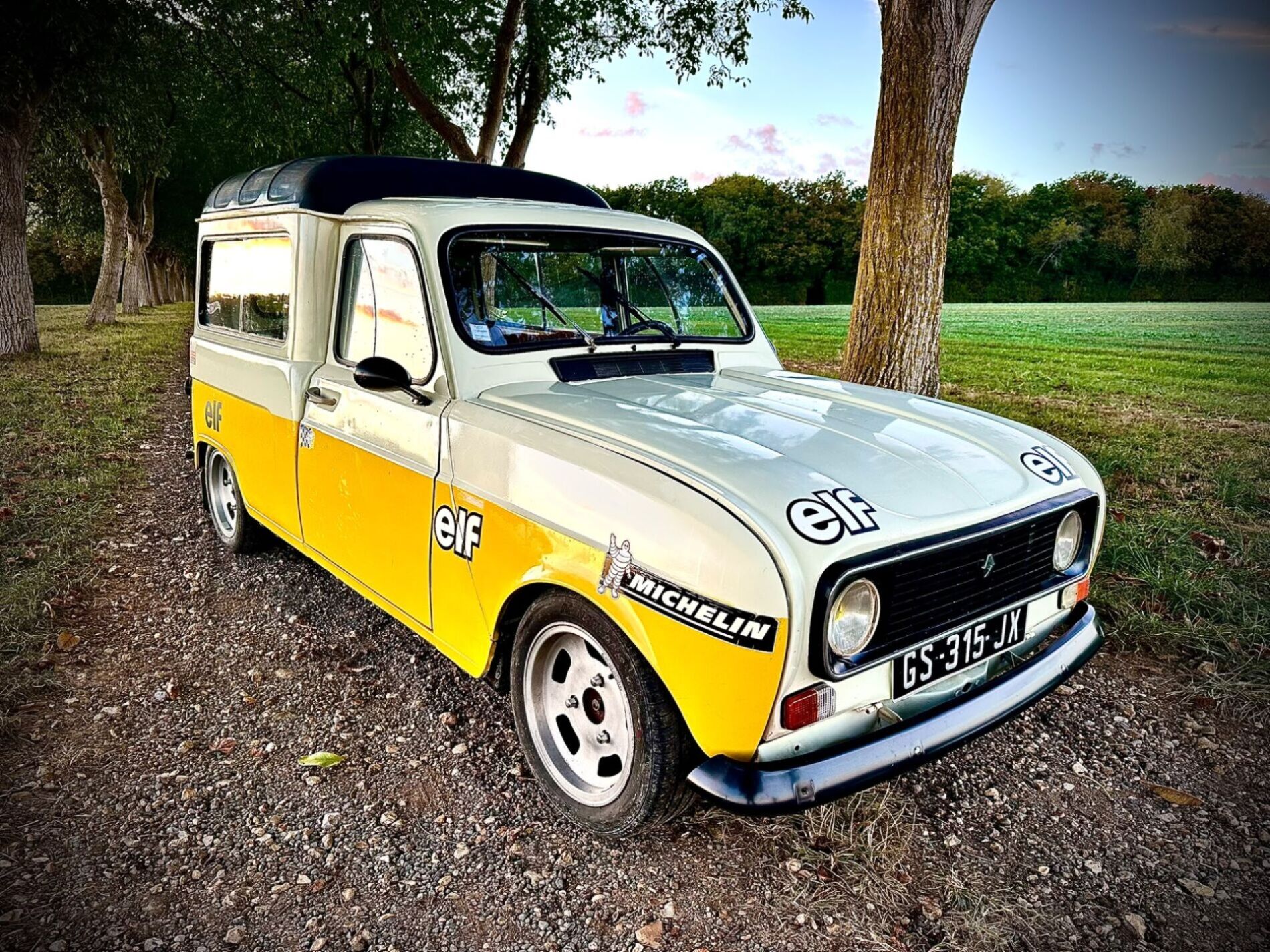
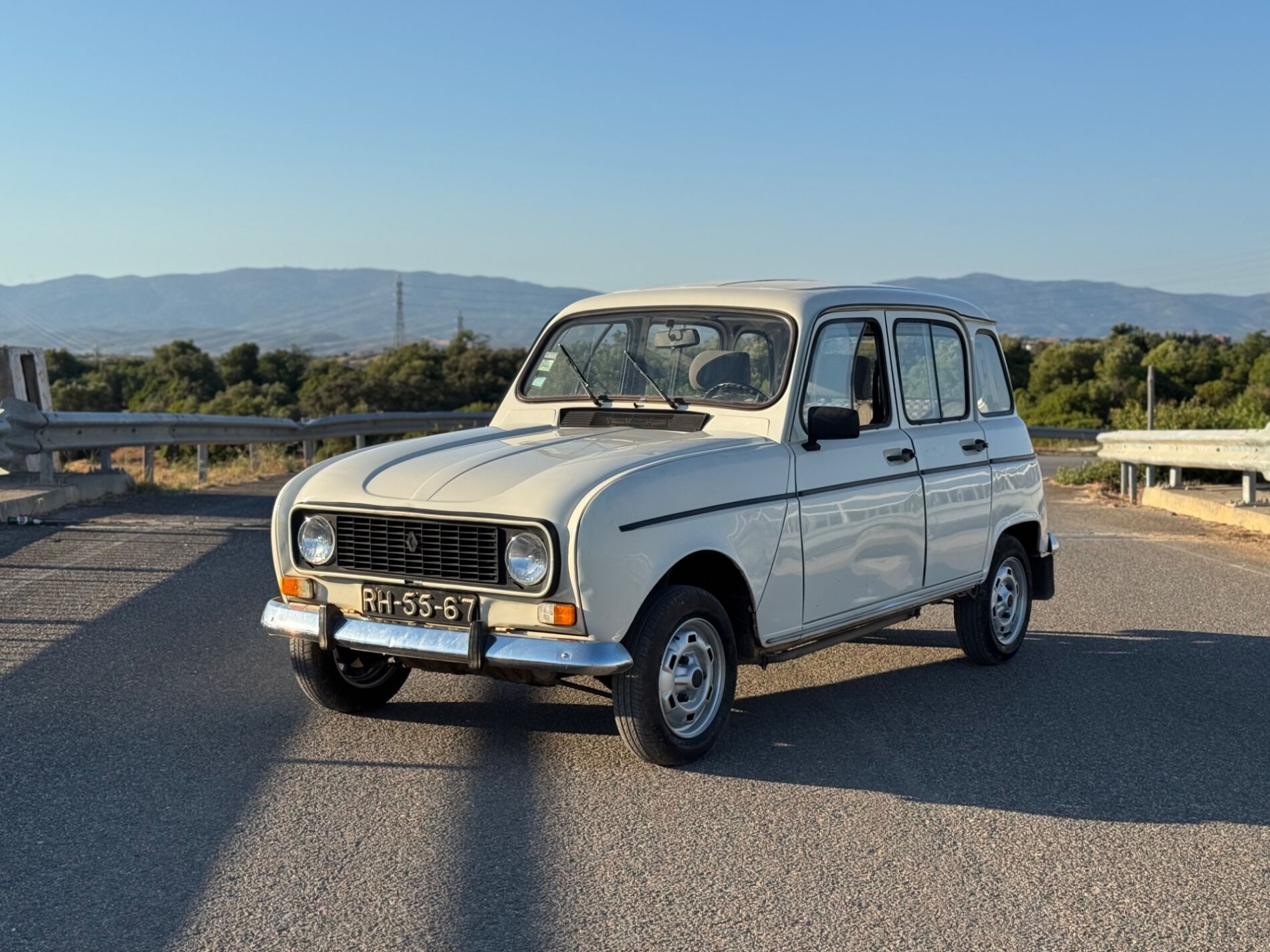
Introduced in the summer of 1961 to replace the 4CV in the popular car segment, the Renault 4 introduced an architecture then new for Renault: front-wheel drive, front longitudinal engine, torsion bar suspension and a tailgate on a very practical monocoque body. Project 112, launched under the impetus of Pierre Dreyfus, aimed to create a simple, versatile and easy-to-build car capable of competing with the Citroën 2CV while offering greater everyday modernity. Its functional lines, attributed to Renault’s design office with input from in-house designers, prioritised interior space, access and load volume above all else. The first R4s received the small 747 cc Billancourt engine, then the range quickly became structured between base, Luxe, Super and van versions. The Renault 4 F4 appeared in the 1960s as a closed light commercial vehicle, later joined by the F6 with an extended wheelbase and increased volume, which became very common among tradespeople and public authorities.
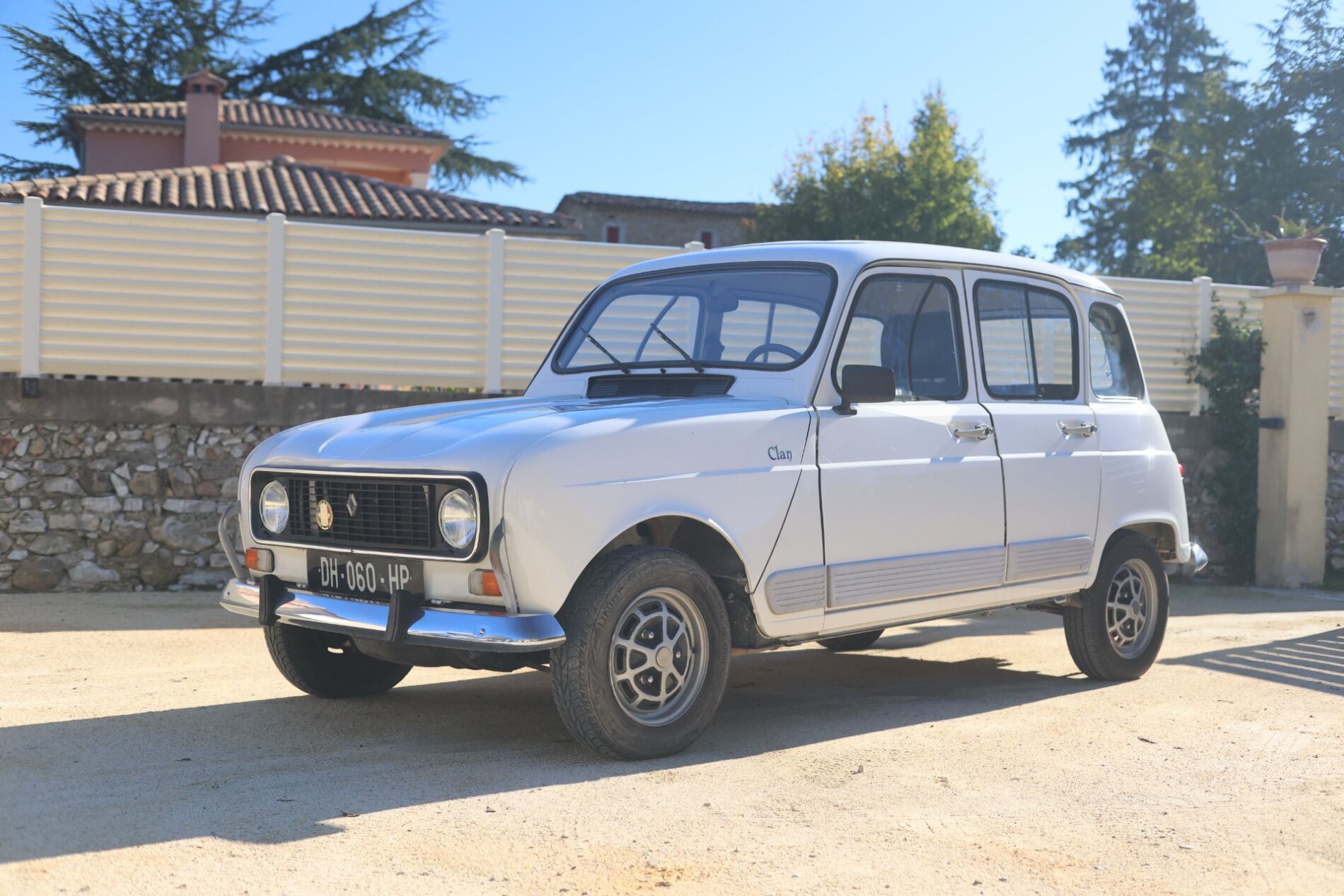
Over its very long career, the Renault 4 evolved in small steps: the move from 6 volts to 12 volts, the gradual adoption of the 845 cc Cléon-Fonte engine on many versions, then the 1108 cc on the GTL and some derivatives, changes to the grille, dashboard, seats and safety equipment. The GTL launched in the late 1970s became one of the best-known variants, with its smoother engine, side protection strips and more upmarket presentation, while special editions such as Parisienne, Jogging, Clan or Savane kept the model appealing at the end of its career. The Sinpar all-wheel-drive version, produced in small numbers, gave the 4L a special place among fans of leisure and light off-road vehicles. Independent conversions such as the open-top JP4 by Car Système also left their mark on enthusiasts’ imaginations, as did the model’s involvement in student and humanitarian rallies, which became a real cultural phenomenon. Produced in France and then in many countries until the early 1990s, the Renault 4 passed the 8 million mark across all versions combined.
Today, the Renault 4 remains highly appreciated for its mechanical simplicity, its network of specialists, the relative abundance of parts and its enduring charm. Collectors mainly seek the earliest versions still in original specification, well-preserved Super models, late GTL/Clan/Savane cars, as well as the F4, F6, Sinpar and JP4, which are much more distinctive. Its popular success also has a downside: many examples have been restored unevenly, making inspection of the chassis and originality particularly important.
Technical data
| Version | Renault 4 / 4L (early series) | Renault 4 TL / GTL / Clan / Savane | Renault 4 F6 |
| Production years | 1961-1968 approximately depending on version | 1970s-1992 depending on version | 1980-1992 |
| Body style | 5-door saloon | 5-door saloon | 3-door van |
| Engine(s) | inline 4-cylinder, 747 cc, Billancourt engine | inline 4-cylinder, 845 cc or 1108 cc depending on version, Cléon-Fonte engine | inline 4-cylinder, 1108 cc |
| Power | around 26 to 32 hp DIN depending on model year | around 34 hp DIN (845) to 34-38 hp DIN (1108 depending on tune and year) | around 34 hp DIN |
| Transmission | front-wheel drive, 3-speed then 4-speed manual gearbox | front-wheel drive, 4-speed manual gearbox | front-wheel drive, 4-speed manual gearbox |
| Kerb weight | around 600 to 650 kg | around 700 to 760 kg | around 790 to 850 kg |
| Top speed | around 100 to 115 km/h | around 115 to 125 km/h | around 110 to 120 km/h |
| Particularities | early versions with Billancourt engine, dashboard and specific details | more refined trim on TL/GTL, sought-after Clan and Savane special editions | extended wheelbase, higher payload than the F4 |
| Production | more than 8 million examples across all Renault 4s, saloons and utility versions |
Buyer’s guide
For relaxed road use, the TL and especially the late GTL/Clan/Savane are generally the most pleasant thanks to the Cléon-Fonte engine, the 4-speed gearbox and a more complete specification. Those seeking rarity will aim for a Sinpar, a well-documented JP4 or a sound F6, while the very first 747 cc cars appeal to purists but require greater vigilance regarding originality and the availability of certain specific details. Cars that are too cosmetically restored but weak in the chassis, or poorly identified conversions, should be avoided as a priority.
Points to watch
- Box-section chassis and platform : structural corrosion is the critical issue on the Renault 4, especially on the side members, master cylinder support, front axle mountings, front floor under the feet and rear crossmembers; inspect underneath on a lift or pit and ask for the exact nature of the repairs if panels have been replaced.
- Sills and body/chassis junction : saloons such as the F4/F6 often rust at the bottom of the rear wings, the bottoms of the doors, the wheel arches and the body mounting points on the platform; check for the absence of thick filler or riveted/welded panels hiding old corrosion.
- Gearbox : on this model with the “trombone” lever on the dashboard, linkage play, synchro crunching and droning are common with age; check the precision of the shift mechanism, the engagement of 2nd and 3rd when hot, and the absence of major leaks from the transaxle.
- Billancourt 747 cc engine : on the early 4L and Super, watch for smoke, uneven compression, timing noise and leaks, especially on cars that have been driven little; ask whether the bottom end and cylinder head have been rebuilt and check that the engine type matches the year to avoid the frequent mix-ups with newer blocks.
- Cléon-Fonte 845/1108 engine : very robust, but it can leak heavily and show a tired cylinder head or a clogged cooling system on GTL, F4 and F6 models; look for mayonnaise, bubbles in the expansion tank, smoke when hot and stable idle after a long test drive.
- Torsion bar suspension : the stance of a Renault 4 is not perfectly symmetrical because of the different left/right wheelbase, but a pronounced sag, knocking noises or an inconsistent ride height can reveal worn mountings, poorly adjusted bars or approximate chassis repairs.
- Braking and hydraulic system : rear wheel cylinders, hoses and the master cylinder age badly on cars that have been left standing for a long time; on a restored car, check whether the system was actually rebuilt and not just bled, especially on utility versions that have been stored.
- Special versions and conversions : on Sinpar models, check for the specific all-wheel-drive components and that they work properly; on JP4s and other open-top conversions, examine the quality of the conversion, the reinforcements, watertightness and the match between the modified body and the documents.
When buying
On a Renault 4, the most useful documents are those that prove structural work: chassis, floorpan, side member, and suspension mount invoices, not just paint or upholstery. Also check that the type mine, chassis number and, on older or restored cars, the engine type match the announced version, as engine swaps were common. For a Sinpar, a JP4, an F4 or an F6, you also need to confirm that the designation on the paperwork matches the vehicle’s actual configuration.
On Benzin a Renault 4 has sold for 5 294 € on average, with a median price of 5 000 €. Based on the 19 sales completed on the platform.
The 19 Renault 4 sold on Benzin changed hands for between 530 € and 16 200 €, depending on condition, mileage and version.
19 of the 36 Renault 4 listed on Benzin found a buyer — 53 % of completed sales.
No Renault 4 is for sale at the moment. Follow the model to be notified as soon as a new one is listed.
Every vehicle comes with a detailed photo report, its history and the public exchanges between seller and community. You bid online; if you win, Benzin secures the payment and supports you through to delivery.
Follow the model from this page and you will get an e-mail as soon as a Renault 4 is listed on Benzin.
 English
 Français
 Español
 Italiano
 Deutsch
 Polski
 Magyar
