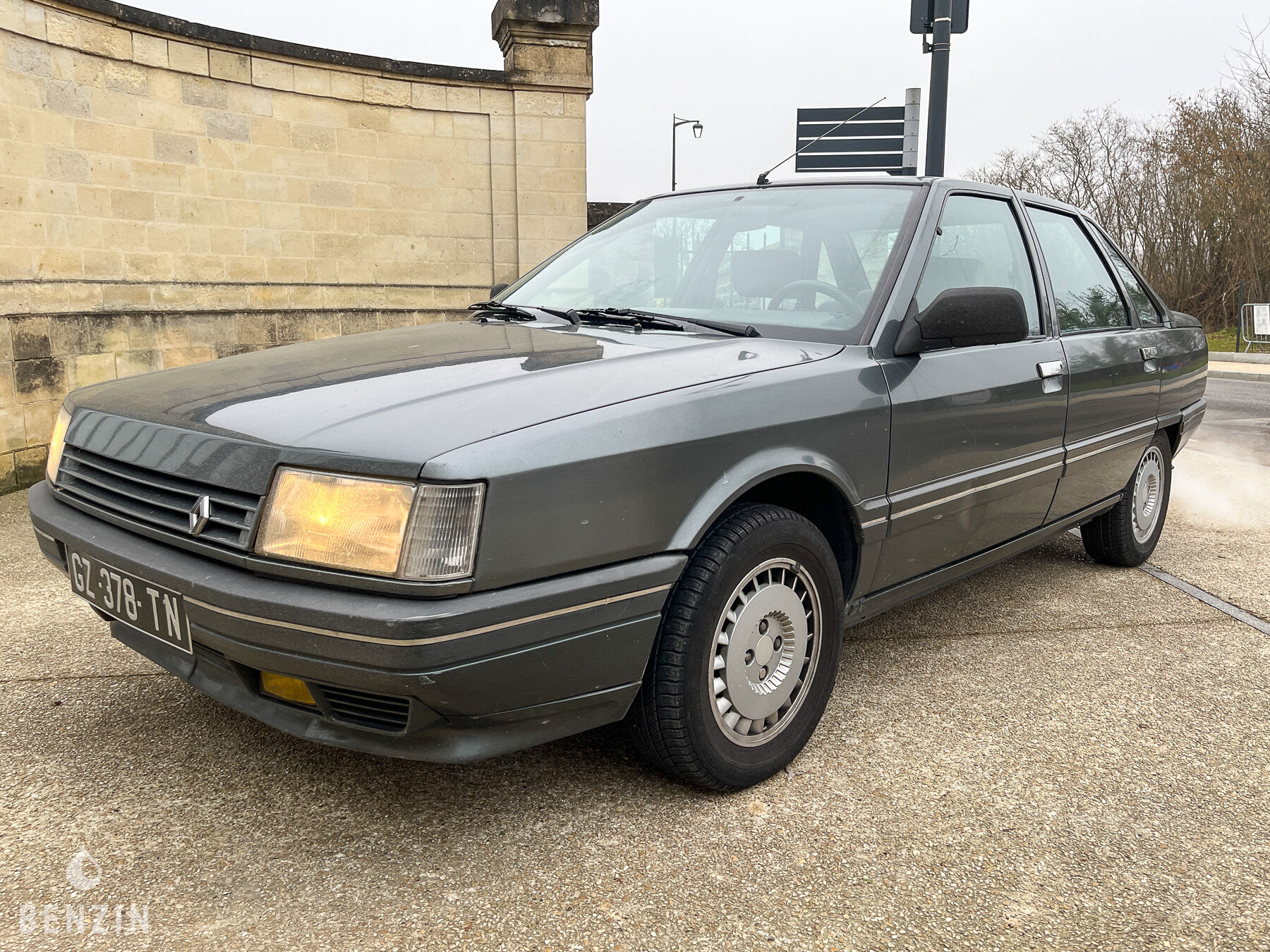
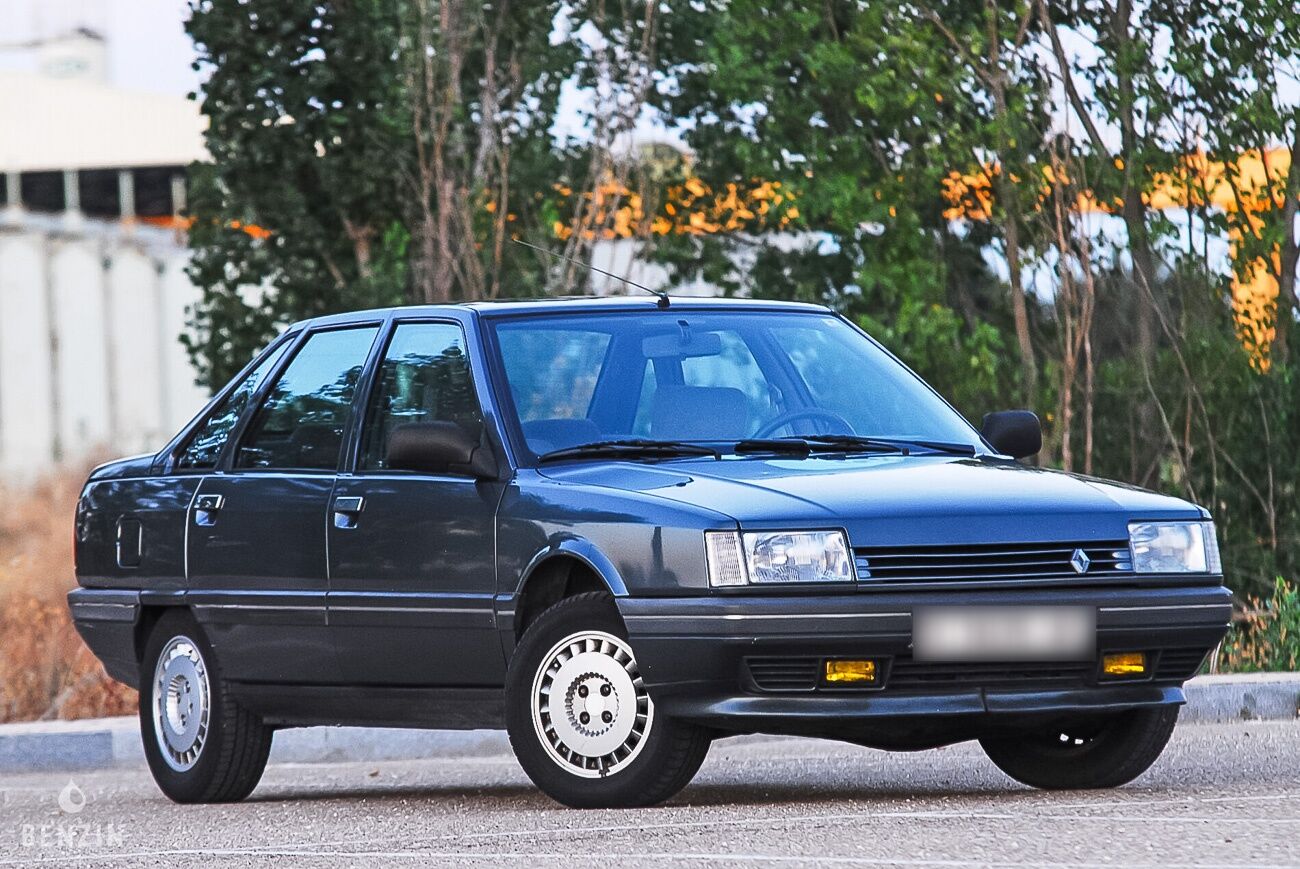
Introduced in spring 1986 to replace the Renault 18 at the upper end of the mainstream range, the Renault 21 had to face the Peugeot 405, Citroën BX and Ford Sierra in the fiercely contested family-car segment. Its sober, highly aerodynamic shape, designed by Renault with input from Italdesign, prioritized interior space and a large trunk over fashion. Technically, the 21 became famous for a rare industrial quirk: depending on the engine, the wheelbase differed slightly, a consequence of the longitudinal layout and the use of blocks from different engine families. The range began with a 4-door sedan, then quickly expanded with the 5-door hatchback and the Nevada estate, especially popular in 7-seat form.
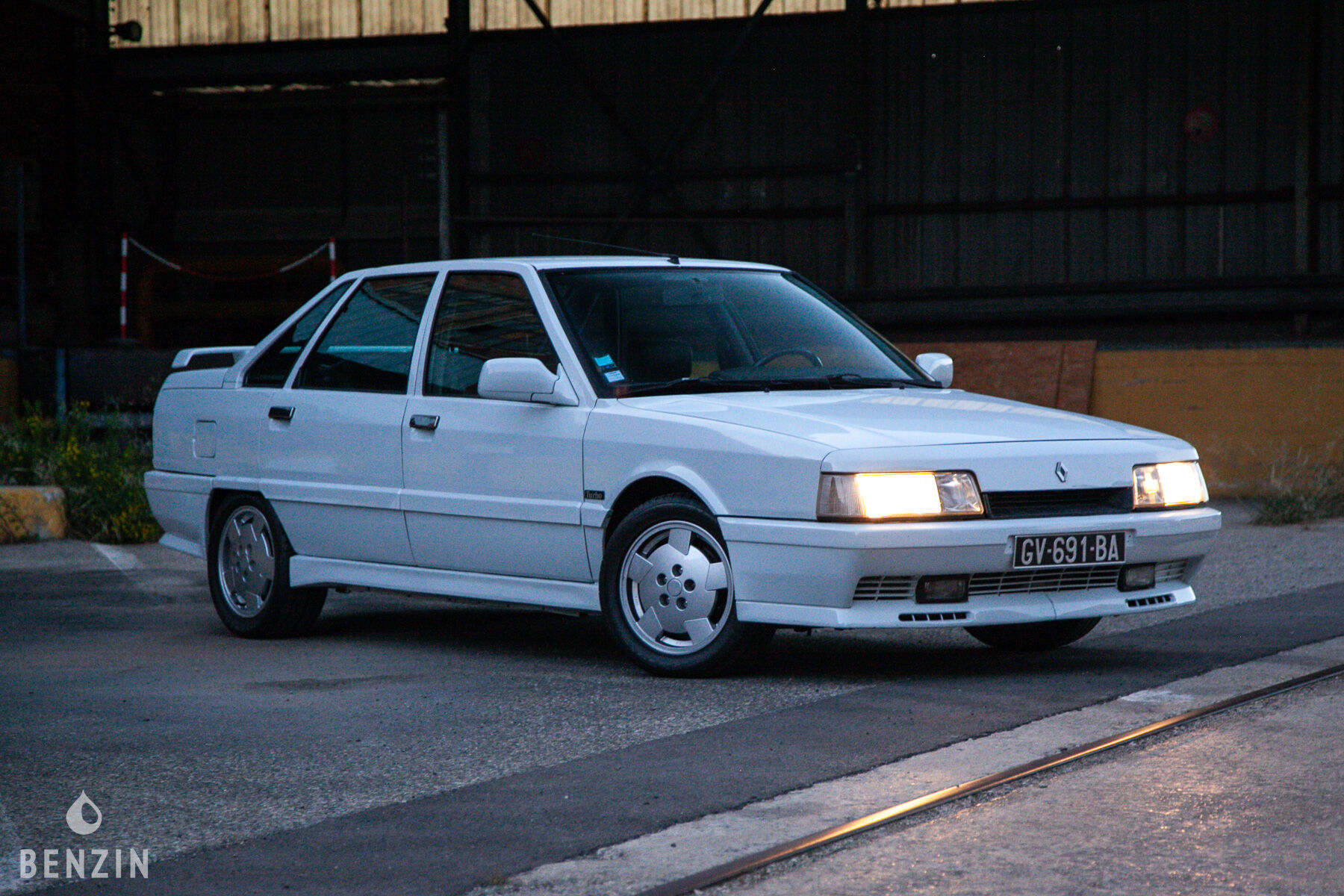
The engines cover a wide range, from the frugal 1.4 and 1.7 petrol units to the 2.0 liters, not forgetting the 2.1 naturally aspirated Diesel and then Turbo-D. The GTS and TXE versions long represented the best of the model for everyday use, with a good balance of comfort, equipment and running costs. In 1989, phase 2 brought a modernized front end, a revised dashboard, rationalized trim levels and, depending on the market, more equipment. At the top sits the Renault 21 2L Turbo launched in 1987, first as front-wheel drive and then as the very rare all-wheel-drive Quadra, a car that became iconic for its performance and for its image as a French executive sedan capable of troubling many more conspicuous sports cars.
The 21 Turbo also made its mark on the French road scene through certain service or intervention vehicles, which explains the lasting appeal of “former government” or rebuilt examples. In competition, the 21 Turbo served as the basis for rally and circuit entries, without building a major factory record but reinforcing a solid reputation for effectiveness. The Renault 21 career ended in 1994, succeeded by the Laguna, after production of more than two million examples across all body styles. Today, enthusiasts mainly seek original Turbos, the very rare Quadra and the fine unmodified GTS or TXE, the latter increasingly appreciated for their authentic 1980s-1990s grand touring character.
Technical data
| Version | 21 GTS | 21 TXE | 21 2L Turbo |
| Production years | 1986-1994 | 1986-1992 | 1987-1994 |
| Body style | 4- or 5-door sedan | 4- or 5-door sedan, sometimes Nevada depending on market | 4-door sedan, then Quadra depending on version |
| Engine(s) | 4-cylinder inline 1,721 cc petrol | 4-cylinder inline 1,995 cc petrol injection | 4-cylinder inline 1,995 cc turbo injection |
| Power | approx. 90 hp | approx. 120 hp | 175 hp on non-catalyzed versions, 162 hp on some catalyzed versions |
| Transmission | Front-wheel drive, 5-speed manual gearbox | Front-wheel drive, 5-speed manual gearbox | Front-wheel drive, 5-speed manual gearbox; all-wheel drive on Quadra |
| Weight | approx. 1,050 kg | approx. 1,100-1,150 kg | approx. 1,250-1,350 kg depending on front-wheel drive or Quadra |
| 0-100 km/h | approx. 12 s | approx. 9.5 s | approx. 7.5-8 s |
| Top speed | approx. 175-180 km/h | approx. 195 km/h | approx. 220-227 km/h |
| Features | Simple and robust family version | Higher trim, often well equipped | Most sought-after version; Quadra very rare |
| Production | More than 2 million examples for the entire Renault 21 range |
Buyer’s guide
The non-catalyzed phase 2 2L Turbo is the most sought after for its lively engine, more polished presentation and iconic status, while the Quadra mainly appeals to connoisseurs able to accept its specific mechanicals. For simpler use, an original GTS or TXE, sound body and properly maintained, is often the best choice. Modified cars, reconfigured as fake “Turbo” cars or former service vehicles without clear traceability should be approached with caution.
Points to watch
- Timing : the absence of a recent invoice is a real warning sign on all engines, especially on the 2.0 liters and Turbo; ask for the date, mileage, possible replacement of the water pump and make sure it is not just a verbal statement from the previous owner.
- Cooling : on the 2L Turbo, the slightest weakness in the radiator, hoses, thermostat or cooling fan can lead to overheating that is poorly tolerated; check gauge stability, the absence of mayonnaise and abnormal pressure in the expansion tank.
- Turbo and forced induction : on the 2L Turbo, forums report tired pressure hoses, seized wastegates and exhaust leaks on the manifold side; during the test drive, look for excessive whistling, flat spots on acceleration, smoke when getting back on the throttle or irregular boost pressure.
- UN1 gearbox and clutch : on Turbo cars driven hard, the synchros, especially 2nd and 3rd, can wear out, and the clutch quickly becomes expensive if everything is not sound; check engagement both cold and hot and ask whether the clutch has already been replaced.
- Quadra transmission : on the rare 4x4s, watch the driveshaft, its bearings, the viscous coupling and the uniformity of the four tires; different or very worn tires can damage the transmission, and the specific parts are much harder to find than on a front-wheel-drive car.
- Structural corrosion : the classic weak points of the 21 are the jacking points, sills, floors, rear suspension mounting points and sometimes the windshield or tailgate surrounds depending on the body style; it is essential to inspect the car on a lift or with clear photos of the underside, because a nice exterior presentation can hide repairs.
- Dashboard and displays : on well-equipped versions, the digital displays, trip computer and some controls can show signs of weakness with missing segments or intermittent lighting; check when hot, at night if possible, and confirm that the original items are present.
- Front axle and steering : the weight of the 2.0 liters and the Turbo wears out ball joints, bushings, top mounts and sometimes the steering rack more quickly, with vague steering or knocking on rough surfaces; on a sporty car or former intervention vehicle, especially check for play and even wear on the front tires.
When buying
On a 21, the parts that really reassure are the invoices for the timing, cooling and, for a Turbo, the clutch, turbo or injection. An inspection of the underside is essential to confirm the condition of the jacking points and sills, and on a Quadra you need to take the time to check the all-wheel drive system with four identical tires. For a former government car or one decorated as such, demand clear administrative traceability and make sure the car is registered as an ordinary passenger car, without any non-compliant equipment retained for road use.
On Benzin a Renault 21 has sold for 4 756 € on average, with a median price of 3 250 €. Based on the 7 sales completed on the platform.
The 7 Renault 21 sold on Benzin changed hands for between 1 360 € and 9 800 €, depending on condition, mileage and version.
7 of the 12 Renault 21 listed on Benzin found a buyer — 58 % of completed sales.
No Renault 21 is for sale at the moment. Follow the model to be notified as soon as a new one is listed.
Every vehicle comes with a detailed photo report, its history and the public exchanges between seller and community. You bid online; if you win, Benzin secures the payment and supports you through to delivery.
Follow the model from this page and you will get an e-mail as soon as a Renault 21 is listed on Benzin.
 English
 Français
 Español
 Italiano
 Deutsch
 Polski
 Magyar
