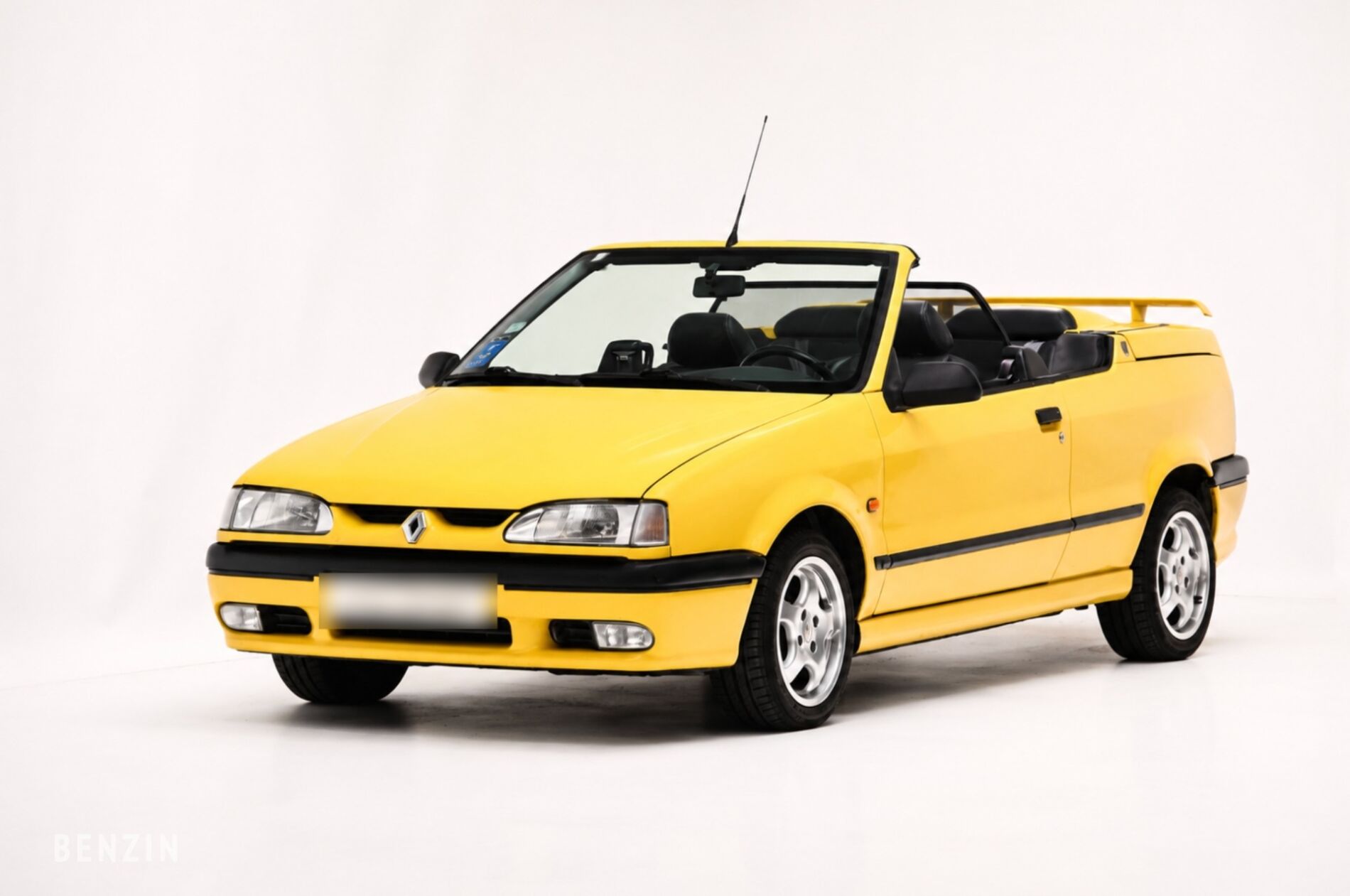
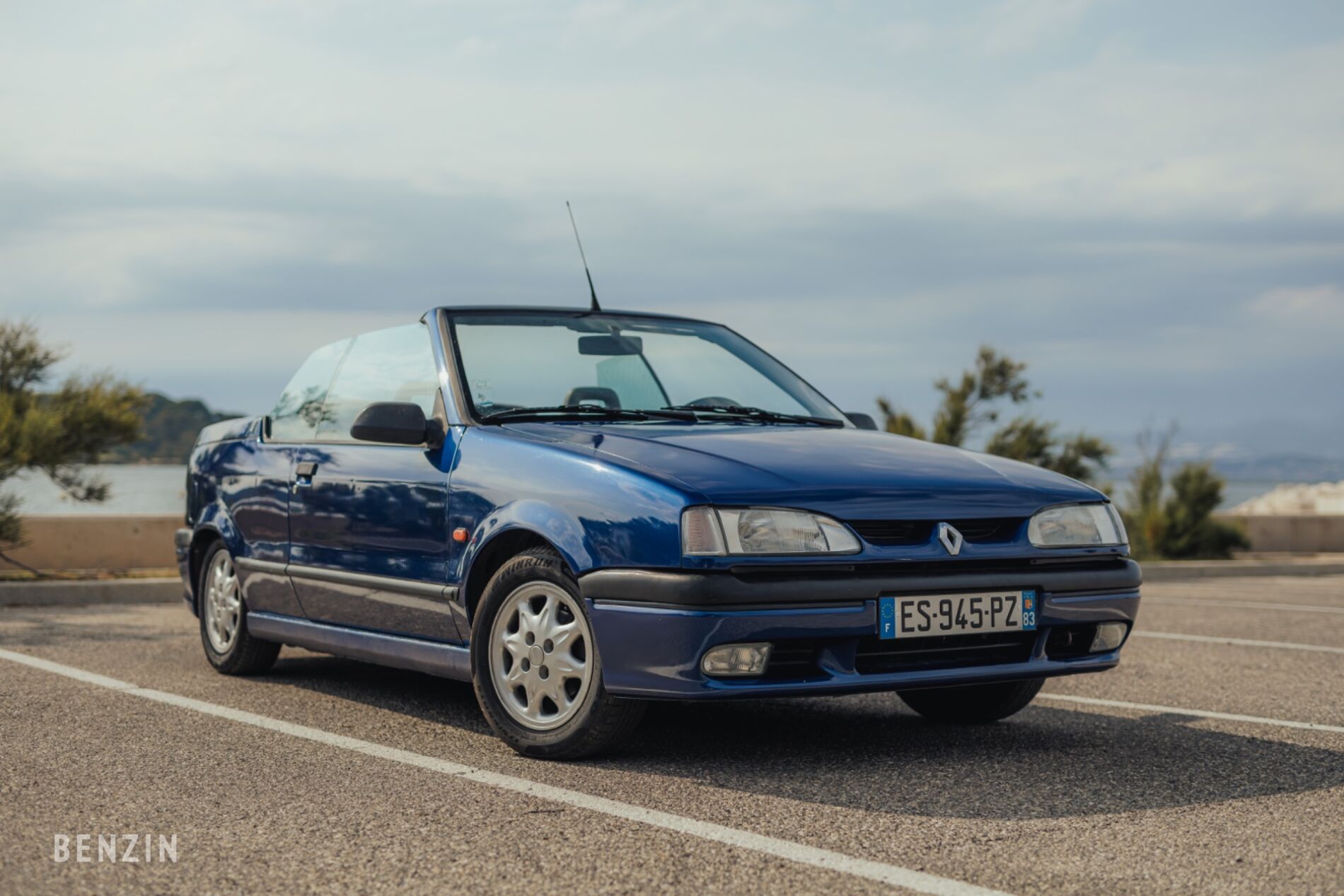
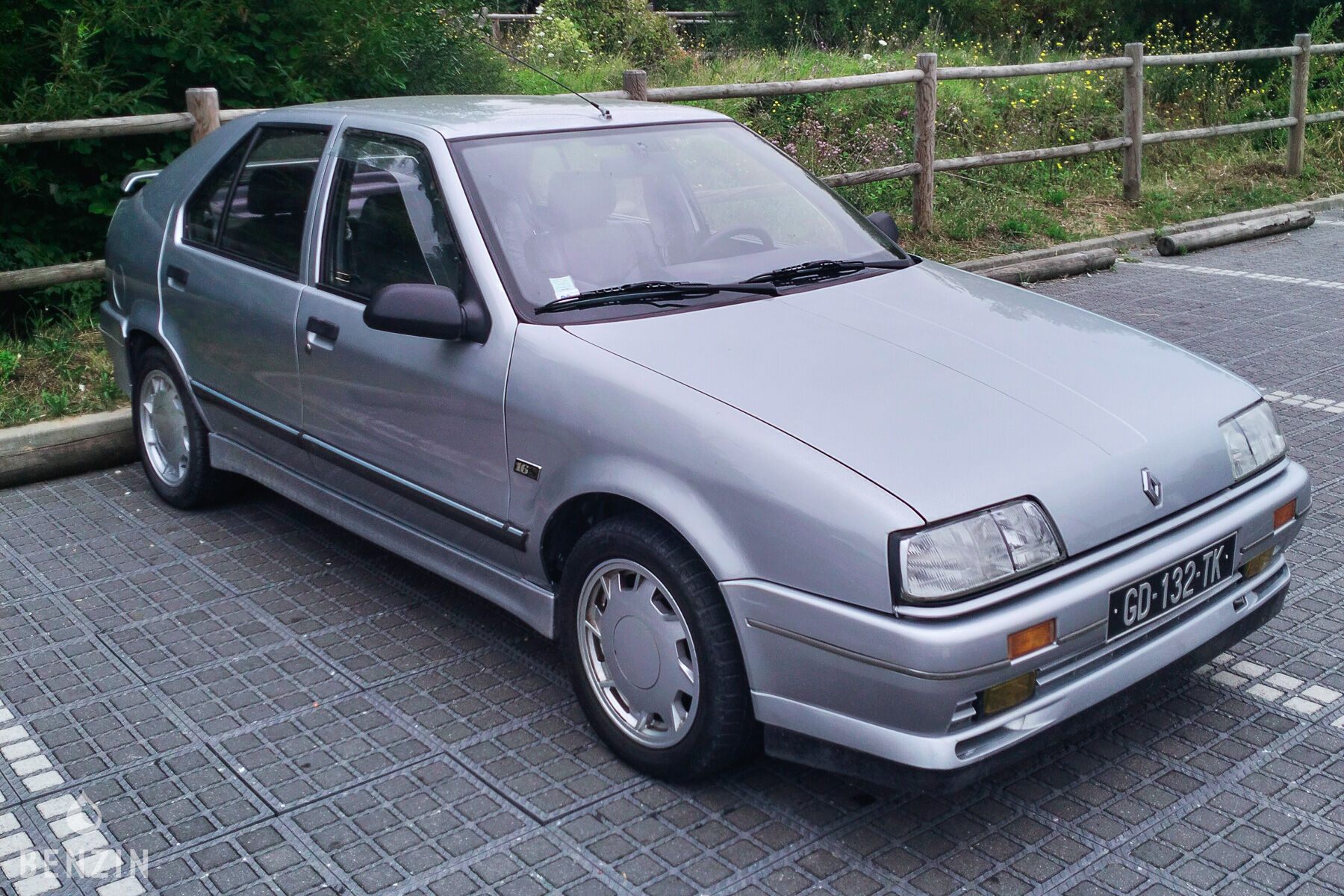
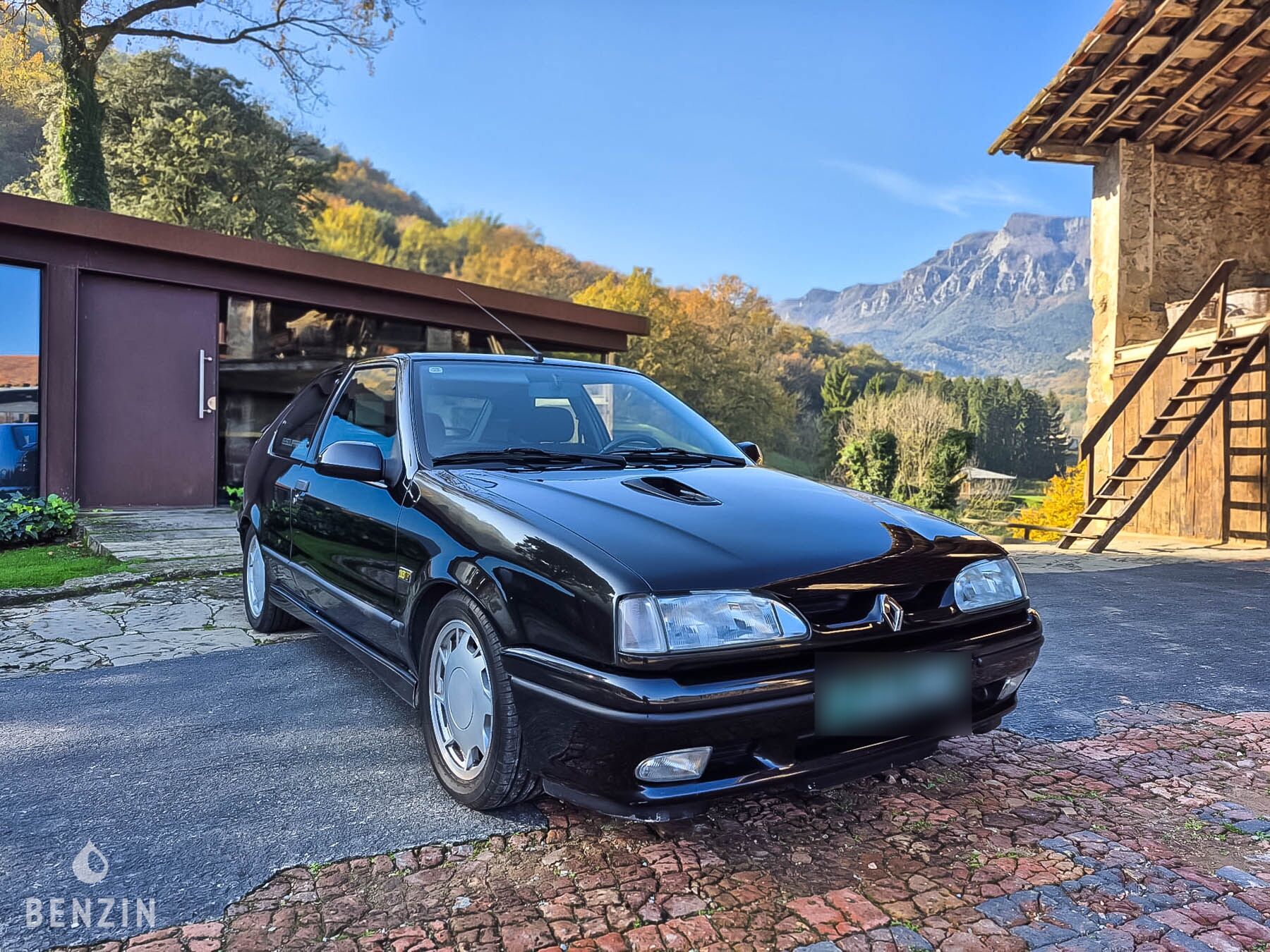
Introduced in 1988 to gradually replace the Renault 9/11, the Renault 19 marks a new stage for Billancourt’s compact range, with a sharper, more restrained design signed under the direction of Giorgetto Giugiaro, then finalized in-house at Renault. It was first launched as a 5-door saloon and 5-door hatchback depending on the market, then as the 4-door Chamade, the sporty 16S and finally as a cabriolet assembled by Karmann. Its career is structured in two main phases: phase 1 from 1988, with angular styling, then phase 2 introduced in 1992 with a softened front end, revised dashboard, modernized equipment and a more upscale presentation. The mechanical range is particularly broad, from modest 1.2 to 1.8-litre “Energy” petrol engines to 1.9 naturally aspirated and turbo diesels, not forgetting the 16S with its 1.8 16-valve engine. The latter, with 140 hp at launch, became the model’s sporting flagship and one of the most notable French cars in the segment at the turn of the 1990s. The cabriolet, unveiled in 1991, uses the phase 1 then phase 2 19 platform, with an elegant specific rear end, a manual or power-assisted soft top depending on the market, and sought-after versions such as the 16S and RSi.
Throughout its career, the Renault 19 also served as the basis for numerous special editions depending on the country and for export-adapted variants, while also giving rise to the first Mégane, which is technically derived from it. In competition, its image remains mainly linked to the 16S in cup racing, regional rallying and the French car culture of young sporty cars of the era, rather than to a major factory program. The 19 was widely sold in Europe and beyond, with more than 5 million examples when different body styles and licensed production are counted, which still explains the good availability of common mechanical parts today. Among enthusiasts, the most followed versions are the 16S, the 16S Cabriolet and, in a different vein, the RSi Cabriolets and preserved TDE diesels for their very 1990s character. Ordinary examples were long neglected, but interest is clearly rising again for original, low-mileage, unmodified cars with sound bodies. Clubs and specialists point out that a good 19 remains a simple, pleasant and light compact car, but one that requires real vigilance regarding corrosion, comfort electrics and certain suspension components.
Technical sheet
| Version | 19 GTS 1.4 | 19 TDE 1.9 | 19 16S / 16S Cabriolet |
| Production years | 1988-1995 depending on markets and trim levels | 1988-1995 depending on markets and trim levels | 1990-1995 for the 16S, 1991-1995 for the 16S Cabriolet |
| Body | 5-door saloon, 4-door Chamade depending on version | 5-door saloon, 4-door Chamade depending on version | 5-door saloon or 2-door cabriolet |
| Engine(s) | 4-cyl. petrol 1,390 cc “Energy” | 4-cyl. diesel 1,870 cc turbo | 4-cyl. petrol 1,764 cc 16-valve type F7P |
| Power | around 80 hp | around 90 hp | 140 hp |
| Transmission | Front-wheel drive, 5-speed manual gearbox | Front-wheel drive, 5-speed manual gearbox | Front-wheel drive, 5-speed manual gearbox |
| Weight | around 950-1,000 kg | around 1,050-1,100 kg | around 1,050 kg (saloon) to 1,150 kg (cabriolet) |
| 0-100 km/h | around 12 s | around 11-12 s | around 8.2 s (saloon) to 9 s (cabriolet) |
| Top speed | around 170 km/h | around 180 km/h | around 215 km/h (saloon) to 205 km/h (cabriolet) |
| Production | More than 5 million examples for the Renault 19 family and close derivatives, depending on the counts used |
Buyer’s guide
For collector use, the 16S phase 1 and phase 2 are the most sought after, the phase 1 for its character and period presentation, the phase 2 for its often more accomplished finish. The best compromise between enjoyment and versatility is often found in the RSi Cabriolet or a structurally sound 16S, while TDE diesels appeal to those who want a very usable car. Modified cars, lowered cars, badly repaired rust cars or electrically bodged examples should be avoided, especially on cabriolets.
Points to watch
- Body corrosion : sills, floors, jacking points, rear wheel arches and rear axle mountings can be attacked, especially on cars that have lived outside and on reinforced cabriolets. You should ask for clear photos of the underbody, side members and jack points, because a 19 can look clean from above and be badly corroded underneath.
- Soft top and cabriolet sealing : worn fabric, tired rear window, leaks into the rear bins and damp carpets are common on Cabriolets. Check the condition of the windshield seals, soft top fixings, proper locking and the absence of water marks in the boot and behind the trim panels.
- Rear axle : as on several Renaults of the period, the arm bearings can develop play and cause abnormal rear camber, with wheels that “tuck in.” On a 19, you need to look at the car’s stance, inner tire wear and ask whether the axle has already been rebuilt or replaced.
- Gearbox : worn synchros, imprecise shifting and leaks are not uncommon, especially on high-mileage cars or those driven hard, including 16S models. During the test drive, check cold engagement of 2nd and 3rd, noises under load and the presence of a clear invoice if the gearbox has been replaced.
- F7P engine in the 16S : the 16-valve does not tolerate poor maintenance, with timing belt age unknown, unstable idle, oil leaks and neglected cooling system. Check the belt date, the absence of mayonnaise or pressure build-up in the expansion tank, and that it pulls cleanly all the way to the top of the rev counter.
- On-board electrics : the central liquid-crystal display fading, temperamental central locking, infrared remote, power windows and various bad contacts are common owner complaints. Everything should be tested, including the display, timed interior light, electric mirrors and boot release.
- Cooling on diesel and petrol models : aging radiators, worn hoses, tired fan or thermostatic switch can lead to overheating, especially on TDE and 16S models. Check that the fan cuts in, the condition of the expansion tank and any old signs of overheating or head gasket replacement.
- Interior and 16S/Cabriolet-specific parts : seats, door cards, wheels, spoilers, lights and trim pieces are becoming harder to find in good condition. Check that the car has kept its correct parts, as many 19s have been mixed with parts from different phases or trim levels.
When buying
On a Renault 19, the most useful documents are the timing belt invoices, any rear axle, gearbox and, for a cabriolet, soft top or seal refurbishment invoices. A lift inspection is particularly important to check the underside, cabriolet reinforcements and axle mountings. On a 16S, a cold start test, a compression check if there is any doubt, and verification that the car is original are better than a flattering service history alone. If the mileage seems inconsistent, it is best to cross-check with old MOTs, interior wear and the dates shown on mechanical work.
On Benzin a Renault 19 has sold for 4 125 € on average, with a median price of 3 375 €. Based on the 8 sales completed on the platform.
The 8 Renault 19 sold on Benzin changed hands for between 250 € and 8 900 €, depending on condition, mileage and version.
8 of the 13 Renault 19 listed on Benzin found a buyer — 62 % of completed sales.
No Renault 19 is for sale at the moment. Follow the model to be notified as soon as a new one is listed.
Every vehicle comes with a detailed photo report, its history and the public exchanges between seller and community. You bid online; if you win, Benzin secures the payment and supports you through to delivery.
Follow the model from this page and you will get an e-mail as soon as a Renault 19 is listed on Benzin.
 English
 Français
 Español
 Italiano
 Deutsch
 Polski
 Magyar
