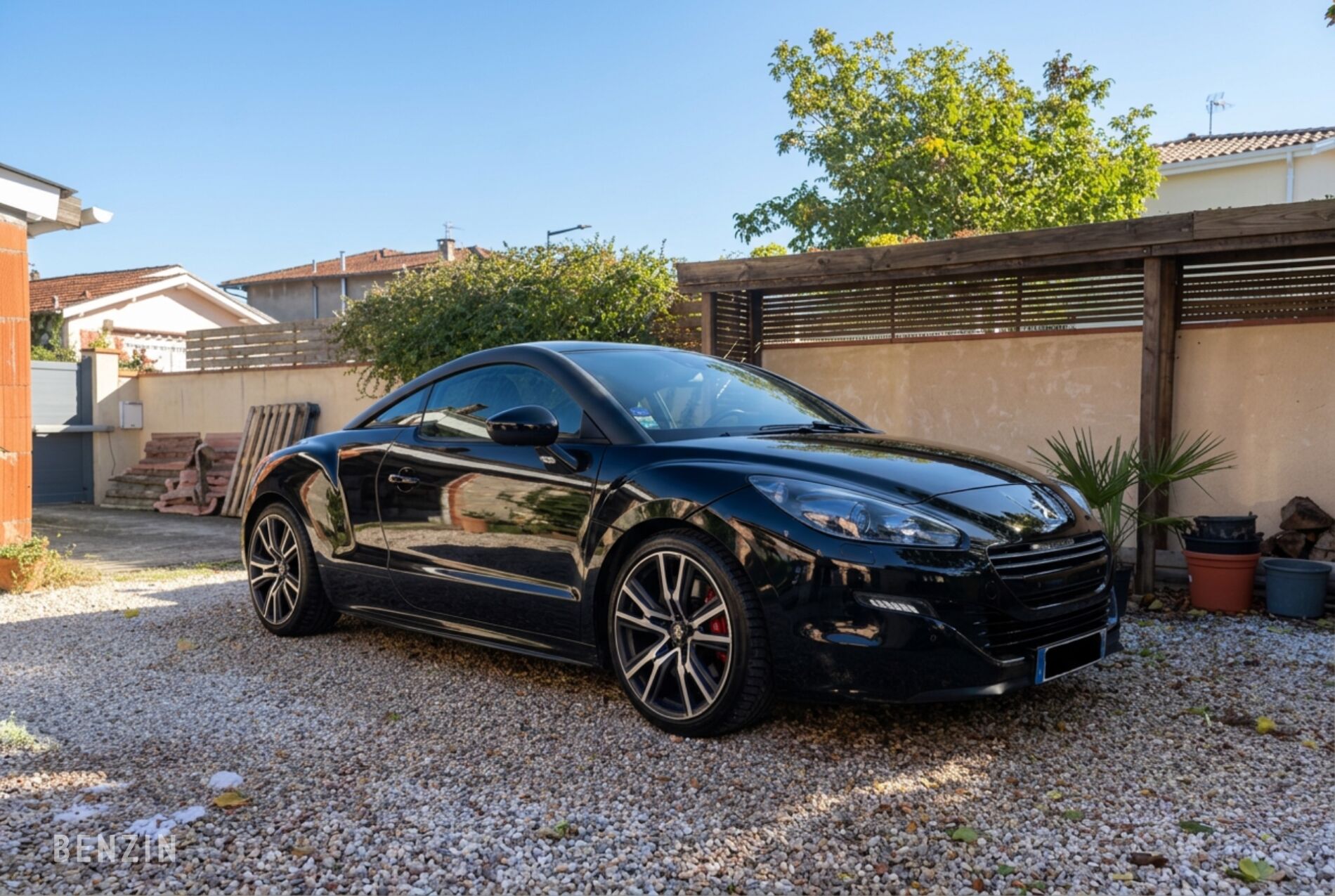
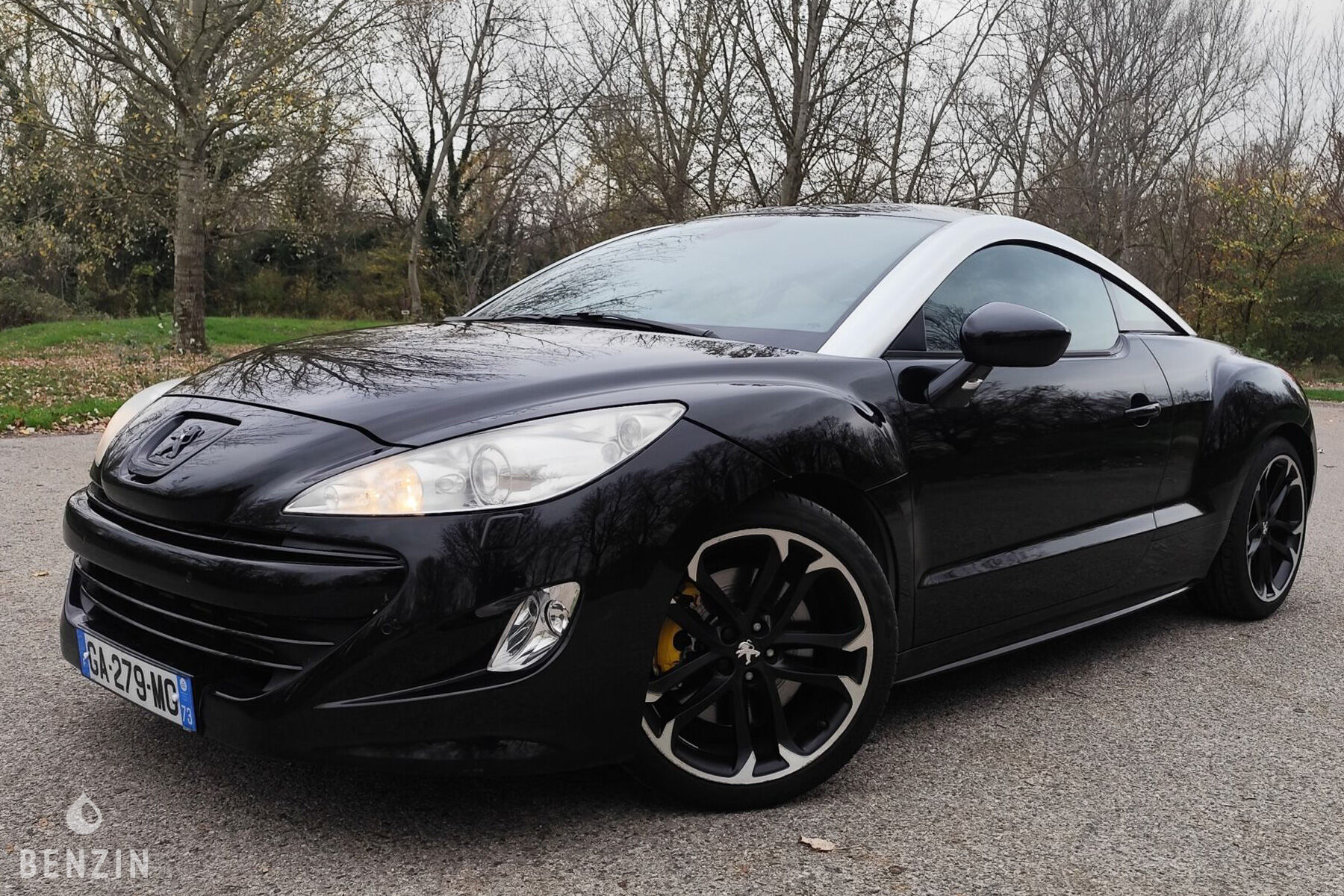
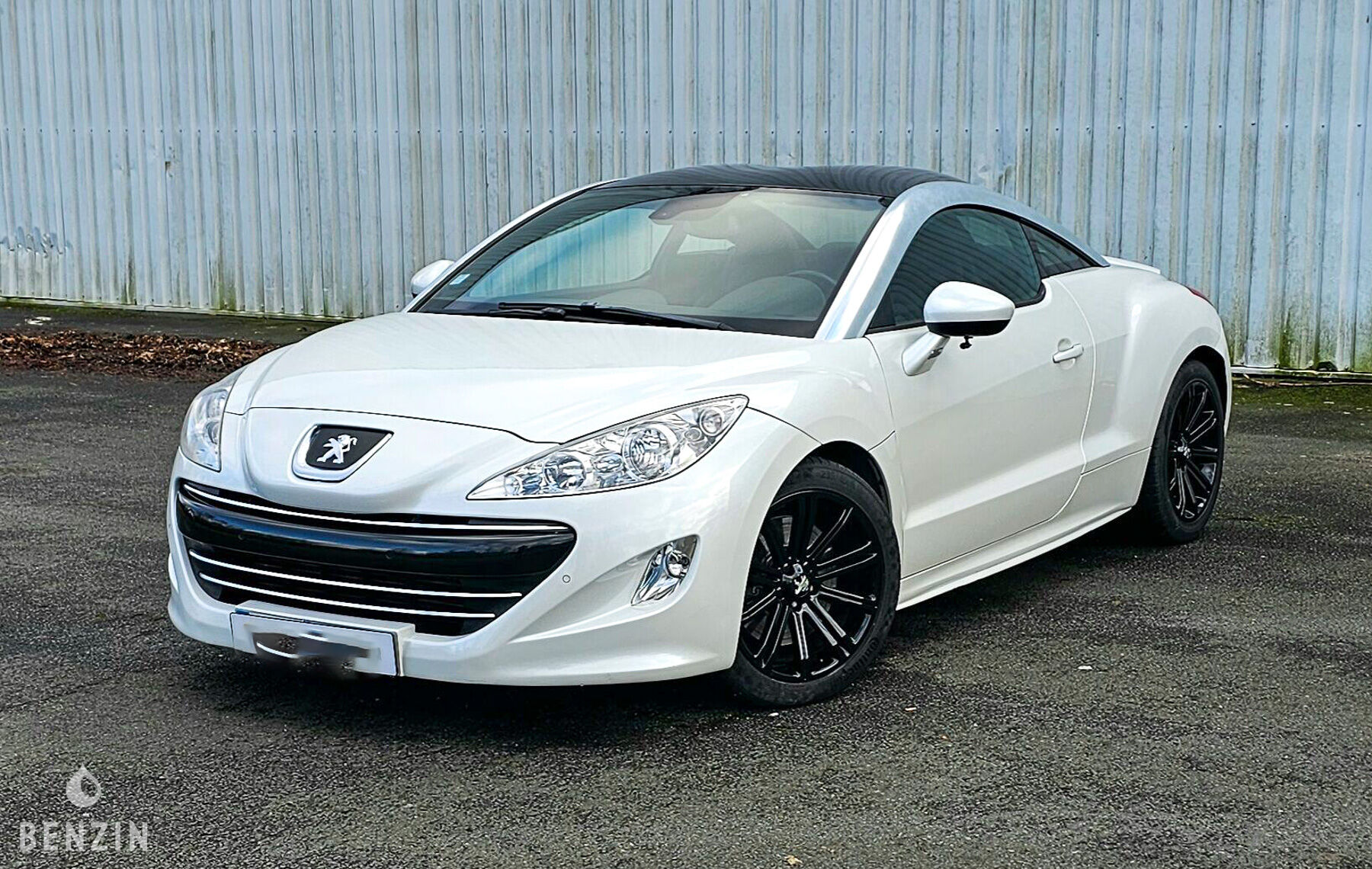
Unveiled as a concept at the 2007 Frankfurt Motor Show, the Peugeot RCZ is one of the brand’s rare production coupés to have remained very faithful to its prototype. Its styling, overseen at the Peugeot design center then led by Gérard Welter, owes much to its double-bubble roof, concave rear window, and aluminum roof arches, elements that give it an instantly recognizable identity. Initially planned under the “308 RCZ” badge, the model ultimately became a standalone car and was simply named RCZ at its launch in 2010. Unlike most Peugeots of the time, it was not assembled in France but by Magna Steyr in Graz, Austria. Technically, it is based on the 308 T7 platform, with a compact front-wheel-drive chassis and a strictly 2+2 layout, with the rear seats remaining symbolic.
The range starts with the 156 hp 1.6 THP, the 200 hp 1.6 THP, and the 163 hp 2.0 HDi, with six-speed manual gearboxes and, depending on the market, an automatic on some later petrol versions. In 2013, the RCZ received a light facelift, most visible at the front, and continued its career with a more modern presentation without changing the original silhouette. The most significant version arrived the same year with the RCZ R, developed with Peugeot Sport, powered by an evolution of the 1.6 turbo raised to 270 hp, fitted with a Torsen differential and a much sharper chassis. Special editions such as Onyx, Asphalt, Brownstone, Red Carbon, and Magnetic marked the car’s career depending on the country and model year, often with specific color and trim combinations.
The RCZ also served as the basis for the RCZ Racing Cup entered in customer racing, which strengthened its sporty image beyond its role as a style coupé. Production ended in 2015, with no direct successor, after a total of just over 68,000 examples. Today, it holds a special place in recent Peugeot history: less radical than a true rear-engined sports car, but far more distinctive than a simple compact derivative. Enthusiasts mainly seek well-maintained THP 200s, diesels for regular use, and of course the RCZ R, already regarded as the collectible versions of the line.
Technical data
| Version | RCZ 1.6 THP 156 | RCZ 1.6 THP 200 | RCZ R 1.6 THP 270 |
| Production years | 2010-2015 | 2010-2015 | 2013-2015 |
| Body style | 2+2 coupé | 2+2 coupé | 2+2 coupé |
| Engine | 4 cyl. 1,598 cc turbo, direct injection | 4 cyl. 1,598 cc turbo, direct injection | 4 cyl. 1,598 cc turbo, direct injection |
| Power | 156 hp | 200 hp | 270 hp |
| Torque | 240 Nm | 275 Nm | 330 Nm |
| Transmission | Front-wheel drive, 6-speed manual gearbox | Front-wheel drive, 6-speed manual gearbox | Front-wheel drive, 6-speed manual gearbox, Torsen differential |
| Curb weight | approx. 1,280 kg | approx. 1,355 kg | approx. 1,355 kg |
| 0-100 km/h | approx. 8.3 s | approx. 7.5 s | approx. 5.9 s |
| Top speed | 212 km/h | 237 km/h | 250 km/h |
| Total production of the model | Just over 68,000 examples across all versions |
Buyer’s guide
The best compromise is often the THP 200, especially in phase 2, which offers strong performance without the running costs of an RCZ R. The RCZ R is the most desirable and most accomplished version dynamically, with an engine that is better sorted than the early THP units, but you have to accept higher consumable costs. The early THP 156 and 200 can be very good cars if the known weaknesses of the 1.6 turbo have been addressed, but they are also the ones that need the most careful inspection.
Points to watch
- Timing chain and tensioner : rattling on cold start, timing faults, or engine warning light on early 1.6 THP engines, especially before the tensioner updates; ask whether the timing chain/tensioner kit has already been replaced and absolutely listen to a cold start.
- Water pump and thermostat housing : coolant leaks, sweet smell, white traces, or a dropping level on THP engines; this is a classic issue on the model and you should check replacement invoices rather than relying on a simple regular top-up.
- Oil consumption : frequent top-ups between oil changes on some 1.6 THP engines, sometimes linked to urban use, an oil separator, or turbo wear; ask the owner precisely how much was added and check for the absence of smoke on acceleration.
- Turbo and oil supply : abnormal whistling, lack of boost, limp mode, or noticeable play on high-mileage THP engines; check the condition of the turbo, the presence of replacement invoices, and the regularity of oil changes, which is crucial on this engine.
- Intake and direct injection carbon buildup : rougher idle, loss of punch in the mid-range, misfires or ignition faults on petrol engines; forums report clogged valves and sensitive coils/spark plugs, especially on cars that are driven little or used for many short trips.
- Frameless windows and window regulators : jerky lowering/raising, window that no longer indexes properly when the door is opened, or poor sealing; the issue comes from the mechanism, the calibration, or the end-stop sensors, and it is fairly common on RCZ.
- Retractable rear spoiler : irregular operation in automatic or manual mode, mechanism noise, error message; check its movement on command and while driving, as the motorization system and its sensors wear over time.
- DPF and Eolys additive on 2.0 HDi : anti-pollution warning, frequent regenerations, loss of power on diesel versions; check whether the additive tank has been refilled according to mileage and whether the DPF has already been cleaned or replaced.
When buying
On a petrol RCZ, the invoices that really matter concern the timing system, the water pump/thermostat, the spark plugs and coils, and any work on the turbo or intake decarbonization. A diagnostic scan is very useful to read stored faults, check for misfires, timing deviations and, on diesel versions, the condition of the DPF/additive system. You should also test the car cold and then hot, check that the windows index correctly, and test the active rear spoiler, two details very specific to the model.
On Benzin a Peugeot RCZ has sold for 11 048 € on average, with a median price of 9 000 €. Based on the 13 sales completed on the platform.
The 13 Peugeot RCZ sold on Benzin changed hands for between 6 600 € and 23 200 €, depending on condition, mileage and version.
13 of the 16 Peugeot RCZ listed on Benzin found a buyer — 81 % of completed sales.
No Peugeot RCZ is for sale at the moment. Follow the model to be notified as soon as a new one is listed.
Every vehicle comes with a detailed photo report, its history and the public exchanges between seller and community. You bid online; if you win, Benzin secures the payment and supports you through to delivery.
Follow the model from this page and you will get an e-mail as soon as a Peugeot RCZ is listed on Benzin.
 English
 Français
 Español
 Italiano
 Deutsch
 Polski
 Magyar
