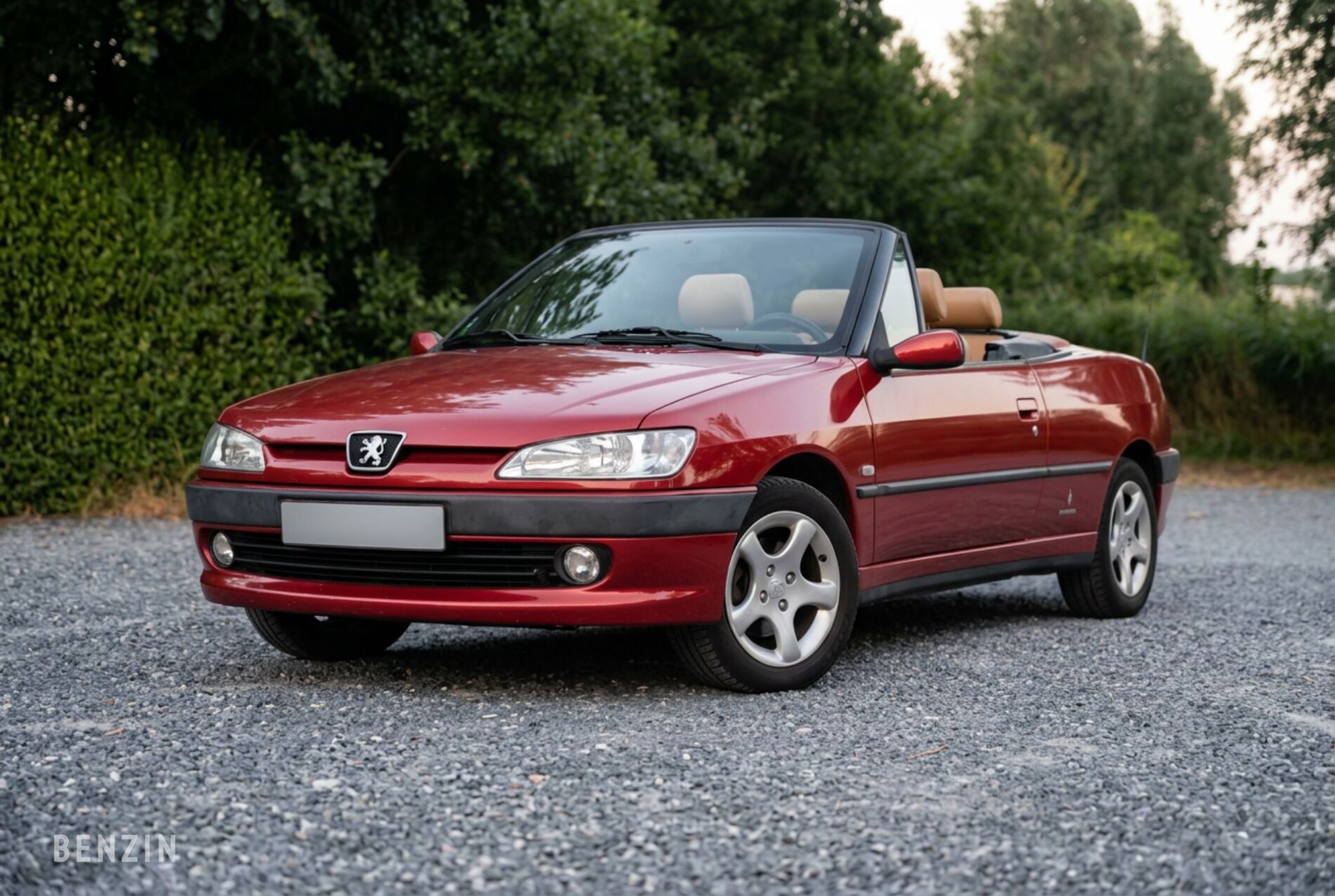
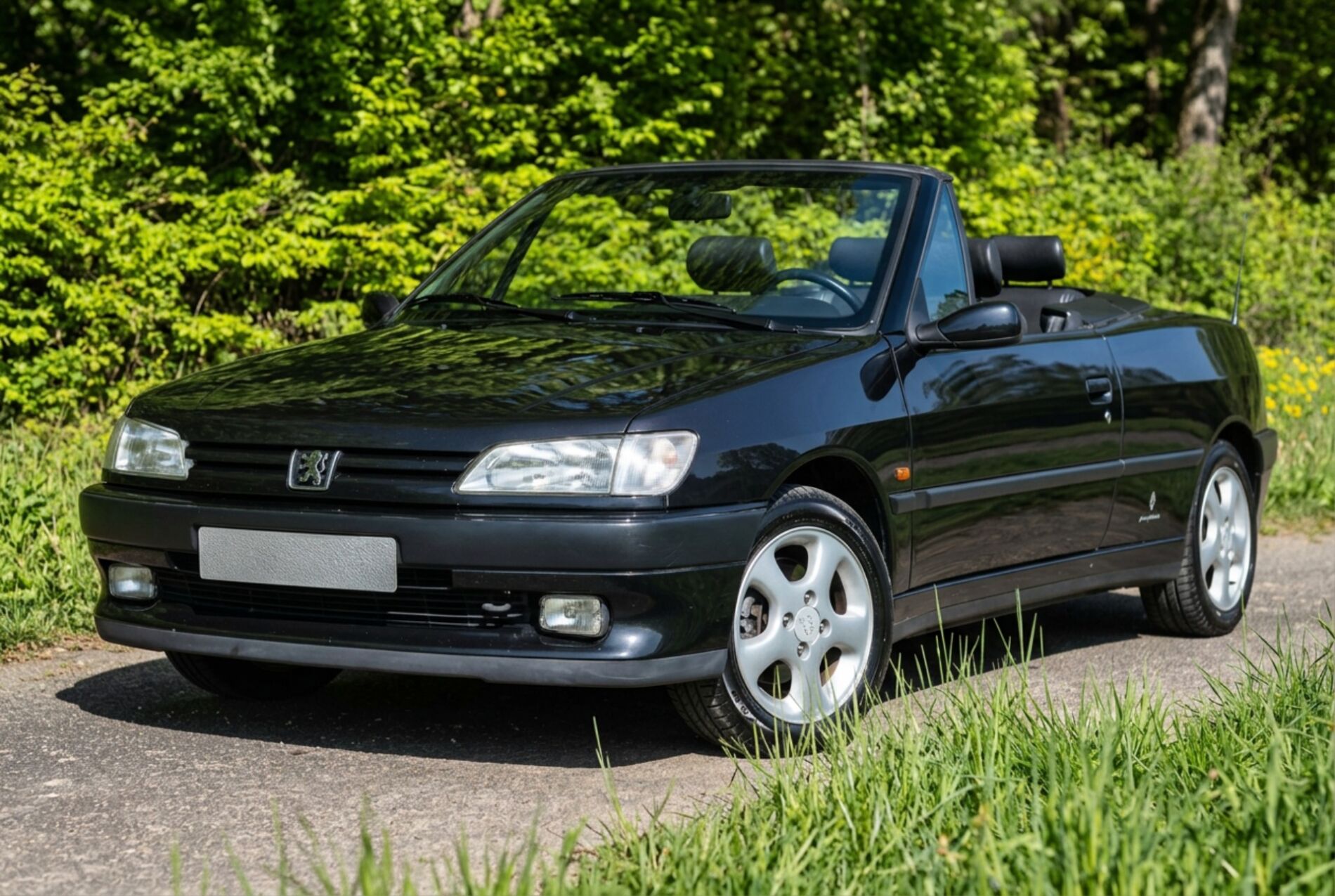
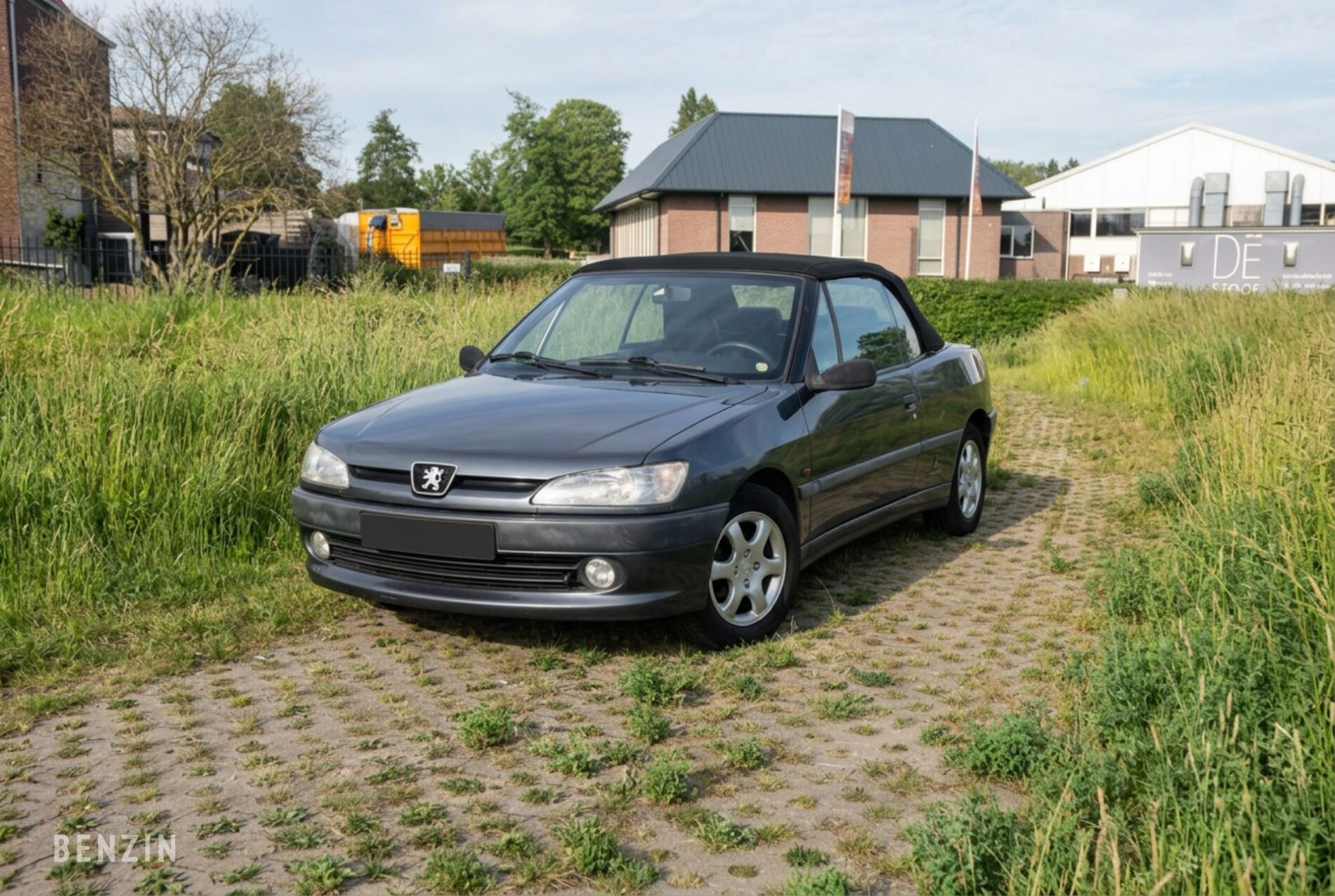
Introduced in 1994, the Peugeot 306 Cabriolet is derived from the 306 saloon launched the previous year, but it is not simply an improvised open-top version. Its lines were designed by Pininfarina, which also handled assembly, explaining its particularly balanced proportions and specific finish compared with mass-produced 306s. With its very pure profile, short rear end and well-integrated tonneau cover, it quickly established itself as one of the most elegant mainstream cabriolets of the 1990s. The launch initially featured petrol engines from the XU family, notably the 2.0-liter 8-valve, then the range expanded depending on the market with more accessible versions and, later, 16-valve engines. In France, enthusiasts mainly remember the 2.0 and 2.0 16V, which better suit the car’s weight and road-going purpose. The car received the 306 phase 2 updates in 1997, then the phase 3 updates in 1999, with a modernized front end, revised interior presentation and updated equipment.
The range thus covered several faces of the model: 1.6 at the end of its career, 1.8 and 1.8 16V depending on year and market, 2.0 8-valve, then 2.0 16V with 135 hp, the latter being the most sought after for its superior refinement without betraying the cabriolet spirit. The soft top is a true centerpiece of the model, with a sophisticated mechanism and, on many examples, an electro-hydraulic control system that today contributes as much to its charm as to the points to watch when buying. The 306 Cabriolet did not have a notable sporting career, but it marked its era through its design and a road behavior quality rare in the segment, benefiting from the excellent 306 chassis. Production continued until the early 2000s, with total output of a little over 75,000 examples. Long underestimated, it is now regarded as one of the most beautiful modern French cabriolets, with real appeal among youngtimer enthusiasts.
Collectors today favor cars that remain original, with original interiors, a soft top in good condition and full operation of the windows and roof system. Later examples, better equipped and often better preserved, have their audience, while early versions appeal through the purity of their design and certain upholstery combinations that have become rare.
Technical data
| Version | 306 Cabriolet 1.6 | 306 Cabriolet 1.8 16V | 306 Cabriolet 2.0 16V |
| Production years | approx. 1997-2002/2003 | approx. 1997-2001 | approx. 1997-2002 |
| Body | 2-door cabriolet, 4 seats | 2-door cabriolet, 4 seats | 2-door cabriolet, 4 seats |
| Engine | 4-cylinder inline petrol, 1587 cm³ | 4-cylinder inline petrol, 1761 cm³, 16 valves | 4-cylinder inline petrol, 1998 cm³, 16 valves |
| Power | 88 hp | 112 hp | 135 hp |
| Transmission | front-wheel drive, 5-speed manual gearbox | front-wheel drive, 5-speed manual gearbox | front-wheel drive, 5-speed manual gearbox |
| Curb weight | approx. 1230 kg | approx. 1250 kg | approx. 1270 kg |
| 0 to 100 km/h | approx. 12.5 s | approx. 11 s | approx. 10 s |
| Top speed | approx. 180 km/h | approx. 195 km/h | approx. 205 km/h |
| Production | a little over 75,000 examples across all versions |
| Assembly | Pininfarina, Italy |
Buyer’s guide
The best compromise is often the 1.8 16V, lively enough, lighter at the front than the 2.0 16V and generally less stressed. The 2.0 16V is the most desirable version for enthusiasts, while the 1.6 suits leisurely use but can feel a bit underpowered in this reinforced cabriolet. The cars to avoid are mainly those whose soft top has been bodged, disabled or converted to manual operation without clear documentation.
Points to watch
- Electro-hydraulic soft top : incomplete cycle, temperamental closing or operation only by hand on many older examples; the rams, pump, hoses and especially the mechanism micro-switches are involved; check a full opening and closing, without manual assistance and without hydraulic oil leaks in the boot or behind the trim panels.
- Rear quarter windows : they easily go out of adjustment and no longer fit the soft top or door windows properly; the fault shows up as wind noise, leaks or incomplete raising; check alignment on both sides and the seal around the quarter window.
- Rear window and fabric : on cars that have spent a long time outdoors, the rear window can yellow, crack when folded, or come unglued, and the fabric seams wear; inspect the corners, pronounced folds and the fabric/rear-window joint, a point often mentioned by owners.
- Rear axle : as on other 306s, the rear axle arm bearings wear out; visible negative camber, a sagging rear end or squeaks are typical; ask whether the axle has already been rebuilt, as the cabriolet is heavier than a saloon.
- Airbag warning light : a very common fault linked to the connectors under the front seats or to the wiring loom; on this generation, it is not unusual but it should not be considered normal; check that the warning light comes on with the ignition and then goes out, and run a diagnostic if needed.
- Cooling system and head gasket : on XU 1.8/2.0 engines, forums report a need to watch for seepage, no mayonnaise but especially coolant loss, tired radiators and irregular fan operation; check temperature stability, traces at the expansion tank and invoices for the radiator, thermostat or head gasket.
- Gearboxes and shift mechanism : on high-mileage versions, the shift action can become stiff or imprecise, with worn 2nd or 3rd gear synchros depending on use; check cold shifts, downshift locking and the absence of crunching, especially on the 2.0s more often driven dynamically.
- Water ingress : specific to cabriolets that have been little used, they affect the soft-top drains, the boot and sometimes the floors; dampness, mold on panels and interior condensation should raise concern; lift the carpets, look at the spare wheel and check the condition of the tonneau cover seals.
When buying
On a 306 Cabriolet, a full demonstration of the soft top is essential, preferably several times, with checks of the windows, the tonneau cover and the absence of hydraulic leaks. Timing belt invoices are especially important, whether for the 1.6 TU or the 1.8/2.0 XU, as are proof of work on the rear axle or the cooling system. A diagnostic scan to confirm the absence of an airbag fault and, on later versions, stored faults related to engine management or the soft top, is a real plus on this model.
On Benzin a Peugeot 306 Cabriolet has sold for 3 608 € on average, with a median price of 3 200 €. Based on the 25 sales completed on the platform.
The 25 Peugeot 306 Cabriolet sold on Benzin changed hands for between 1 550 € and 9 000 €, depending on condition, mileage and version.
25 of the 30 Peugeot 306 Cabriolet listed on Benzin found a buyer — 83 % of completed sales.
No Peugeot 306 Cabriolet is for sale at the moment. Follow the model to be notified as soon as a new one is listed.
Every vehicle comes with a detailed photo report, its history and the public exchanges between seller and community. You bid online; if you win, Benzin secures the payment and supports you through to delivery.
Follow the model from this page and you will get an e-mail as soon as a Peugeot 306 Cabriolet is listed on Benzin.
 English
 Français
 Español
 Italiano
 Deutsch
 Polski
 Magyar
