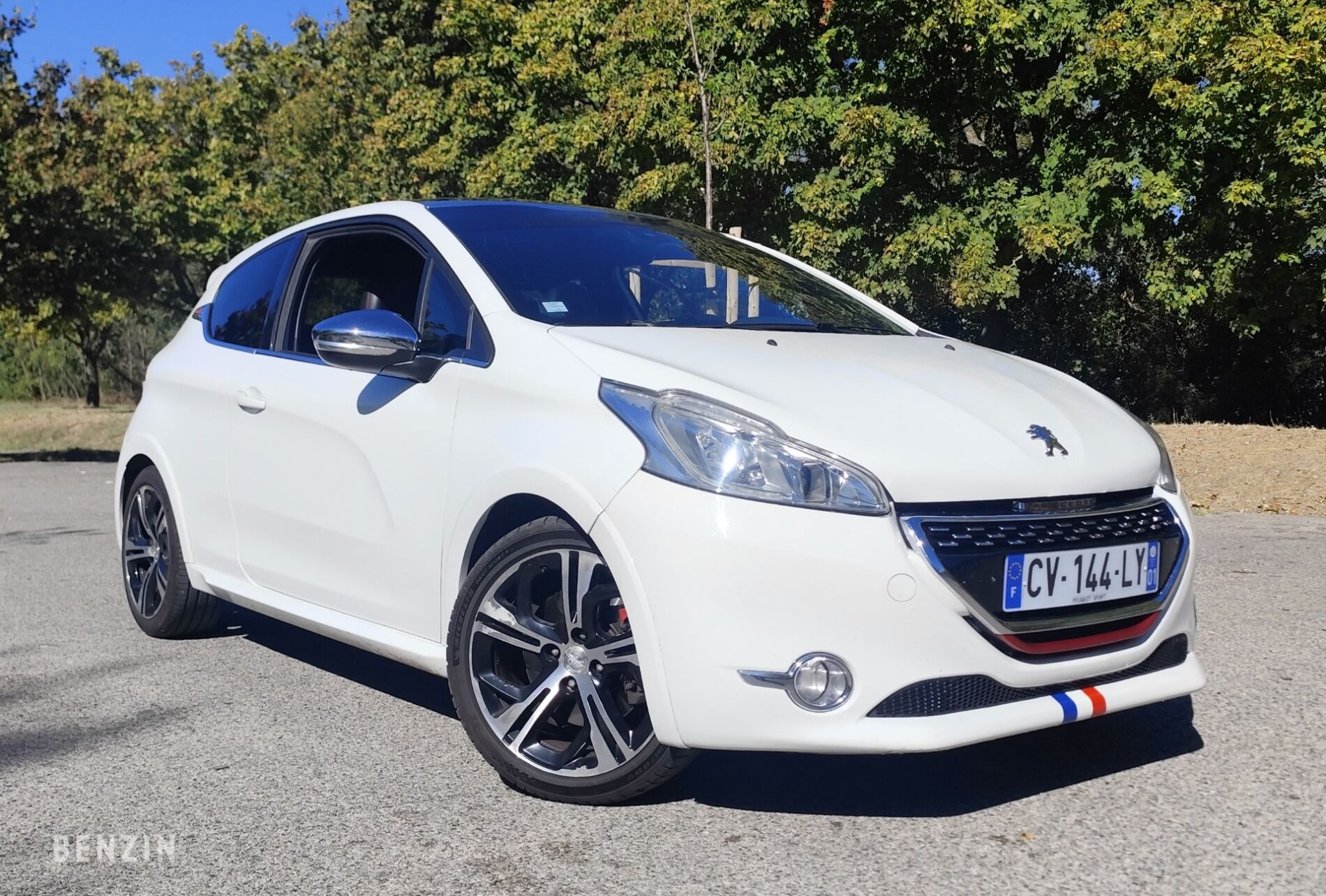
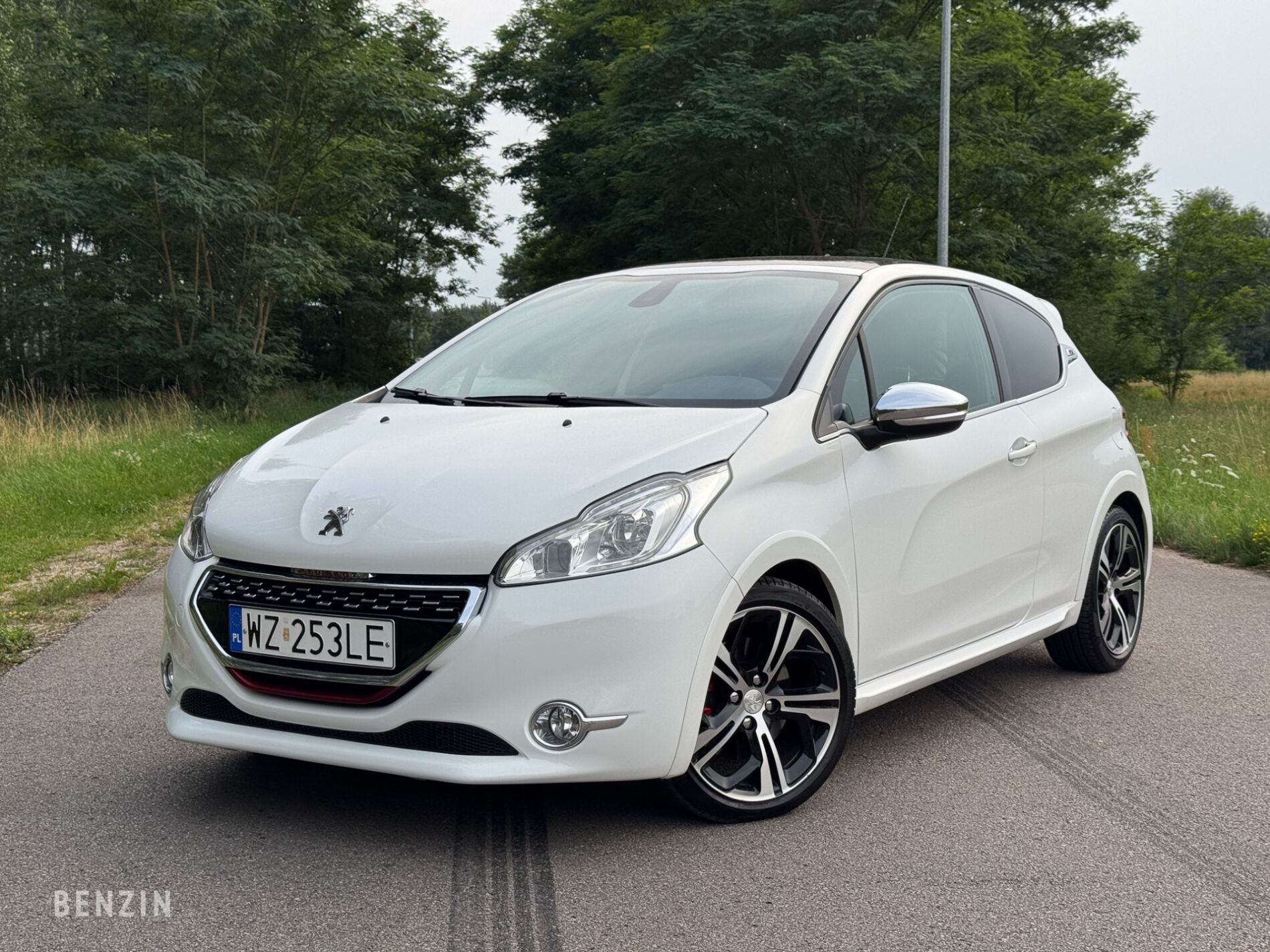
Launched in spring 2013, the Peugeot 208 GTI brought back to life a major badge for the brand after several years without a small petrol sports car. It is based on the 3-door 208 and was designed under the direction of Gilles Vidal, with a positioning clearly inspired by the 205 GTI more in spirit than in technical specification. Under the hood is the 1.6-liter THP direct-injection turbo engine, here tuned to 200 ch, paired exclusively with a six-speed manual gearbox. The recipe then favors versatility, with an effective but less radical chassis than some contemporary rivals, which earned it a reputation as a GTI that is easy to live with every day. The styling follows the expected codes of the genre, with a lowered stance, wider tracks, dual exhaust outlets, sporty seats, and red instrumentation.
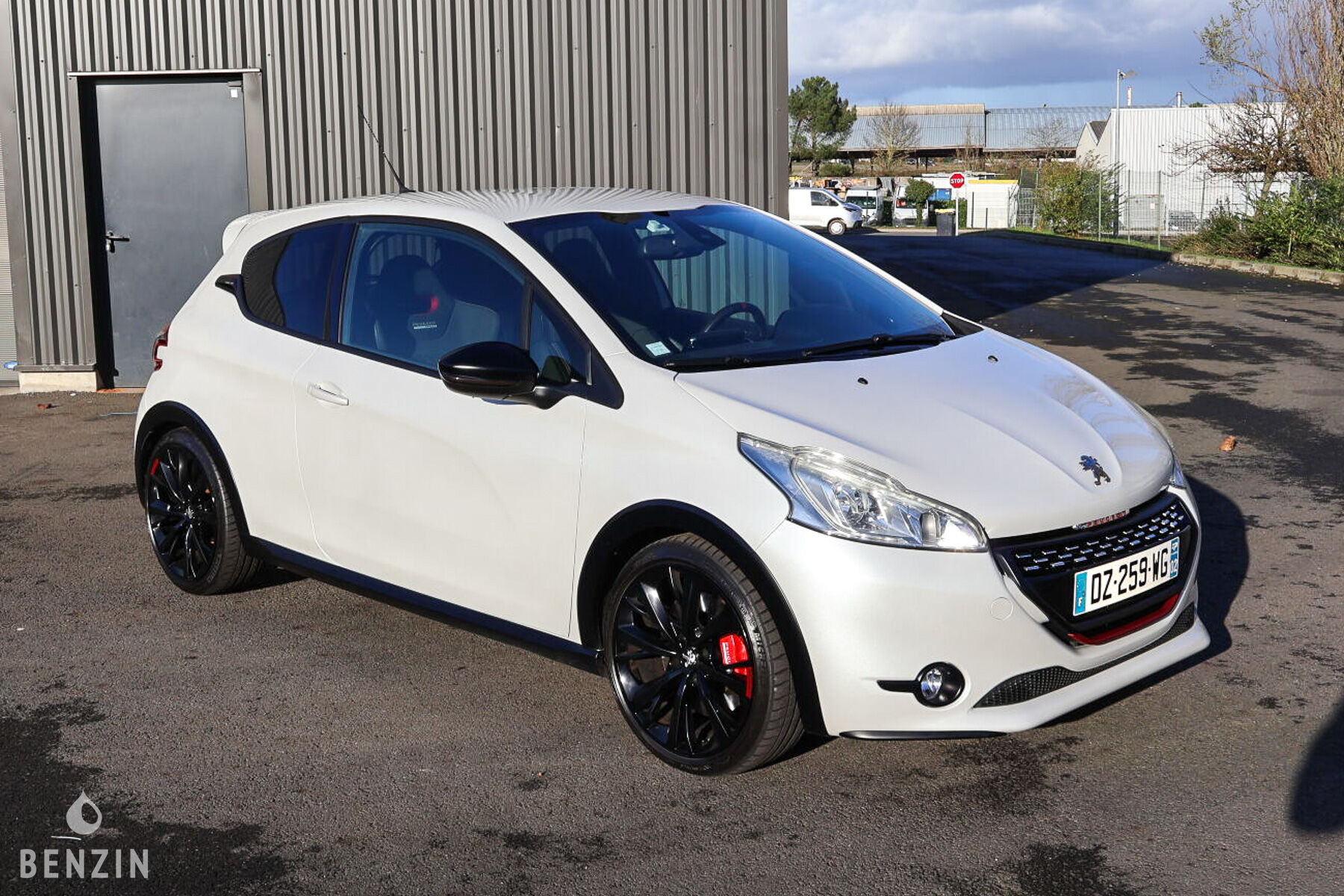
In 2014, the very important 30th anniversary series appears, produced in limited numbers, serving as a test bed for a sharper version. Power rises to 208 ch, the front axle gains a Torsen limited-slip differential, the tracks are widened further, suspension settings are stiffened, and braking improves significantly. This setup is then carried over to the 208 GTI by Peugeot Sport, offered after the 2015 facelift, while the “standard” restyled GTI also adopts the 208 ch engine but without taking on the full Peugeot Sport chassis package. The French career ends in 2018, with no direct GTI-badged successor in the next generation, which today increases enthusiasts’ interest in the last small Peugeot sports cars with manual gearboxes and combustion engines.
The 208 GTI did not have a major official competition program in this production form, but its badge, its character, and especially the by Peugeot Sport variant kept the link with the brand’s sporting history alive. Among enthusiasts, the hierarchy is quite clear: the early 200 ch cars are appreciated for their comfort and discretion, while the 30th and by Peugeot Sport are the most sought after for their sharper front end and mechanical differential. Like many models equipped with the 1.6 THP from the EP family, however, it requires rigorous and documented maintenance. A beautiful original car, not remapped and properly maintained, remains today a very appealing hot hatch and one already well recognized by French youngtimer collectors.
Technical sheet
| 208 GTI 200 | Restyled 208 GTI | 208 GTI 30th / By Peugeot Sport |
| Production years | 2013-2015 | 2015-2018 | 2014-2018 |
| Body style | 3-door hatchback | 3-door hatchback | 3-door hatchback |
| Engine | Turbo inline 4, 1,598 cm³ | Turbo inline 4, 1,598 cm³ | Turbo inline 4, 1,598 cm³ |
| Power | 200 ch | 208 ch | 208 ch |
| Torque | 275 Nm | 300 Nm | 300 Nm |
| Transmission | Front-wheel drive, 6-speed manual gearbox | Front-wheel drive, 6-speed manual gearbox | Front-wheel drive, 6-speed manual gearbox, Torsen differential |
| Curb weight | approx. 1,160 kg | approx. 1,185 kg | approx. 1,185 kg |
| 0 to 100 km/h | approx. 6.8 s | approx. 6.5 s | approx. 6.5 s |
| Top speed | approx. 230 km/h | approx. 230 km/h | approx. 230 km/h |
| Specific features | Road chassis setup | Restyled styling, 208 ch engine | Wider tracks, specific suspension, big brakes |
Buyer’s guide
The most desirable are the 30th and the GTI by Peugeot Sport, clearly more accomplished for anyone looking for a true small sports car thanks to the Torsen and the specific chassis. For more road-focused use, a restyled 208 ch GTI often offers the best compromise between performance, equipment, and everyday usability. The early 200 ch cars should not be ruled out, but you need to pay closer attention to engine history and the cooling system.
Points to watch
- Timing chain : rattling on cold start, timing faults, or engine warning light on the 1.6 THP, especially on poorly serviced cars or early production years; ask whether the timing chain kit, tensioner, or at least the stretch check has already been done.
- Water pump and thermostat housing : low coolant level, smell of hot coolant, or pinkish/whitish traces at the front of the engine; this is a known issue on THP engines, especially in the early years, and an invoice for replacement is reassuring.
- Oil consumption : the THP can consume oil without an immediate breakdown, but a significant increase, very frequent top-ups, or blue smoke on acceleration should raise concern; check the service history for oil level monitoring and ask the seller specifically about actual consumption between oil changes.
- Variable valve timing phasers and solenoids : unstable idle, hesitation on acceleration, or intermittent emissions fault; these symptoms recur regularly on the EP6 family and deserve a diagnostic scan before purchase.
- Manual gearbox and Torsen differential : on the 30th and by Peugeot Sport, check for no synchro crunching and no abnormal noises during tight maneuvers or under heavy load; these versions have a specific transmission and have often seen more spirited driving.
- Front axle : knocking top mounts, worn wishbone bushings, misaligned geometry, or inner tire wear; the issue is more common on Peugeot Sport cars, which are firmer and sometimes used on track or very rough roads.
- Front brakes : vibrations under braking, heat-marked discs, or uneven pad wear; the 30th and by Peugeot Sport, being more capable, suffer more from hard use and you should check that the consumables fitted are of good quality.
- SMEG touchscreen and multimedia : display bugs, sluggishness, temperamental Bluetooth, or outdated navigation on phase 1 cars; this is not mechanically critical, but an update or screen replacement may be needed.
When buying
On a 208 GTI, the most important thing is a cold start test, followed by a diagnostic scan to check for any misfires, variable valve timing faults, or engine warning history. You should also look for targeted invoices: timing chain, water pump/thermostat, spark plugs and ignition coils, as well as brake and tire replacements on Peugeot Sport versions. On a 30th or a by Peugeot Sport, also make sure the specific limited-slip transmission is original and that the car has not been remapped or modified without solid documentation.
On Benzin a Peugeot 208 GTI has sold for 11 320 € on average, with a median price of 13 200 €. Based on the 5 sales completed on the platform.
The 5 Peugeot 208 GTI sold on Benzin changed hands for between 5 400 € and 15 000 €, depending on condition, mileage and version.
5 of the 21 Peugeot 208 GTI listed on Benzin found a buyer — 24 % of completed sales.
No Peugeot 208 GTI is for sale at the moment. Follow the model to be notified as soon as a new one is listed.
Every vehicle comes with a detailed photo report, its history and the public exchanges between seller and community. You bid online; if you win, Benzin secures the payment and supports you through to delivery.
Follow the model from this page and you will get an e-mail as soon as a Peugeot 208 GTI is listed on Benzin.
 English
 Français
 Español
 Italiano
 Deutsch
 Polski
 Magyar
