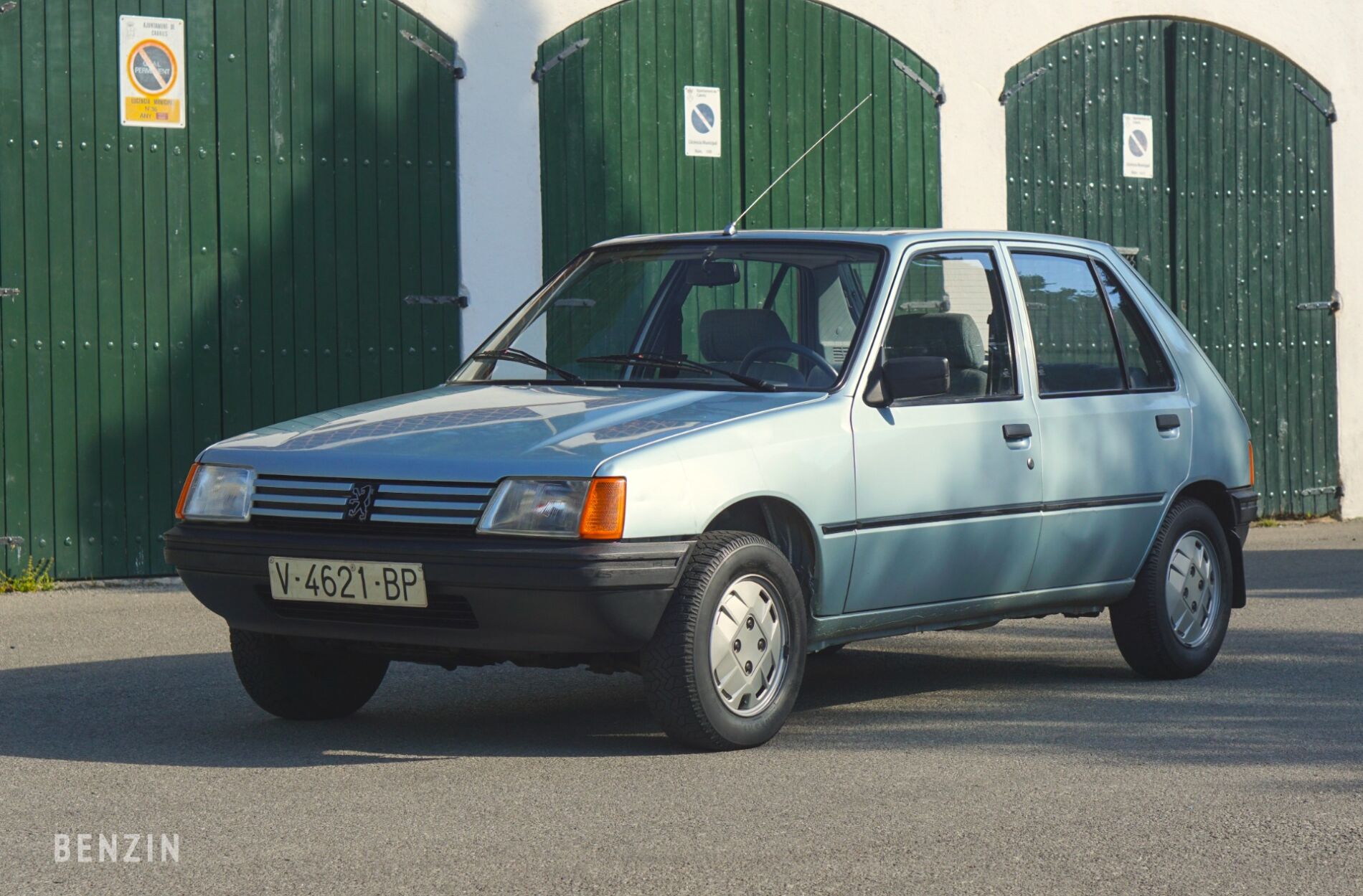
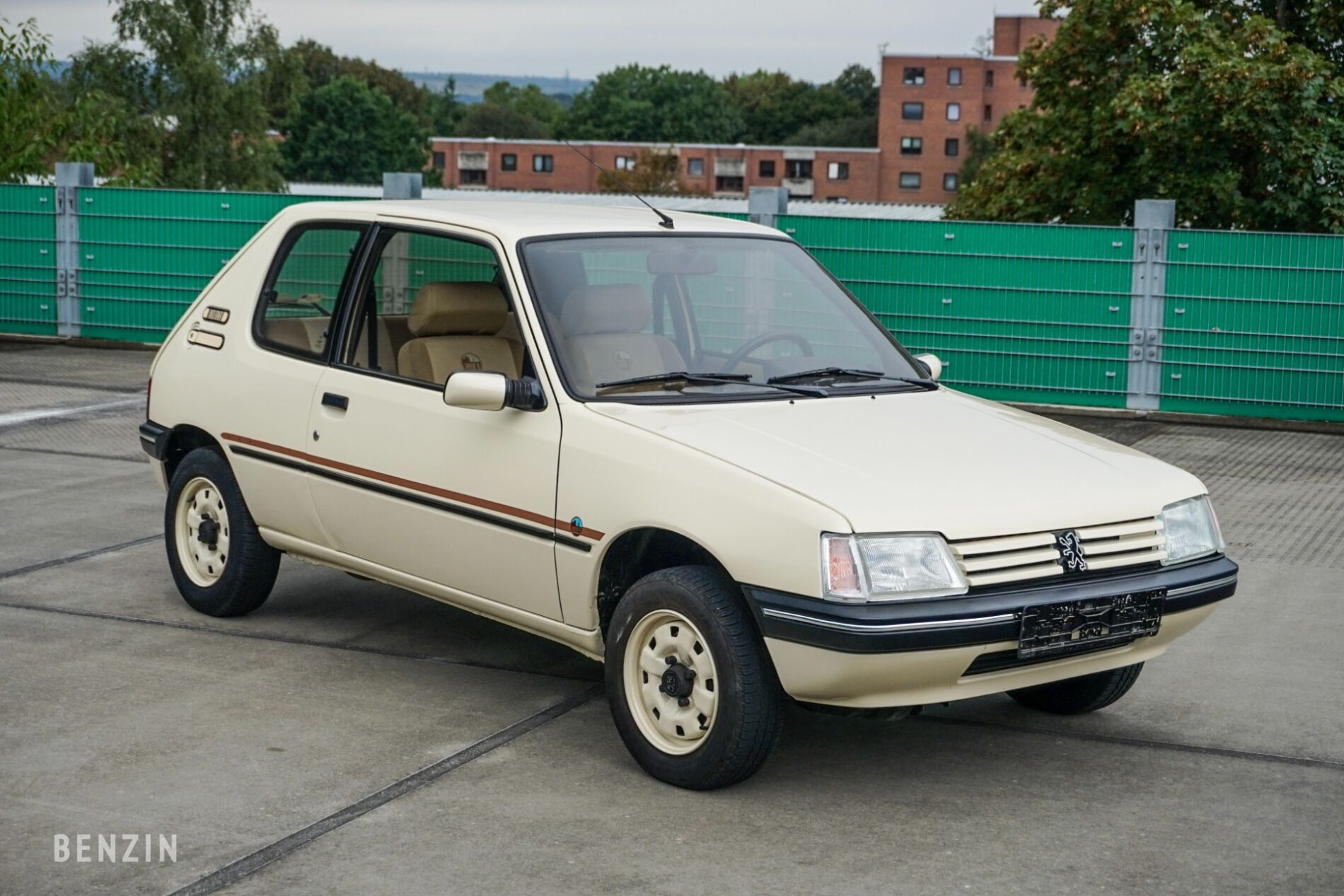
Unveiled on 24 February 1983, the Peugeot 205 arrived at a crucial time for the brand and gradually replaced the 104 and 204/304 in the small all-rounder segment. Its exterior styling was created by Peugeot’s design centre led by Gérard Welter, with a silhouette that was simple, light and very well proportioned, while the cabriolet was developed and assembled by Pininfarina. From launch, the 205 stood out for its spaciousness, precise front end and road manners, which quickly became a benchmark in the segment. The initial range combined petrol engines from the “Poissy” family on some early versions, then the 205 mainly adopted TU, XU and XUD diesel engines, which made much of its reputation. Throughout the 1980s and 1990s, it evolved in small steps rather than in major changes, with updates to the dashboard, upholstery, equipment, wiring looms and presentation details depending on the model year.
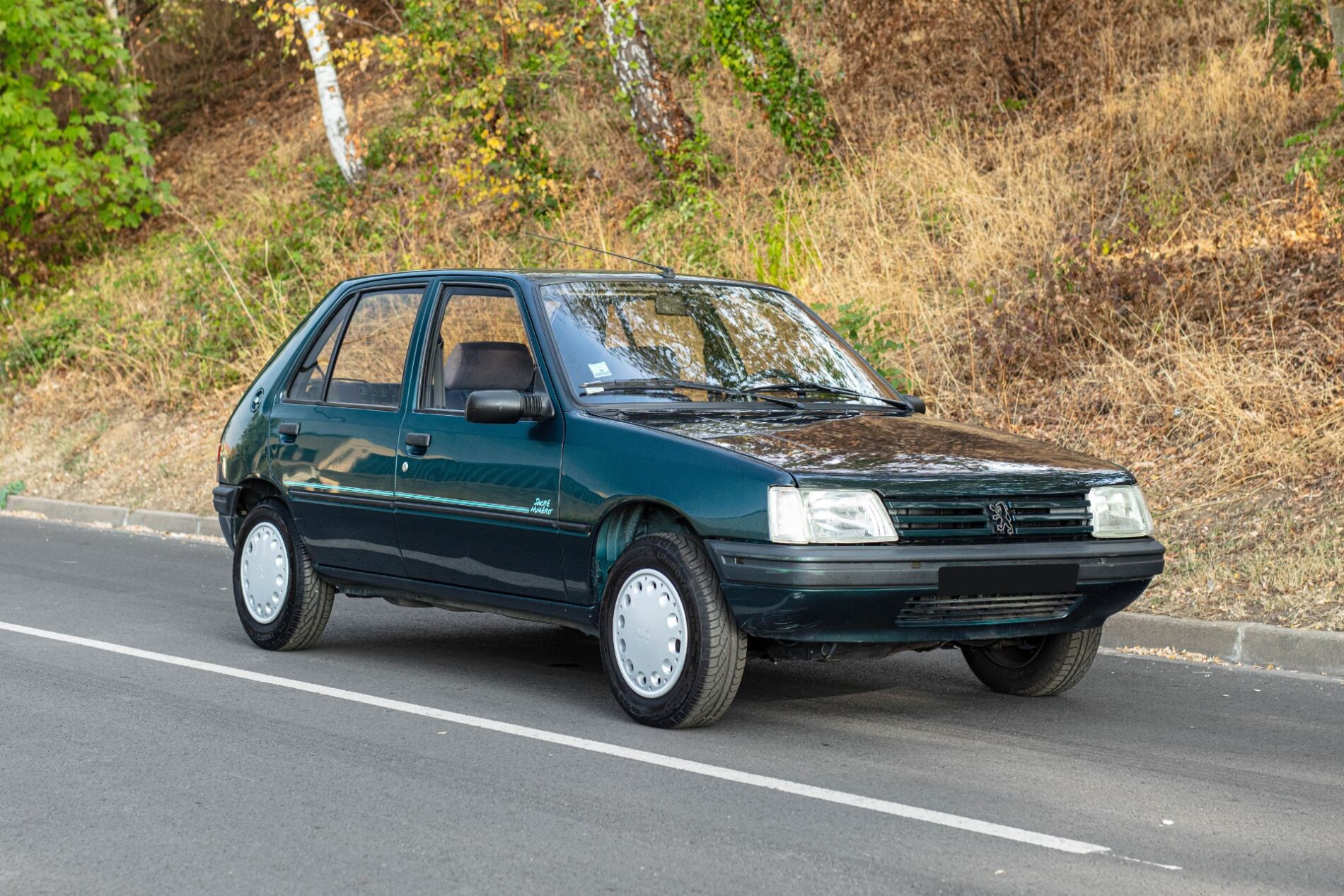
The range is exceptionally broad, from the simple GL, GR, XR or Junior to the livelier XS and GT versions, not forgetting the naturally aspirated diesels and D-Turbo, much appreciated for their economy and durability. The CJ, CTI and Roland Garros cabriolets occupy a special place, with their Pininfarina construction and a presentation often more refined than the corresponding saloons. Peugeot also multiplied special editions, including Lacoste, Green, Roland Garros, Indiana, Color Line or Sacré Numéro, now sought after for their specific colours, fabrics and equipment. At the top of the road-going range, the 1.6 then 1.9 GTI established the 205 as a benchmark among small sports cars, while the very rare Turbo 16 gave the model worldwide exposure in rally raids and the Group B World Rally Championship. The 205 not only saved Peugeot industrially, it also left a lasting mark on French car culture.
Produced until 1998 for the saloon in Europe, and until the mid-1990s for the cabriolet, the 205 was built in more than 5.2 million examples. Enthusiasts often distinguish the very first series, the more homogeneous intermediate phases, and the last, well-equipped series such as the Sacré Numéro. The modest versions, long overlooked, now interest collectors more when they are highly original, low-mileage or in a now rare specification, notably Junior, Automatic, Roland Garros or Indiana. Today, the 205 remains an easy classic to understand, enjoyable to drive and strongly supported by clubs, remanufactured parts and a wide network of specialists, provided you choose an example with a sound body shell and rear axle.
Technical data
| Version | 205 1.1 TU | 205 Cabriolet 1.4 CJ / Roland Garros | 205 D-Turbo |
| Production years | 1988-1998 depending on market and trim | 1986-1994 depending on version | 1991-1994 |
| Body | 3- or 5-door saloon | 2-door Pininfarina cabriolet | 3- or 5-door saloon |
| Engine(s) | 4-cylinder inline TU1, 1,124 cc | 4-cylinder inline TU3, 1,360 cc | 4-cylinder inline XUD7T, 1,769 cc turbo diesel |
| Power | around 60 hp | around 70 hp | 78 hp |
| Transmission | Front-wheel drive, 4- or 5-speed manual | Front-wheel drive, 5-speed manual | Front-wheel drive, 5-speed manual |
| Weight | around 790 kg | around 900 kg | around 910 kg |
| 0-100 km/h | around 15 s | around 13 s | around 12 s |
| Top speed | around 155 km/h | around 165 km/h | around 175 km/h |
| Model production | More than 5.2 million examples across all versions |
Buyer’s guide
For regular use, the well-kept 1.1 and 1.4 TU models offer the best compromise between simplicity, enjoyment and parts availability, while the XUD diesels appeal thanks to their robustness if the cooling system is impeccable. In the collector market, original, untouched special editions such as Roland Garros, Lacoste, Indiana or Junior now have real appeal, and the Pininfarina cabriolets deserve particular attention to the structure. The versions to avoid are mainly tired, modified, rusty or rear-sagging cars, more than any particular trim level.
Points to watch
- Rear axle : excessive rear camber, “V”-shaped wheels, squeaks or an abnormal ride height betray worn trailing arm bearings, a classic 205 issue on all versions; check the geometry visually, the absence of play and ask for a full overhaul invoice rather than just a used axle.
- Body shell corrosion : sills, jacking points, floor under the rear seat, spare wheel well, boot floor, front inner wings and sometimes front chassis rails/subframe can be affected, especially on cars stored for a long time or poorly repaired; check under the carpets, under the rear seat and in the engine bay.
- TU 1.4 head gasket : the 1.4 carburettor and light injection engines have a reputation for suffering this more often than the smaller-capacity units, with mayonnaise-like sludge, coolant consumption or hoses building pressure; ask whether the cylinder head has been pressure-tested and skimmed, not just the gasket replaced.
- Cooling on XUD diesels and D-Turbo : overheating, inoperative fan, tired radiator or poorly bled cooling system can end up damaging the head gasket, even more so on turbo models; check cold starting, warm-up, fan cut-in and the absence of excessive pressure in the expansion tank.
- Carburation and automatic choke : too high an idle, flat spots on acceleration, difficult cold starting or a smell of fuel often come from Solex/Pierburg carburettors, diaphragms, air leaks or poor adjustment, especially on XR, GR, GT, XS and 1980s-1990s petrol special editions; a car that runs smoothly cold and hot is preferable to one that “just needs adjusting”.
- Gearbox and linkage : vague shifting, crunching in 2nd or a droning noise under load appear on high-mileage cars, with particular sensitivity to poorly adjusted gearbox linkages and worn synchros; the car should be tested cold, on downshifts, and checked to make sure it does not jump out of gear.
- Pininfarina cabriolet : water leaks, a tired soft top, rear window, window fit and corrosion around the reinforcements or the soft-top well are known issues on CJ, CTI and Roland Garros; check the water drains, the rear floor and the presence of the specific trim items, which are often expensive to source.
- Instrument cluster and speedometer cable : inoperative speedometer or odometer, common on cars that have been laid up or poorly maintained, makes it difficult to read the actual mileage; check that the trip counter works while driving and compare the displayed mileage with old MOT records.
When buying
On a 205, the most useful photos and checks are those of the underbody, the rear axle, the boot floor and the area under the rear seat, far more revealing than the exterior bodywork alone. Invoices for rear axle overhaul, timing belt, water pump and cooling work are especially important, as is confirmation of the engine type for a special edition or a very early version. On a cabriolet, also check the Pininfarina plate, the fit of the soft top and the condition of the reinforcements, and on an imported car make sure the original documents clearly allow registration without any grey areas.
On Benzin a Peugeot 205 has sold for 3 636 € on average, with a median price of 2 850 €. Based on the 39 sales completed on the platform.
The 39 Peugeot 205 sold on Benzin changed hands for between 200 € and 15 650 €, depending on condition, mileage and version.
39 of the 56 Peugeot 205 listed on Benzin found a buyer — 70 % of completed sales.
No Peugeot 205 is for sale at the moment. Follow the model to be notified as soon as a new one is listed.
Every vehicle comes with a detailed photo report, its history and the public exchanges between seller and community. You bid online; if you win, Benzin secures the payment and supports you through to delivery.
Follow the model from this page and you will get an e-mail as soon as a Peugeot 205 is listed on Benzin.
 English
 Français
 Español
 Italiano
 Deutsch
 Polski
 Magyar
