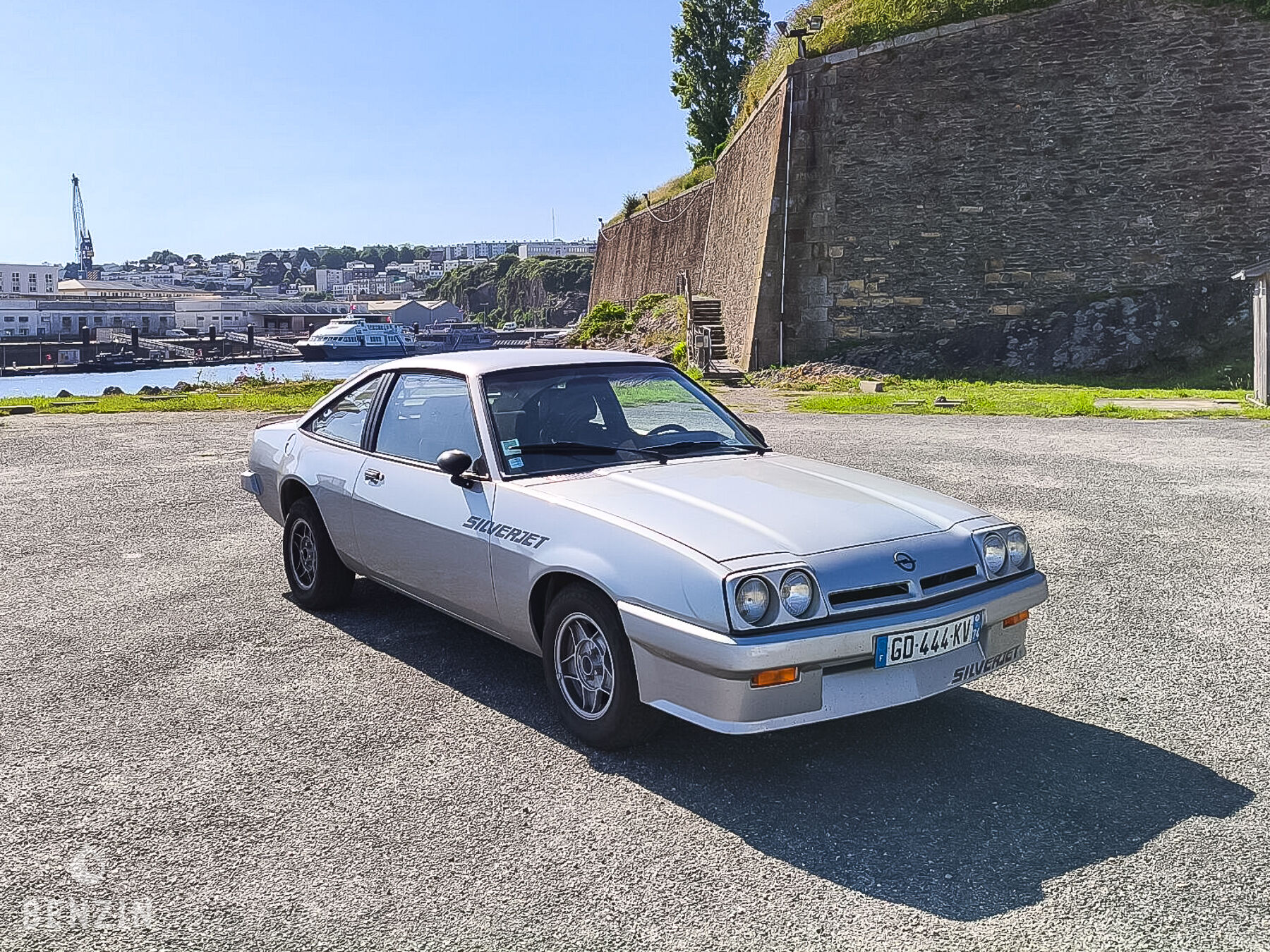
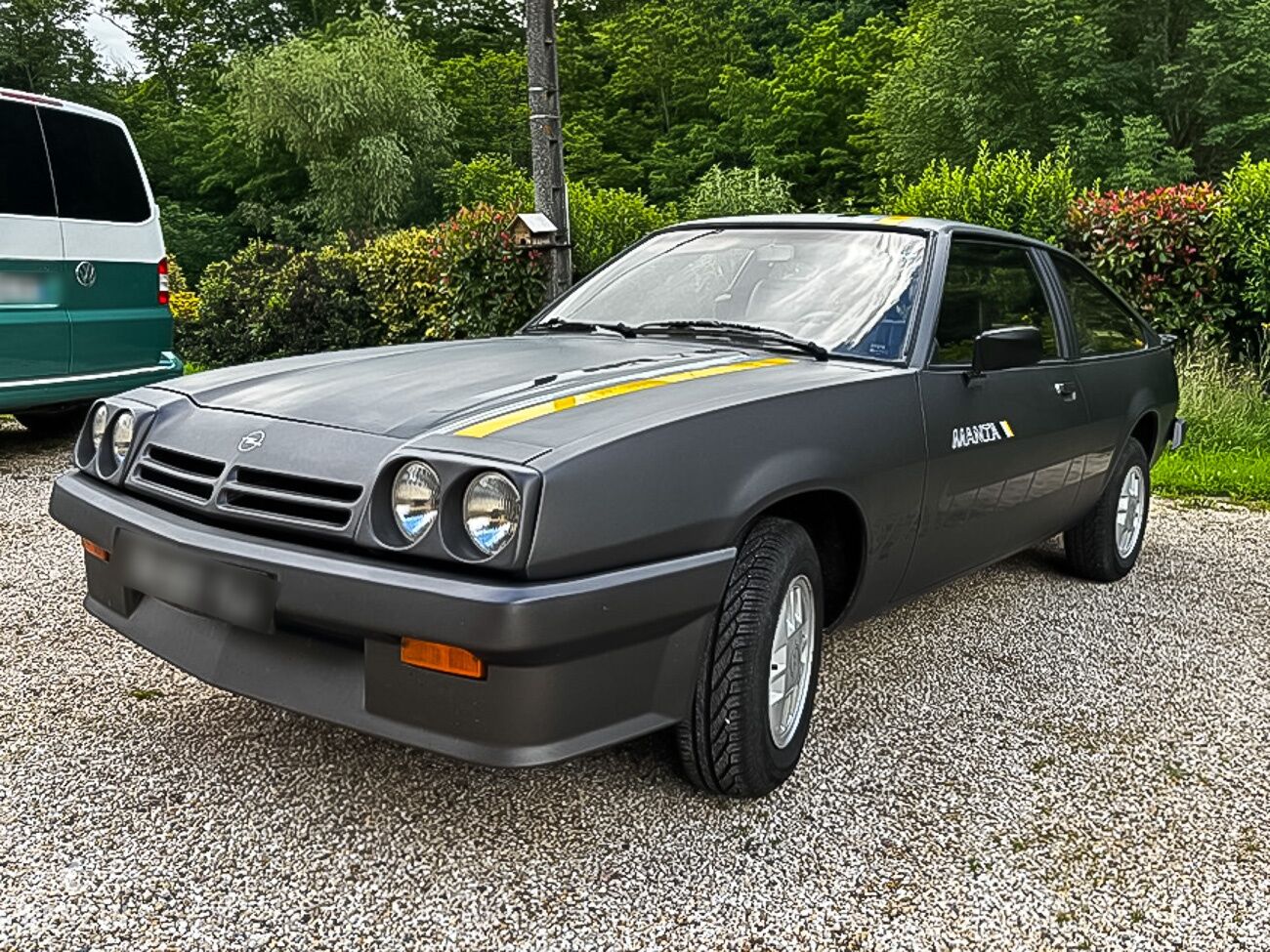
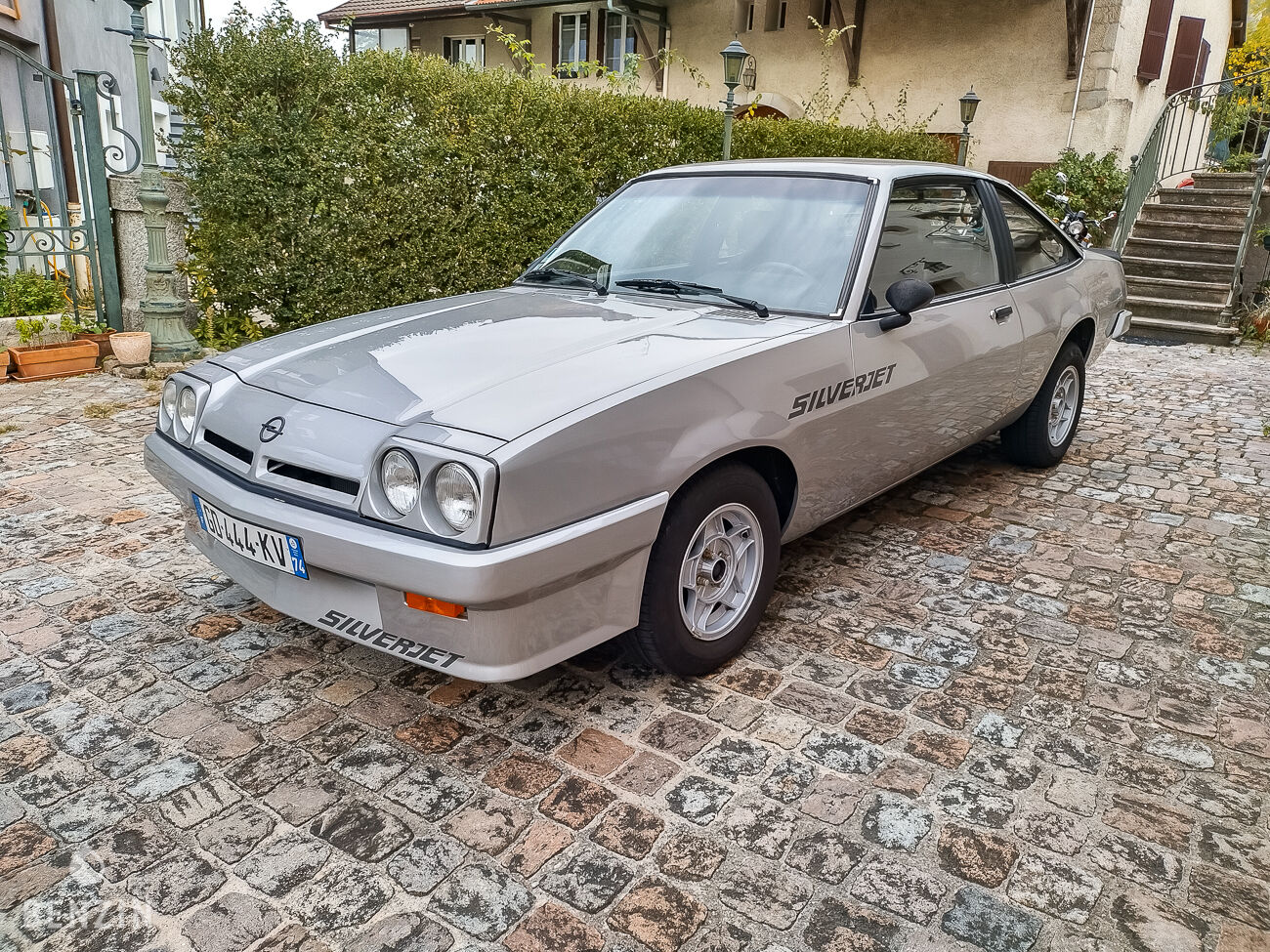
The Opel Manta appeared in autumn 1970 as a compact rear-wheel-drive coupé derived from the Ascona, with the idea of giving Opel a European answer to the Ford Capri and Toyota Celica. Designed in Rüsselsheim in a style inspired by GM’s American coupés, the first generation, known as the Manta A, stands out for its fastback line and its simple overhead-valve or overhead-cam four-cylinder engines depending on the market, from the small 1.2-litre to the sportier 1.6 and 1.9-litre units. The range quickly evolved with Rallye versions and especially the 1900 GT/E with injection, which gave the Manta real dynamic credibility without betraying its role as a popular coupé. In 1975 came the Manta B, more angular, roomier and produced over an exceptionally long run until 1988, first as a coupé and then mainly as a CC hatchback from 1977. Depending on the country, it was available with 1.2 S, 1.6, 1.8 and 2.0 engines, carburettor or injection, with GT/J, GT/E, Berlinetta, Exclusive or GSi designations at the end of its life.
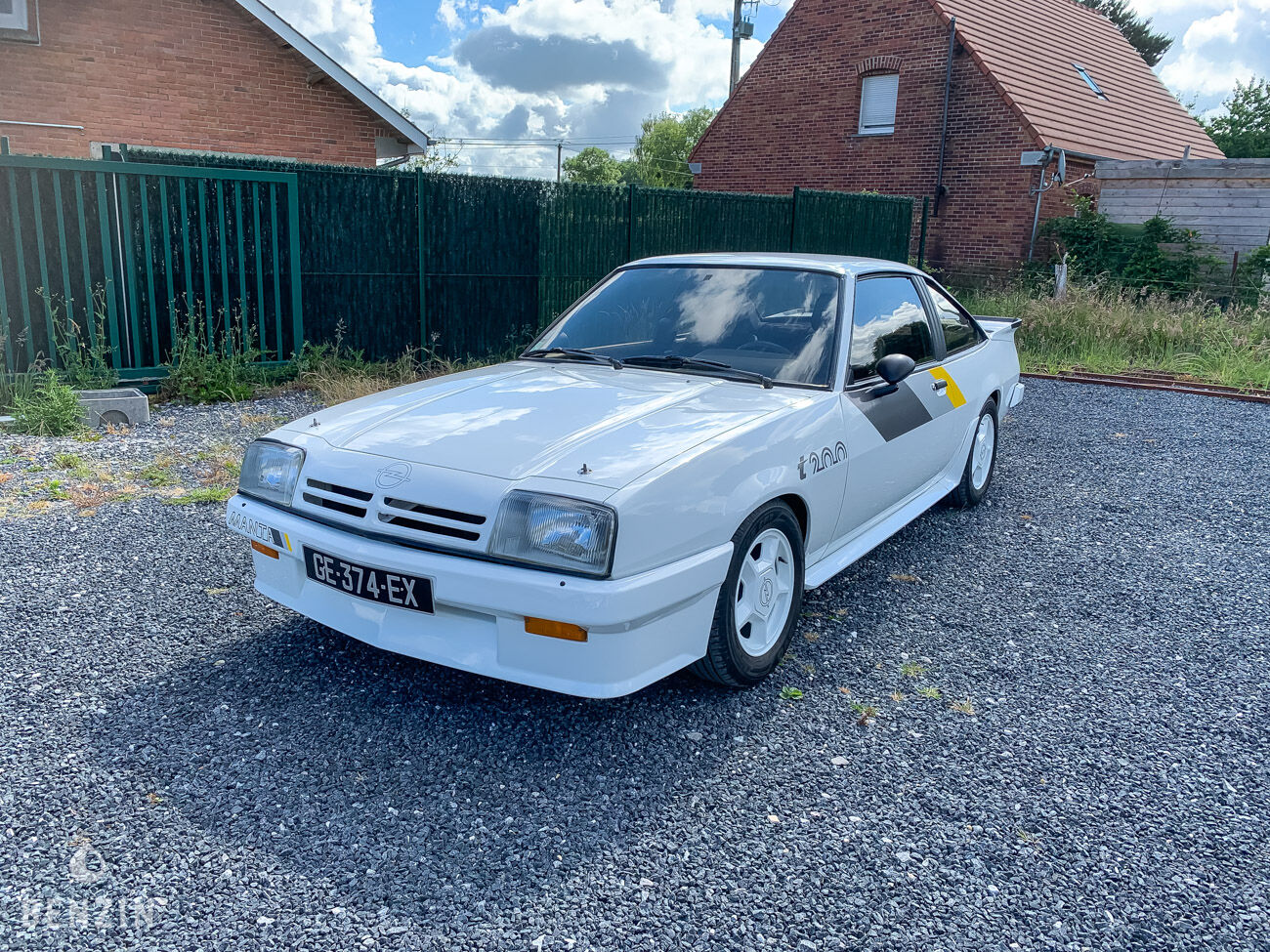
The Manta B is the one best known to enthusiasts, especially in its early-1980s 2.0 GT/E versions and in a few special series or preparations recognized by Irmscher. The striking i200, assembled for South Africa on the basis of the Manta B with Irmscher preparation and a revised 2.0-litre engine, is among the most sought-after variants, along with some well-preserved GT/E cars with a 5-speed gearbox. In competition, the Manta built its reputation in rallying and circuit racing, often in the shadow of the Ascona but with a real presence in Groups 1, 2 and B, while the Manta 400 remains the pinnacle of the line for homologation. The car also gained a strong cultural dimension in Germany and the United Kingdom, where it became a symbol of an accessible, tunable and endearing coupé. In total, the Manta A and B career exceeds one million examples, which still helps today with some mechanical parts shared with the Ascona, but not with all body and trim components. For collectors, interest now focuses on structurally sound cars, original or correctly restored, with true GT/E, GSi and i200 models being far more coveted than the basic small-displacement versions.
Technical data
| Version | Manta A 1900 GT/E | Manta B 1.2 S | Manta B 2.0 GT/E / GSi |
| Production years | 1974-1975 | 1975-1988 depending on market | 1979-1988 depending on version and market |
| Body style | 2-door coupé | 2-door coupé or 3-door hatchback | 2-door coupé or 3-door hatchback |
| Engine(s) | 4-cylinder inline 1.9 l injection | 4-cylinder inline 1.2 l carburettor | 4-cylinder inline 2.0 l Bosch injection |
| Power | around 105 hp | around 60 hp | around 110 hp |
| Transmission | Rear-wheel drive, 4-speed manual gearbox | Rear-wheel drive, 4- or 5-speed manual gearbox | Rear-wheel drive, 5-speed manual gearbox |
| Weight | around 950 kg | around 920 kg | around 1,000-1,050 kg |
| 0-100 km/h | around 10 s | around 15-16 s | around 9.5-10 s |
| Top speed | around 185 km/h | around 145-150 km/h | around 185-195 km/h |
| Production | Just over one million examples for the Manta A and B range combined |
Buyer’s guide
For classic, enjoyable use, the Manta B 2.0 GT/E and then GSi are the most interesting: lively engine, mechanical parts still identifiable, a genuine sporting image and better resale among enthusiasts. A healthy, very original 1.2 S may appeal for its simplicity, but it has neither the performance nor the esteem value of the 2-litre cars; modified cars without solid documentation or fake GT/E models rebuilt from base versions are the ones to approach with the greatest caution.
Points to watch
- Body corrosion : this is the critical point on all Mantas, especially the B; inspect the lower front wings, the top and rear of the front wheel arches, the windscreen scuttle, sills, door bottoms, floors, rear suspension mounting points and spare wheel well, because superficial repairs often hide more seriously affected metal.
- Rear panel and light surrounds : water collects behind the rear blocks and in the rear valance; on Manta B, check the welds, the alignment of the tailgate or boot lid and signs of replacement of the rear panel, an area often repaired after corrosion or impact.
- Battery tray and bulkhead : on Manta A and B cars, acid leaks attack the battery tray, inner wing and sometimes the bulkhead on the passenger side; check the rigidity of the area, the absence of doubled-up sheet metal and the condition of the wiring loom running nearby.
- Bosch L-Jetronic injection : on the 2.0 GT/E and some GSi models, unstable idle, hard starting or flat spots on acceleration often come from the airflow meter, pressure regulator, air leaks or a tired pump; ask what has been renewed and whether the system has remained original, without wiring hacks.
- 1.9/2.0 CIH engines : these engines are robust but do not like long periods of inactivity; watch for tappet noise, camshaft wear and chronic leaks at the rocker cover or front crank seal, and check hot oil pressure on a car recommissioned after storage.
- 5-speed gearbox and rear axle : on Manta B 2-litre cars, the gearboxes can become stiff or noisy, especially in 2nd and 3rd, and the rear axle can whine on deceleration; also check the condition of the flex disc, the propshaft bearing and the absence of abnormal play in the drivetrain.
- Rear braking and compensator : after a long period of storage, wheel cylinders, drums and especially the rear load/proportioning valve can seize, causing an imbalance at inspection; make sure the recommissioning properly addressed this assembly and not just the front consumables.
- Odometer and identification : mileage is often difficult to certify on these old cars, and GT/E or GSi models have sometimes been re-plated or rebuilt; compare the chassis number, manufacturer’s plate, engine type, upholstery and specific equipment with the announced year and version.
When buying
On a Manta, the ideal file includes bodywork invoices with photos before painting, because a car’s value depends first and foremost on the quality of its structure. For a GT/E, GSi or i200, the chassis number, engine code, and the presence of the specific injection, running gear and trim components must be checked to rule out a conversion. A compression test and a hot oil pressure check are very useful on the 1.9 and 2.0 CIH, especially if the car has had a long period of storage or a poorly documented recommissioning.
On Benzin a Opel Manta has sold for 5 075 € on average, with a median price of 5 401 €. Based on the 4 sales completed on the platform.
The 4 Opel Manta sold on Benzin changed hands for between 2 000 € and 7 500 €, depending on condition, mileage and version.
4 of the 6 Opel Manta listed on Benzin found a buyer — 67 % of completed sales.
No Opel Manta is for sale at the moment. Follow the model to be notified as soon as a new one is listed.
Every vehicle comes with a detailed photo report, its history and the public exchanges between seller and community. You bid online; if you win, Benzin secures the payment and supports you through to delivery.
Follow the model from this page and you will get an e-mail as soon as a Opel Manta is listed on Benzin.
 English
 Français
 Español
 Italiano
 Deutsch
 Polski
 Magyar
