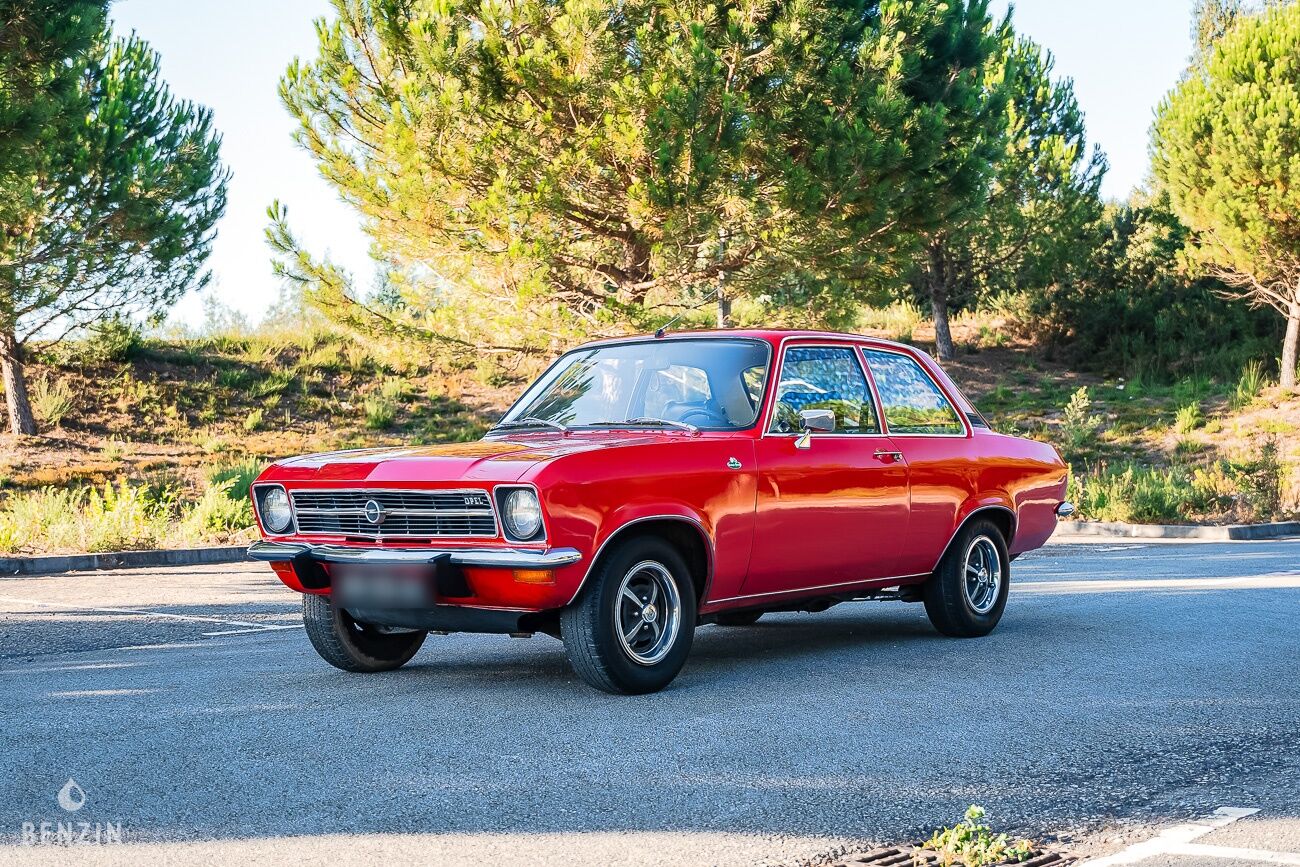
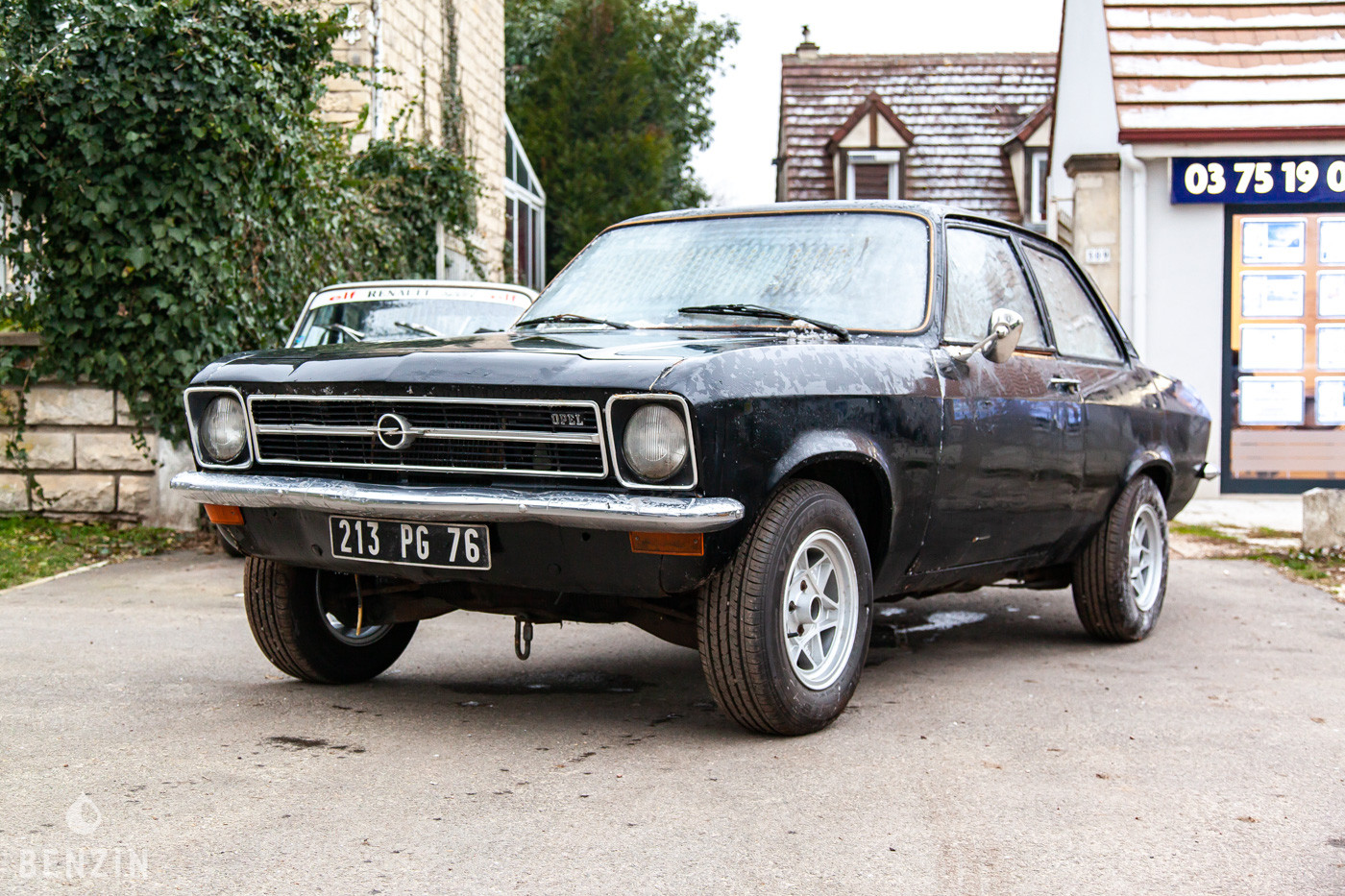
Launched in autumn 1970, the Opel Ascona is Opel’s mid-size family car, positioned between the Kadett and the Rekord, and designed in Rüsselsheim as a simple, robust and international rear-wheel-drive model. The first generation, known as the Ascona A, shares its base with the Opel Manta A and stands out for its very understated lines as a two- or four-door sedan, as well as in Voyage estate form, while some markets also had a coupé badged differently depending on the country. The range starts with the small 1.2-litre overhead-valve engines, then moves up to the more prestigious 1.6 and 1.9-litre CIH engines, whose SR sporty versions are today the most sought after. The Ascona A quickly built its reputation on ease of maintenance, sound handling and very durable Opel engines, provided they were properly maintained.
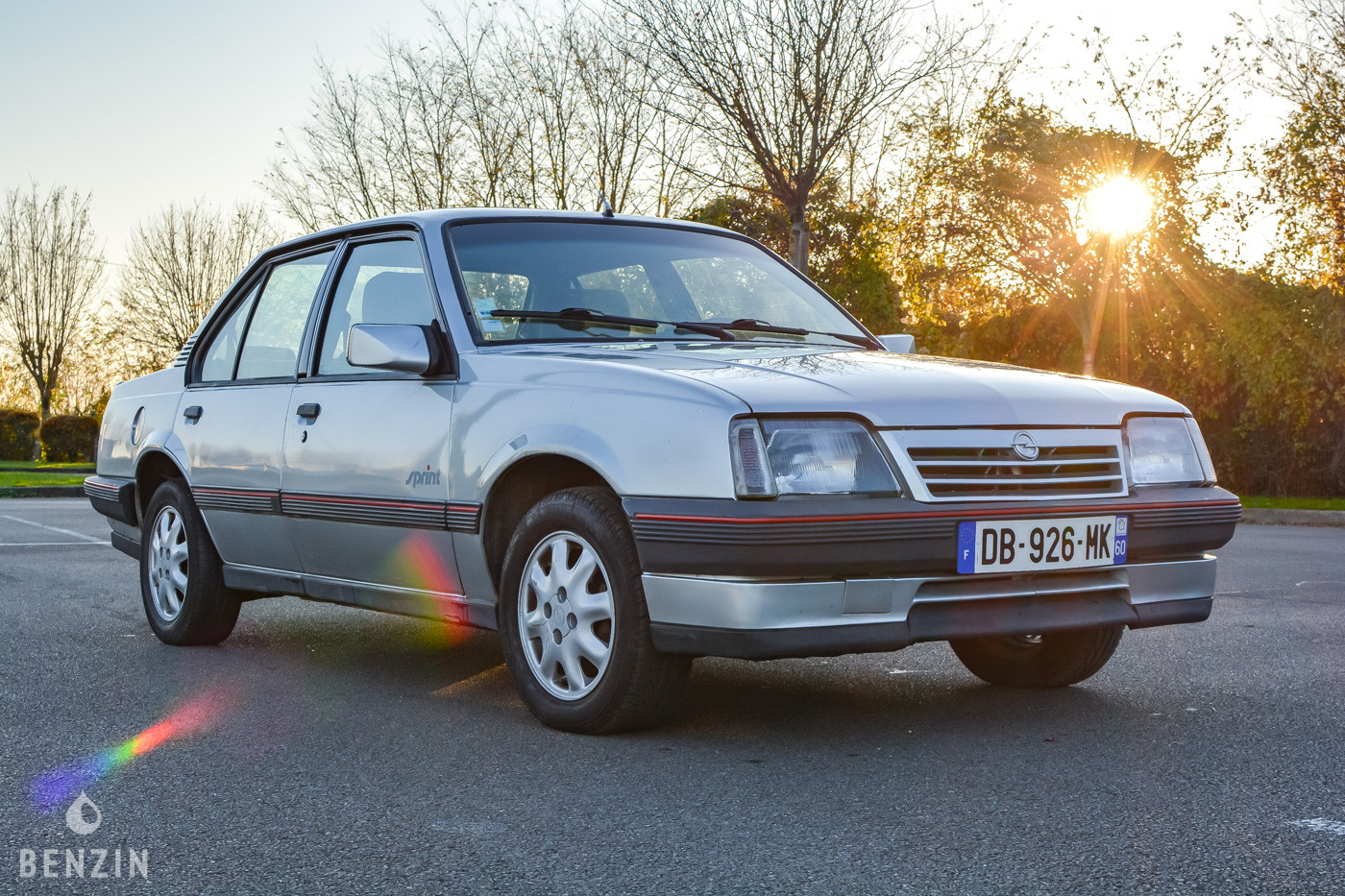
In 1975 came the Ascona B, still rear-wheel drive, more angular, larger and available with four-cylinder engines ranging from 1.2 to 2.0 litres depending on the market. This generation served as the basis for the homologation Ascona 400, a major Group 4 and then Group B rally car, notably victorious in the World Rally Championship with Walter Röhrl in 1982, which strongly shaped the model’s image. In 1981, the Ascona C radically changed philosophy by switching to front-wheel drive, on a platform shared with other General Motors group models, with a clear improvement in interior space, economy and aerodynamics. Its career was long and widely distributed, with 1.3, 1.6, 1.8 and 2.0-litre petrol engines depending on the country, as well as diesels, and special series such as the Sprint that sought to add extra character to a car that had become very rational.
Across all generations, the Ascona was produced in several million examples and long represented the archetype of the serious, family-oriented, unpretentious Opel. Among collectors, interest today focuses on well-preserved Ascona A models, on B models with a sporty character, and on rare C models in their original trims, especially the 1.6 S Sprint or the GT/SRi depending on the market. Enthusiasts appreciate the mechanical availability, simple design and still easy usability, but they also know that corrosion and certain specific trim parts become the real issues in a proper restoration.
Technical data
| Version | Ascona A 1.2 Coupé | Ascona A 1.9 SR | Ascona C 1.6 S Sprint |
| Production years | 1970-1975 | 1970-1975 | mid-1980s |
| Body | 2-door coupé | 2- or 4-door sedan, depending on market | 4-door or 5-door sedan, depending on market |
| Engine(s) | 4-cylinder inline 1,196 cc, carburetor | 4-cylinder inline CIH 1,897 cc, carburetor | 4-cylinder inline 1,598 cc, carburetor |
| Power | approx. 60 hp | approx. 90 hp | approx. 75 to 82 hp depending on market |
| Transmission | Rear-wheel drive, 4-speed manual gearbox | Rear-wheel drive, 4-speed manual gearbox | Front-wheel drive, 5-speed manual gearbox |
| Weight | approx. 850 kg | approx. 930 kg | approx. 950 to 1,000 kg |
| 0-100 km/h | approx. 18 s | approx. 12 s | approx. 13 to 14 s |
| Top speed | approx. 140 km/h | approx. 165 km/h | approx. 165 km/h |
Buyer’s guide
For a car bought for passion, the Ascona A in 1.6 or 1.9 SR form are the most appealing, with real mechanical character and a more desirable presentation than the basic 1.2s. For regular use, a sound-bodied Ascona C 1.6 S Sprint, complete with its specific components, is often the best compromise. Cars that have been modified to look sporty, bodies heavily repaired for corrosion, and rare incomplete versions should be approached with caution, because bringing them back to original condition quickly costs more than the mechanical side.
Points to watch
- Body corrosion : frequent corrosion on sills, wheel arches, jacking points, bulkhead, windscreen surrounds and floors on Ascona A and B; on Ascona C, also watch the front strut towers, spare wheel well and rear suspension mounting points. You need to ask exactly which panels have been replaced, with photos or invoices, because filler repairs are common.
- CIH 1.6/1.9/2.0 engines : top-end ticking, camshaft and rocker wear, especially if oil changes were spaced too far apart or if the oil used was not suitable. When cold, listen for timing gear noise and check idle smoothness as well as hot oil pressure.
- Solex, Varajet or Pierburg carburetors : hard starting, flat spots on acceleration and unstable idle on A models with single- or twin-choke carburetors and on C 1.6 S models. On a Sprint, the operation of the automatic choke, the absence of air leaks and whether the carburetor has been rebuilt rather than merely adjusted should be checked.
- Manual gearboxes : worn 2nd-gear and sometimes 3rd-gear synchros on rear-wheel-drive A/B models, with crunching when cold or stiff shifting in normal driving. The car should be tested both cold and hot, and it should be checked whether the gearbox has already been opened or replaced.
- Rear axle and driveshaft : on A and B, droning under load, clunking when getting back on the throttle, or vibrations coming from the prop shaft bearing and universal joints. These symptoms are well known on high-mileage cars or cars that have been left unused for a long time.
- Locks, handles and door components : lock mechanisms and exterior door handles age poorly on some A and B models, with doors that do not close properly or a seized barrel. It is a detail, but the exact bodywork/hardware parts are not always easy to find in the correct trim.
- Specific trim elements : on SR, Sprint and other sporty series, check for the seats, wheels, stripes, stickers, instrumentation and steering wheel corresponding to the version. Many Ascona have been disguised over the decades, and these specific parts are harder to source than common mechanical parts.
When buying
On an Ascona A or B with a CIH engine, a compression test and, if possible, a hot oil pressure check provide real insight into the condition of the engine. For a Sprint or an SR, the chassis number, engine type, paint codes and equipment should be compared with the original configuration, because rebuilds and conversions are common. If the car has had bodywork done, detailed invoices and bodywork photos are particularly important on this model.
1 of the 4 Opel Ascona listed on Benzin found a buyer — 25 % of completed sales.
No Opel Ascona is for sale at the moment. Follow the model to be notified as soon as a new one is listed.
Every vehicle comes with a detailed photo report, its history and the public exchanges between seller and community. You bid online; if you win, Benzin secures the payment and supports you through to delivery.
Follow the model from this page and you will get an e-mail as soon as a Opel Ascona is listed on Benzin.
 English
 Français
 Español
 Italiano
 Deutsch
 Polski
 Magyar
