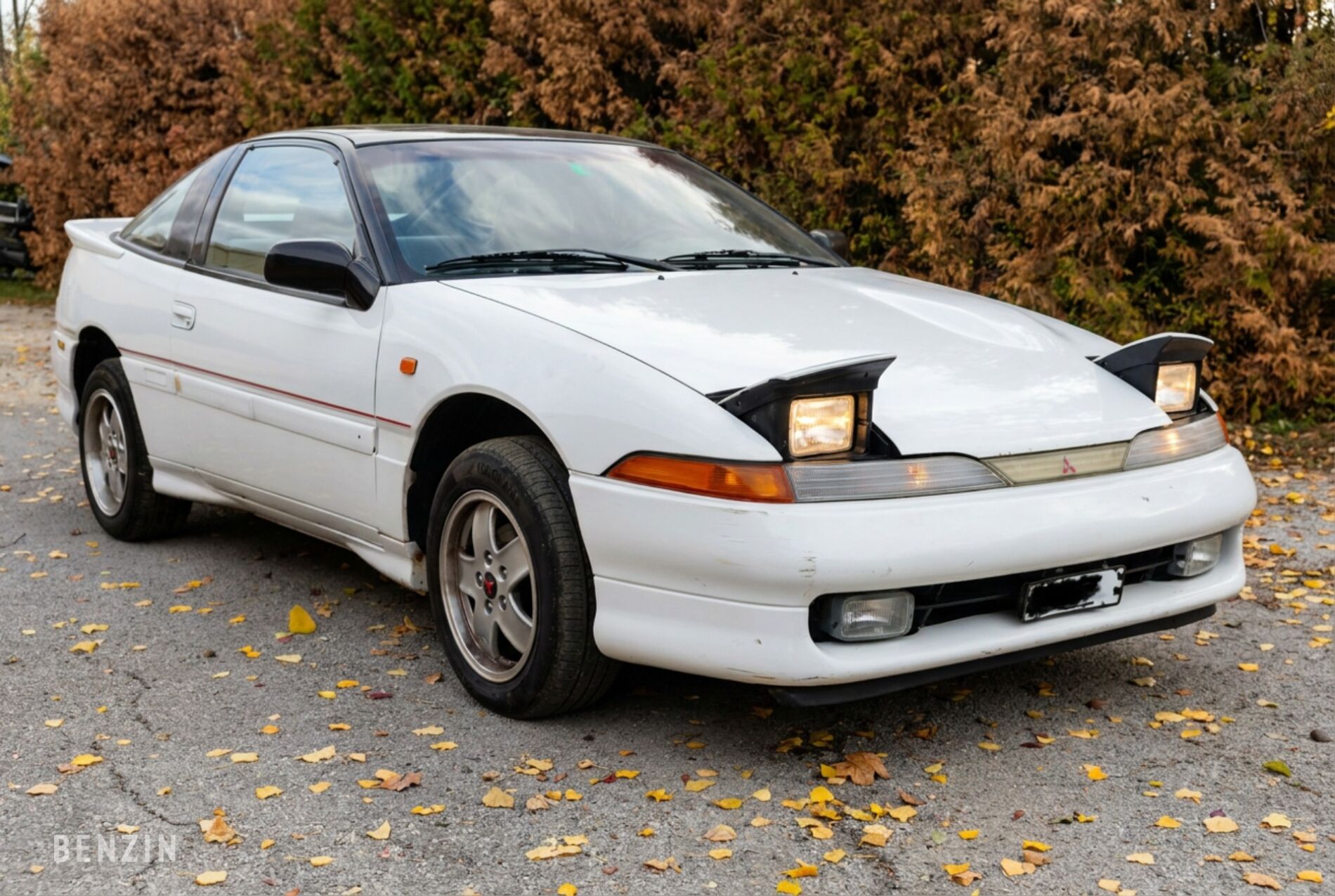
The Mitsubishi Eclipse is a 2+2 coupe developed for the North American market as part of the Diamond-Star Motors joint venture between Mitsubishi and Chrysler, and assembled in Normal, Illinois. Introduced for the 1990 model year, the first generation shares a technical base with the Eagle Talon and Plymouth Laser, with a smoother design and an accessible sports-car positioning. Its identity was very quickly built around turbo all-wheel-drive versions powered by the 4G63 four-cylinder, especially the GSX, to which enthusiasts often add the GS and GST depending on the market and local naming. The first series exists in two phases, with changes to the front end, interior, and engine management, while the naturally aspirated versions use other Mitsubishi engines. From this generation onward, the Eclipse built a strong reputation in tuning, drag racing, and the DSM world, where the ease of increasing power from the turbo 4G63 became a major selling point.
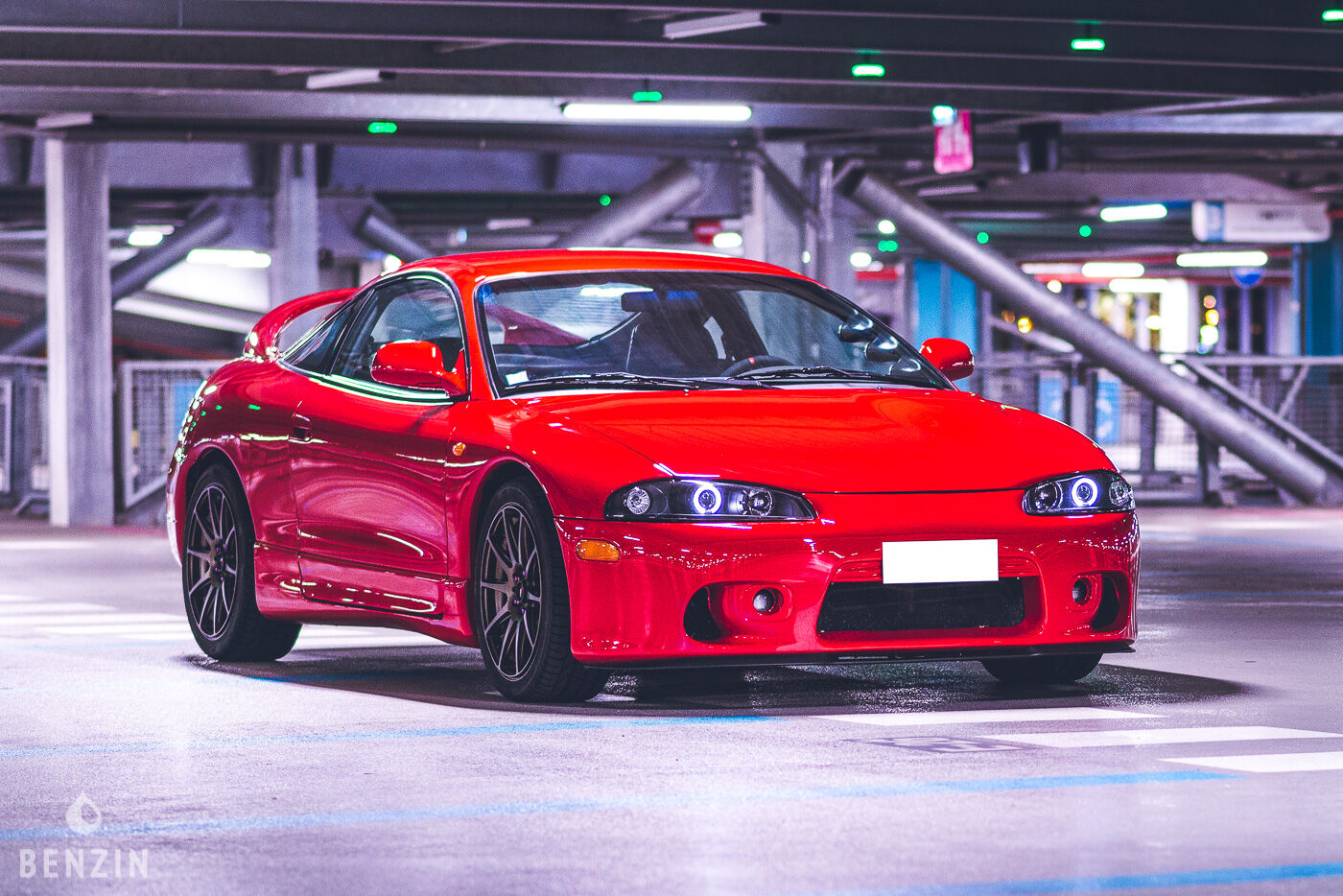
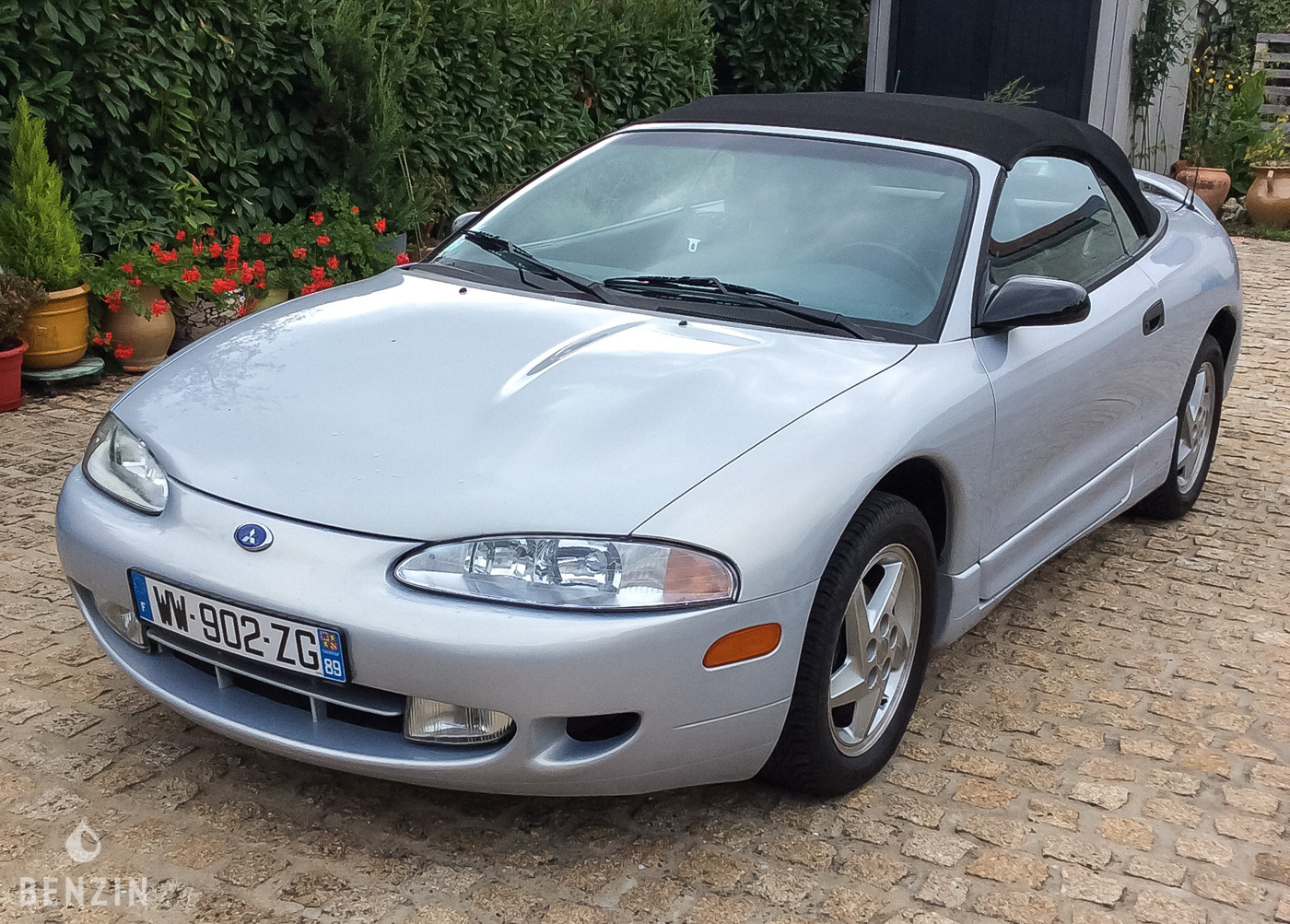
The second generation appeared for the 1995 model year with a rounder body, a modernized cabin, and an offering still centered on naturally aspirated and turbo versions, in front-wheel drive or all-wheel drive depending on the variant. The coupe was joined in 1996 by the Eclipse Spyder, initially offered as a soft-top convertible, best known in turbo front-wheel-drive GS-T and naturally aspirated GS form. On turbo versions, the 4G63 remains the benchmark engine, but second-generation cars are also the ones enthusiasts associate with the risk of “crankwalk” on certain 7-bolt engines, a subject widely documented in specialist clubs and forums. At the same time, the Eclipse gained strong cultural visibility, notably thanks to the tuning scene of the 1990s and 2000s and its prominent appearance in the first Fast & Furious film, which firmly embedded the 2G in popular culture.
The third and fourth generations, launched in 2000 and 2005 respectively, move away from the original formula with different platforms, the abandonment of turbo AWD versions, and a positioning that is more GT than true lightweight sports car. They have their fans, but it is mainly the 1G and 2G, especially the turbo and all-wheel-drive versions, that now attract collectors and enthusiasts. The sought-after examples are those that have remained close to original condition, as many have been modified, sometimes heavily, in intake, engine management, turbo, drivetrain, or wiring. In continental Europe, the Eclipse was often individually imported, which makes the compliance history, suspension condition, and quality of lighting adaptations particularly important.
Technical data
| Version | Eclipse 1G GSX / GS 4x4 Turbo | Eclipse 2G GS-T / GSX | Eclipse Spyder GS-T |
| Production years | 1989-1994 | 1995-1999 | 1996-1999 |
| Body style | 2+2 coupe | 2+2 coupe | 2+2 convertible |
| Engine | 2.0-liter turbo inline 4-cylinder 4G63 | 2.0-liter turbo inline 4-cylinder 4G63 | 2.0-liter turbo inline 4-cylinder 4G63 |
| Power | approx. 195 hp | 210 hp | 210 hp |
| Transmission | All-wheel drive, 5-speed manual | Front-wheel drive (GS-T) or all-wheel drive (GSX), 5-speed manual | Front-wheel drive, 5-speed manual |
| Weight | approx. 1,350 kg | approx. 1,330 to 1,450 kg depending on GS-T/GSX | approx. 1,450 kg |
| 0-100 km/h | approx. 6.5 s | approx. 6.5 to 7.0 s | approx. 7.0 s |
| Top speed | approx. 230 km/h | approx. 230 to 235 km/h | approx. 225 km/h |
| Assembly location | Normal, Illinois, United States | Normal, Illinois, United States | Normal, Illinois, United States |
Buyer’s guide
The versions to favor are the 1G turbo four-wheel-drive models and the 2G GSX or GS-T with a manual gearbox, especially when they are lightly modified and well documented. The 1G is the most “DSM” in spirit, the 2G combines style, performance, and recognition, while the Spyder GS-T is more appealing for leisure use than for body rigidity. The cars to avoid are mainly those modified without coherence, with a large turbo, approximate management, a tired drivetrain, or a hacked wiring harness.
Points to watch
- 4G63 timing and balance shaft belt : on 1G and 2G turbo models, failure of the main timing belt or the small balance shaft belt can lead to engine damage; check the date and mileage of the complete kit, including pulleys, hydraulic tensioner, and water pump.
- Crankwalk in 7-bolt engines : the most discussed issue on some 2G turbo models, especially 1995-1997; a clutch pedal that changes travel, unstable idle when the clutch is depressed, a damaged crankshaft sensor, or abnormal endplay should raise concern.
- Manual gearbox and synchros : the 5-speed gearboxes in turbo DSMs do not cope well with modifications and repeated hard launches; grinding into 2nd, difficult shifting when cold, or a vague shifter call for a careful test drive and rebuild invoices if the car is modified.
- Transfer case and all-wheel drive : on GSX and 1G 4x4 models, transfer case leaks, driveshaft play, and rear differential maintenance are known issues; check for the absence of seepage and load-related vibrations, and ask whether any recalls or old repairs were carried out.
- 1G engine ECU : the capacitors in early-generation ECUs can leak with age; a characteristic smell, erratic idle, random starting, or inconsistent fans justify opening the ECU or proof of refurbishment.
- Spyder soft top and mechanism : on 1996-1999 Spyders, water leaks, poorly adjusted windows, soft-top cover latches, and a tired mechanism are common; the top should be operated several times and the seals, fabric, rear window, and top well inspected.
- Structural corrosion : on examples imported from humid or salty regions, the rocker panels, jacking points, rear wheel arches, and suspension mounting points are the areas most closely watched by owners; good paint is not enough if the underside is affected.
- Engine modifications and management : many Eclipse turbo models have received a boost controller, injectors, exhaust, intercooler, or tuning without serious setup; check the consistency of the package, boost pressure, any possible fuel cut or knocking, and the exact identity of the parts installed.
When buying
On an Eclipse turbo, a compression test, ideally supplemented by a leak-down test, is very useful, as is checking crankshaft endplay on a 2G. On a 1G, inspection of the ECU and proof of a recent replacement of the complete timing system matter more than many added accessories. On imported examples, you should also check the compliance documents, the approval of the lights and turn signals, and the VIN’s match with the car’s true specification, especially to distinguish an authentic turbo AWD from a conversion or an incomplete assembly.
1 of the 2 Mitsubishi Eclipse listed on Benzin found a buyer — 50 % of completed sales.
Yes, 1 Mitsubishi Eclipse is currently for sale on Benzin.
Every vehicle comes with a detailed photo report, its history and the public exchanges between seller and community. You bid online; if you win, Benzin secures the payment and supports you through to delivery.
Follow the model from this page and you will get an e-mail as soon as a Mitsubishi Eclipse is listed on Benzin.
 English
 Français
 Español
 Italiano
 Deutsch
 Polski
 Magyar
