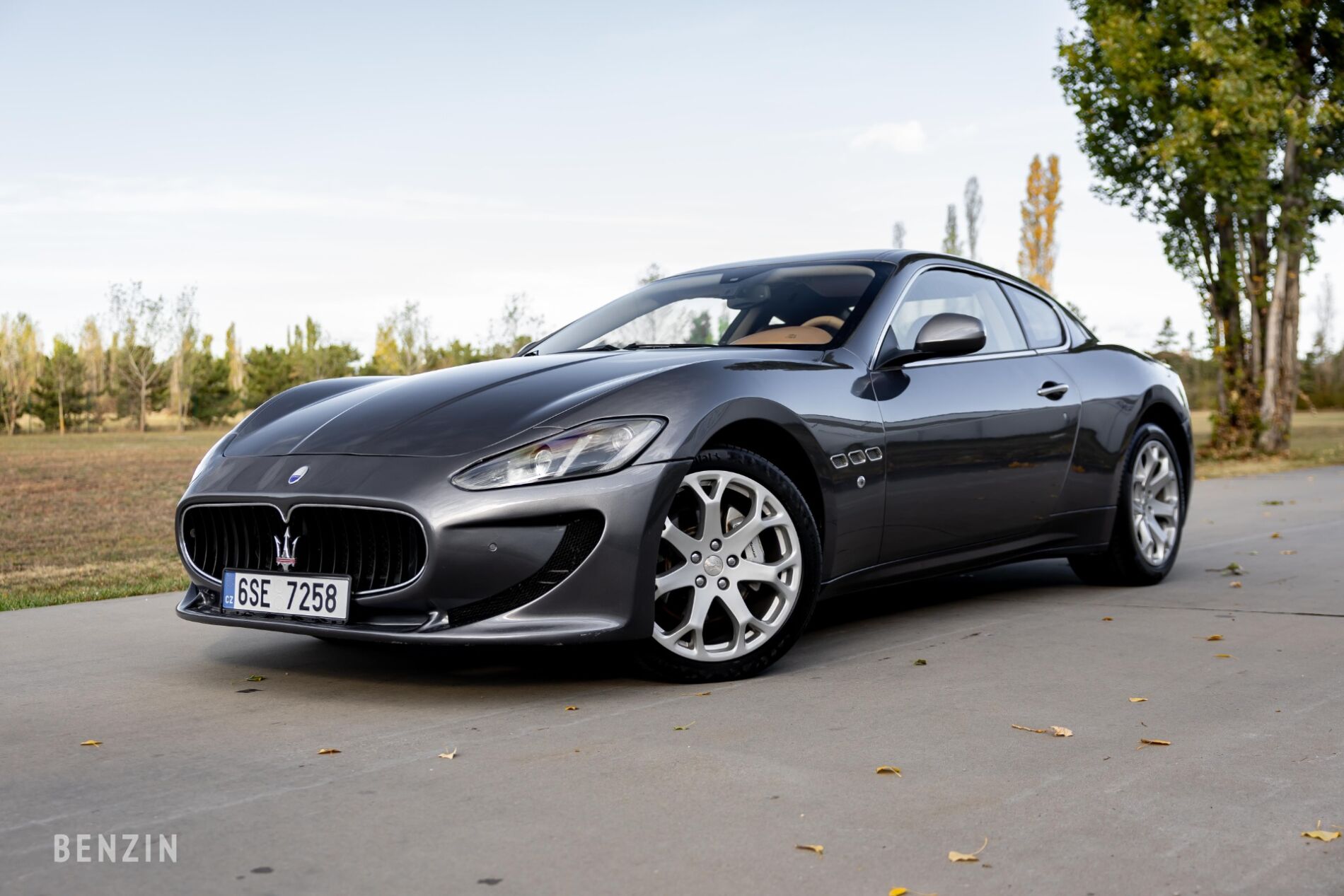
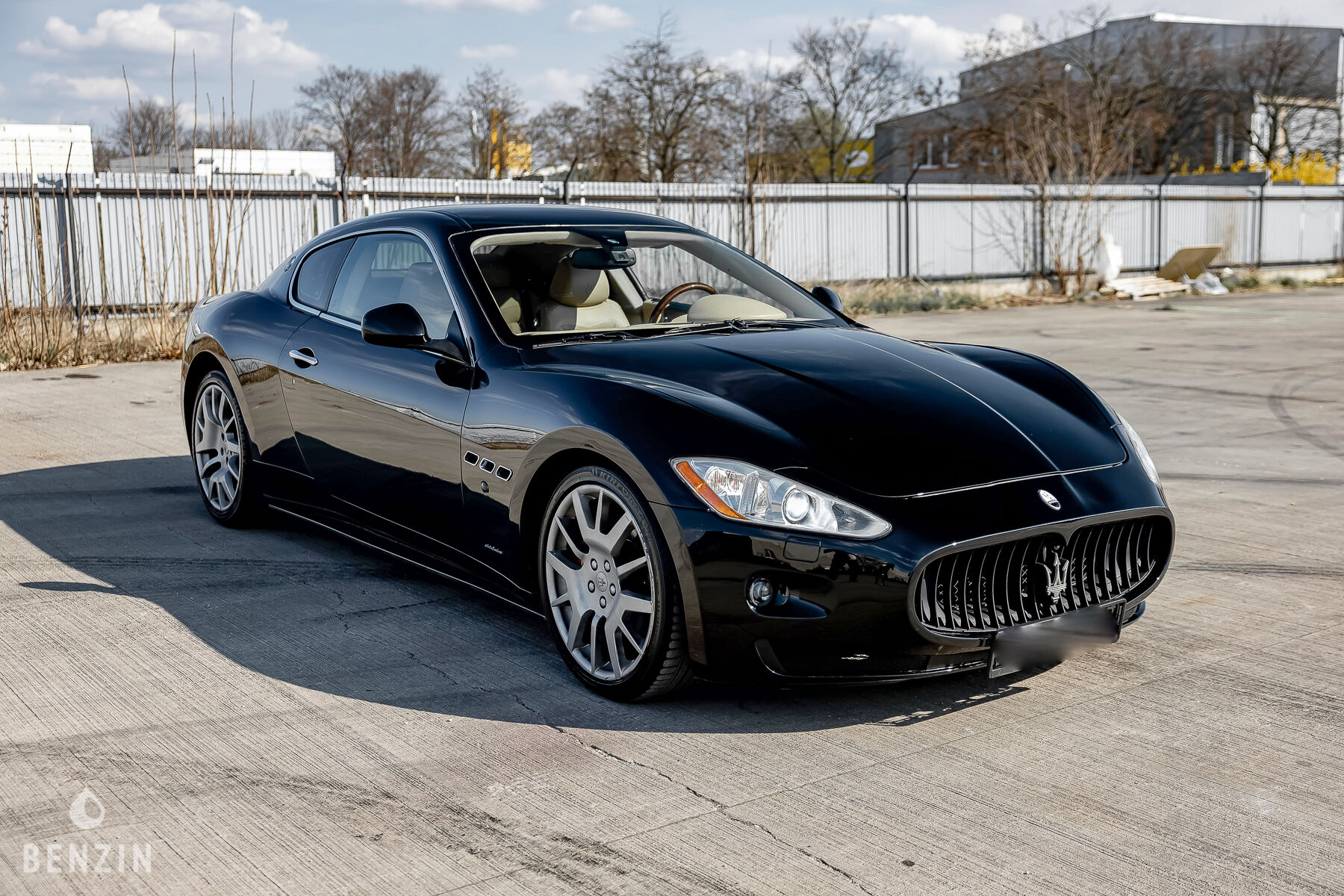
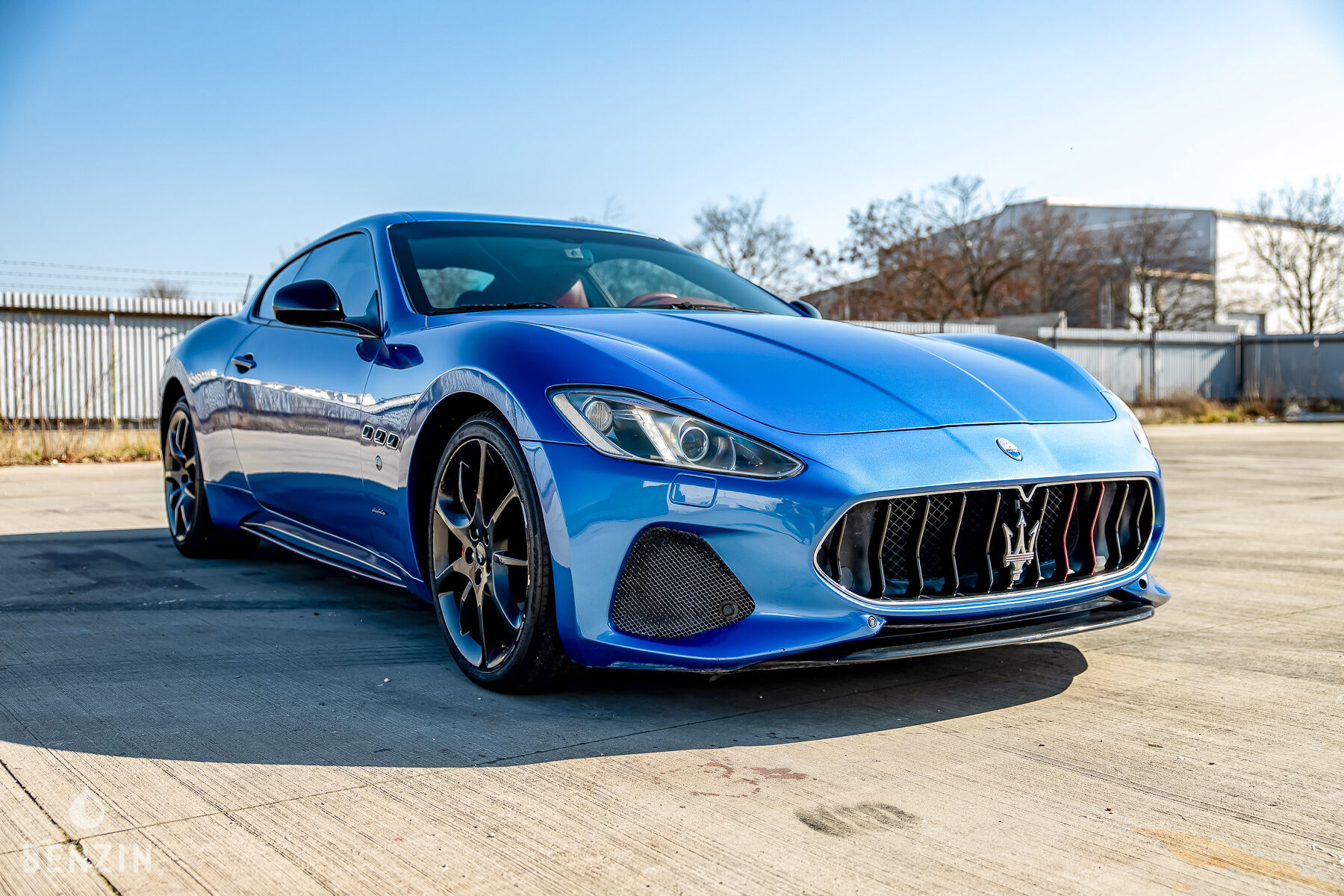
Unveiled at the 2007 Geneva Motor Show, the Maserati GranTurismo type M145 follows in spirit the Coupé designed a few years earlier by Giugiaro, but changes the formula completely with a far more ambitious 2+2 body, penned by Pininfarina. Its proportions, long hood and sculpted fenders make it one of the last great classic Italian GTs with a front-mounted naturally aspirated V8 and transaxle layout. The launch version gets the 4.2-liter Ferrari-Maserati F136 V8 paired with the 6-speed ZF automatic transmission, a configuration that remains highly sought after for its smoothness and ease of use. In 2008 came the GranTurismo S, recognizable by its styling changes and especially its 4.7-liter V8, initially paired with the MC-Shift robotized transmission. This S gave the car the character the 4.2 lacked, with sharper response, a fuller sound and a sportier temperament, but at the cost of less fluid use in town when the robotized gearbox is poorly adjusted or worn.
The range then evolved toward more versatile versions, notably the GranTurismo S Automatic and then, after the 2012 facelift, the GranTurismo Sport 4.7 with ZF gearbox, often considered the best compromise in the line-up. Maserati also offered trims and packs such as the MC Sport Line, more focused on styling and chassis, as well as the radical MC Stradale, a true dynamic showcase for the model. Over the course of its career up to 2019 for the coupé, the GranTurismo received updates to styling, infotainment and calibration, while never abandoning its original recipe: a naturally aspirated V8, four genuine occasional seats and a remarkably pure design. The car did not have a true customer endurance racing career in road-going form, but its image was boosted by MC competition derivatives and by a strong cultural presence, somewhere between luxury grand touring and the connoisseur’s car. Production of the first-generation coupé exceeds 28,000 units, making it a relatively widely produced modern Maserati without being common. Today, enthusiasts favor well-maintained, unmodified and properly specified examples, as the GranTurismo has become one of the last modern Maseratis to combine Pininfarina elegance and a naturally aspirated V8 without forced induction.
Technical data
| GranTurismo 4.2 ZF | GranTurismo S 4.7 | GranTurismo Sport 4.7 ZF |
| Production years | 2007-2019 | 2008-2012 | 2012-2019 |
| Body style | 2+2 coupé | 2+2 coupé | 2+2 coupé |
| Engine | 4.2 l naturally aspirated V8 | 4.7 l naturally aspirated V8 | 4.7 l naturally aspirated V8 |
| Power | 405 hp | 440 hp | 460 hp |
| Torque | 460 Nm | 490 Nm | 520 Nm |
| Transmission | Rear-wheel drive, 6-speed ZF automatic transmission | Rear-wheel drive, 6-speed MC-Shift robotized gearbox | Rear-wheel drive, 6-speed ZF automatic transmission |
| Curb weight | around 1,880 kg | around 1,880 kg | around 1,860 kg |
| 0-100 km/h | 5.2 s | 4.9 s | 4.8 s |
| Top speed | 285 km/h | 295 km/h | around 300 km/h |
| Specific features | Most GT-oriented version, the smoothest in daily use | First 4.7, sportier character, robotized transaxle gearbox | Facelift, accomplished calibration, most sought-after compromise |
Buyer’s guide
For regular use, the 4.2 ZF and especially the Sport 4.7 ZF are the easiest versions to recommend: the former for its smoothness, the latter for its fuller engine and more accomplished tuning. The GranTurismo S with MC-Shift appeals more to purists, but it must be bought on the basis of maintenance and transmission setup records, because a poorly calibrated car becomes expensive and unpleasant. The MC Sport Line series or packs are interesting if you are looking for appearance, but they do not on their own replace the mechanical appeal of a properly maintained 4.7.
Points to watch
- MC-Shift robotized gearbox and clutch : jerks, rough take-offs or slipping on early GranTurismo S 4.7 cars; ask for the clutch wear percentage, the PIS/adaptation value, and calibration or actuator invoices.
- ZF 6HP automatic transmission : slow shifts, hot jolts or harsh downshifts on the 4.2 and Sport 4.7 if the gearbox has wrongly been considered “maintenance-free”; make sure an oil change with pan/filter has already been done.
- Front suspension and alignment : knocks, wandering, or very common inner tire wear on this heavy model with a long front overhang; check the control arms, bushings, links, and a recent alignment report.
- Skyhook damping : error message, leaking damper or inconsistent behavior depending on the mode on equipped cars; the electronically controlled dampers are expensive, so their operation should be checked both by diagnostics and visually.
- Leather-trimmed dashboard : leather shrinking or peeling around the air vents and windshield, especially on cars that have lived in the sun or been imported from hot countries; inspect the top of the dashboard and the door panels closely.
- Front end, radiators and condensers : affected by the low ground clearance and road debris, with crushed fins, corrosion or leaks; look behind the grille, as well as for signs of bumper removal and work on the cooling pack.
- Valved exhaust : valves stuck open or closed, added manual control or tired vacuum hoses; on some cars, the presence of a key or valve control device deserves a clear explanation.
- Interior and comfort electronics : sticky buttons, temperamental Blue&Me/navigation, parking sensors or intermittent power windows; these are known aging issues on the GranTurismo and fixing them can quickly become tedious.
When buying
A Maserati diagnostic scan is particularly useful on this model: it allows you to read Skyhook suspension faults, the condition of the actuators, and on MC-Shift versions, clutch wear and adaptation parameters. On an imported car, you also need to very concretely check administrative compliance with the European market: VIN, country of first delivery, full European certificate of conformity or whether the procedure has already been completed, because not all GranTurismo cars seen on the road have the same homologation status. Finally, invoices for replacement of front suspension components, ZF gearbox oil changes, or work on the cooling pack are worth more than a stamped service book.
On Benzin a Maserati Granturismo has sold for 31 130 € on average, with a median price of 24 510 €. Based on the 7 sales completed on the platform.
The 7 Maserati Granturismo sold on Benzin changed hands for between 17 200 € and 48 500 €, depending on condition, mileage and version.
7 of the 14 Maserati Granturismo listed on Benzin found a buyer — 50 % of completed sales.
No Maserati Granturismo is for sale at the moment. Follow the model to be notified as soon as a new one is listed.
Every vehicle comes with a detailed photo report, its history and the public exchanges between seller and community. You bid online; if you win, Benzin secures the payment and supports you through to delivery.
Follow the model from this page and you will get an e-mail as soon as a Maserati Granturismo is listed on Benzin.
 English
 Français
 Español
 Italiano
 Deutsch
 Polski
 Magyar
