At Maserati, the name Ghibli actually covers three very different cars. The first, unveiled at the 1966 Turin Motor Show and sold from 1967, is a large front-engined coupé designed by Giorgetto Giugiaro at Ghia, on a low, long chassis that became one of the most striking Italian shapes of the 1960s. It first received a 4.7-litre V8, then the 4.9-litre engine of the Ghibli SS in 1969, with a much rarer Spyder variant; in total, just over 1,200 coupés and around 170 spiders were built up to 1973. This first Ghibli very quickly achieved major classic status, for both its styling and its high-speed grand touring performance.
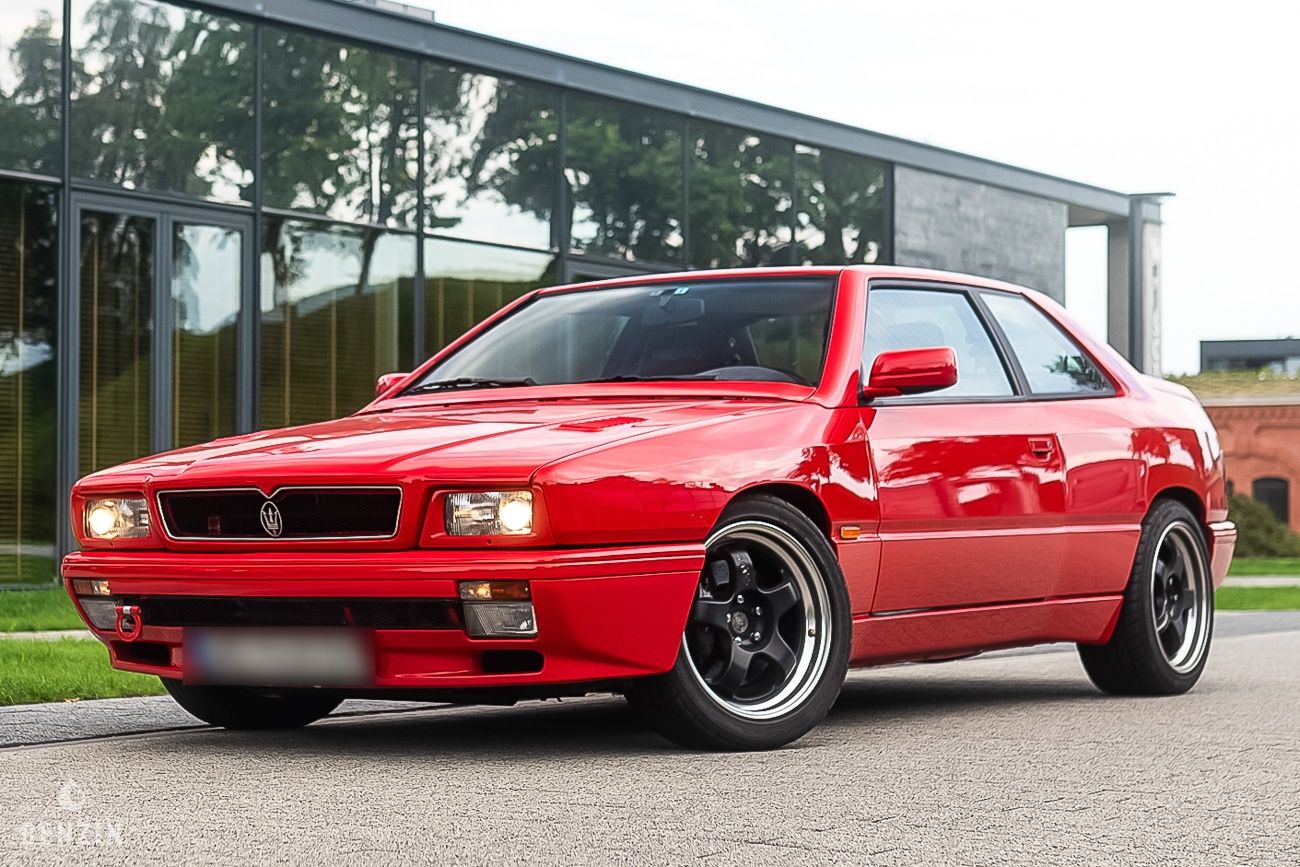
The name reappeared in 1992 on the Ghibli II, derived from the Biturbo family and extensively reworked under a body redesigned by Marcello Gandini. This 2+2 coupé was offered with 2.0-litre twin-turbo V6s for the Italian market and 2.8-litre units for export, first with a 6-speed manual gearbox and then, depending on the market, with an automatic; it later evolved into the Ghibli GT and the Ghibli Cup, the latter being the most radical. The Cup, developed in the wake of the single-make Open Cup trophy, became the cult version, but the late-run 2.8 GTs are often sought after for their more road-friendly feel and more accomplished setup. Produced in small numbers, the Ghibli II is now one of the modern Maseratis most appreciated by fans of the Biturbo era.
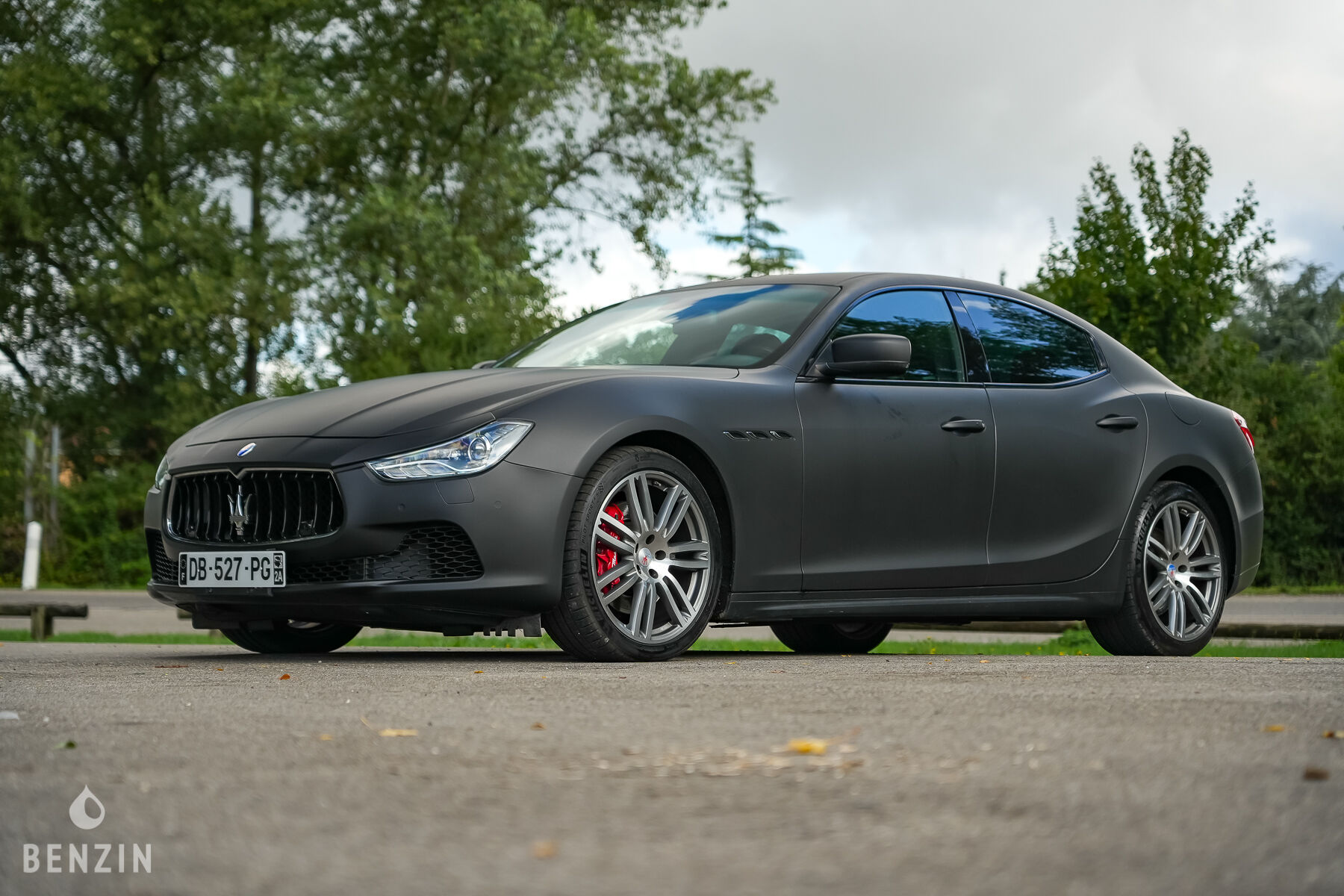
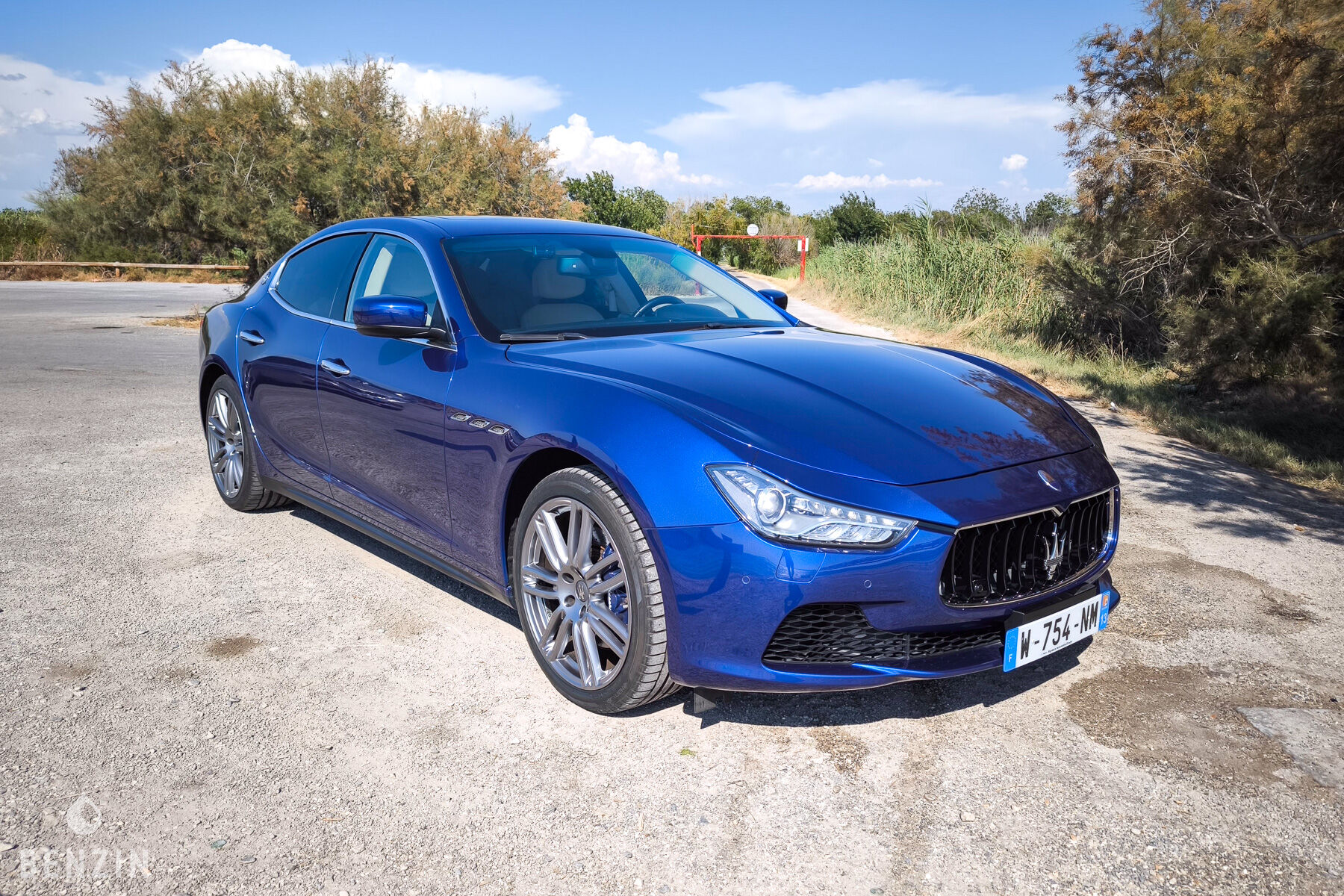
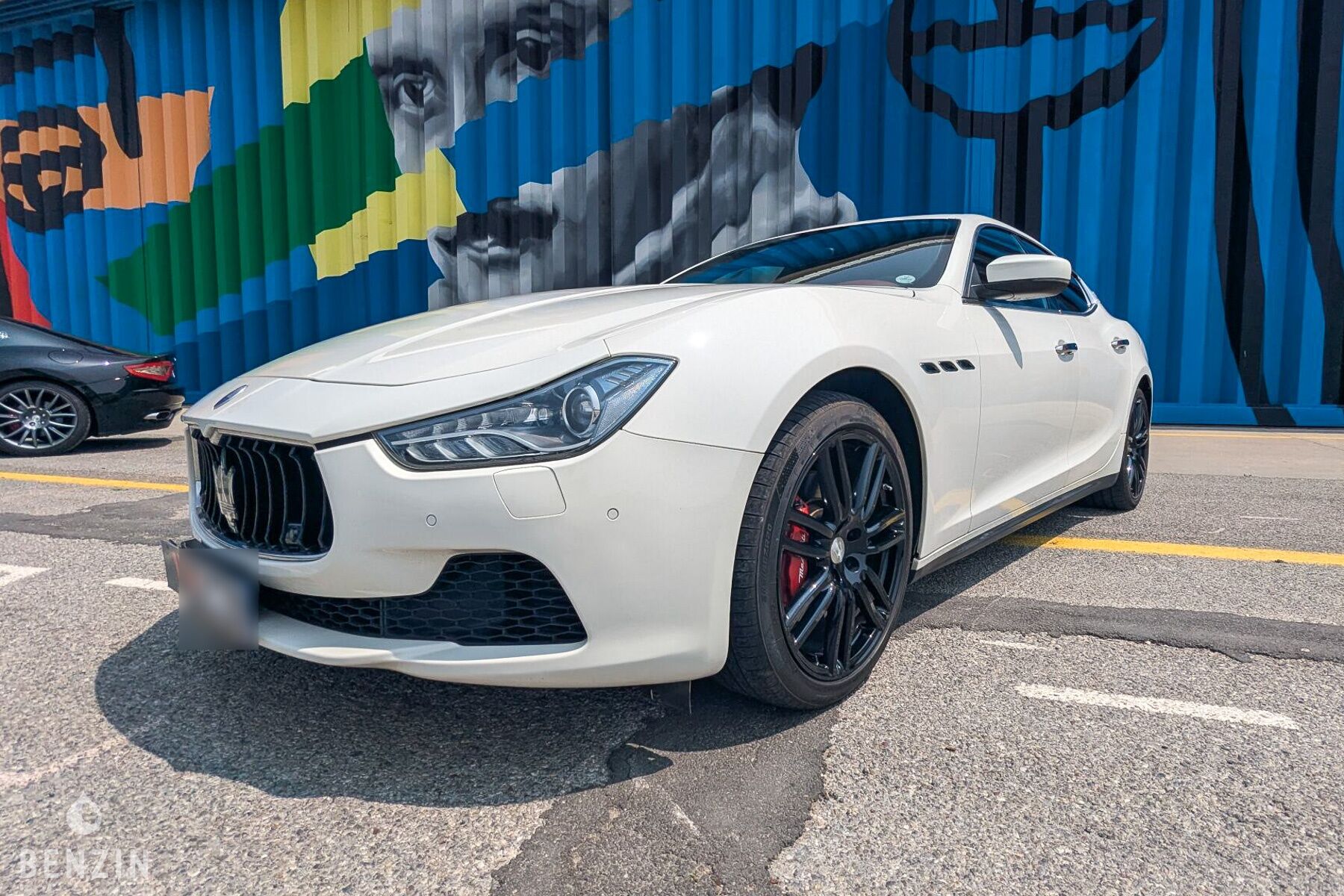
The third Ghibli, introduced in 2013, marks a complete change of direction: it is a sporty upper-segment saloon, designed by the Maserati Centro Stile, intended to broaden the brand’s customer base. It introduced 3.0-litre twin-turbo petrol V6s, including the S and S Q4 all-wheel-drive versions, as well as a Diesel V6 in some markets; the range was then facelifted in 2017 with revised styling and a modernised multimedia system. The examples most commonly seen today are precisely the early S and S Q4 cars, appreciated for their mechanical character, styling and versatility, provided they have been maintained with care. In the collector world, this generation does not yet have the heritage status of the first two, but it is already attracting enthusiasts looking for a Maserati that can be used every day.
Technical data
| Features | Ghibli II 2.8 GT | Ghibli S | Ghibli S Q4 |
| Production years | 1996-1998 | 2013-2017 (phase 1) | 2013-2017 (phase 1) |
| Body style | 2-door coupé, 2+2 | 4-door saloon | 4-door saloon |
| Engine(s) | 2.8-litre twin-turbo V6 | 3.0-litre twin-turbo V6 | 3.0-litre twin-turbo V6 |
| Power | 284 hp | 410 hp | 410 hp |
| Transmission | Rear-wheel drive, 6-speed manual gearbox | Rear-wheel drive, 8-speed ZF automatic gearbox | Q4 all-wheel drive, 8-speed ZF automatic gearbox |
| Weight | Around 1,400 kg | Around 1,810 kg | Around 1,870 kg |
| 0-100 km/h | Around 5.7 s | Around 5.0 s | Around 4.8 s |
| Top speed | Around 255 km/h | 285 km/h | 284 km/h |
Buyer’s guide
For the Ghibli II, the late-production 2.8 GTs are generally the easiest to recommend: they retain the Biturbo character with a more mature setup than the early 2.8s. On the modern saloon, the Ghibli S and especially the facelifted or very well-maintained S Q4s are the ones to favour; imported cars without a clear file, or modified cars without precise records, require more caution. The Ghibli Cup is the most desirable for the informed enthusiast, but it is also the most specific and the least universal.
Points to watch
- Exhaust manifolds : cracks or distortion with cold-start rattling, exhaust smell and sometimes a check engine light on early Ghibli III V6 twin-turbo models; ask whether the manifolds have already been replaced and listen to the engine cold.
- ZF 8HP gearbox : jolts, hesitation or harsh downshifts on Ghibli S and S Q4 if fluid changes have been neglected despite the “lifetime gearbox” claim; check the transmission service history and the smoothness of shifts on the road.
- Q4 drivetrain : vibrations, rumbling or abnormal reactions during manoeuvring that may come from the transfer case or front differential on the S Q4; check for the absence of noise under load and ask whether the all-wheel-drive fluids have been changed.
- Skyhook suspension : leaking dampers, irregular operation or dashboard messages on examples equipped with adaptive damping; check Sport mode, the absence of leaks and the cost of any replacement already carried out.
- Multimedia and telematics system : interface bugs, outdated mapping, non-French language or incomplete functions on imported Ghibli III; check the system language, completed updates and the presence of menus compliant with the French market.
- Body corrosion : sills, windshield surround, lower door sections and rear wheel arches on the Ghibli II, a classic weak point of the Biturbo family; inspect panel joints closely and any paintwork repairs in these areas.
- Turbos and engine management : irregular boost build-up, smoke on acceleration or jerky running on Ghibli II 2.0/2.8, often linked to tired hoses, boost control issues or worn turbos; the test drive should confirm strong, smooth pull.
- Manufacturer’s plate and compliance : missing plate, incomplete homologation file or partial certificate on imported cars, especially Ghibli III; check that the VIN/plate/registration document match and that the documents needed for registration are present.
At the time of purchase
On a Ghibli III, a Maserati diagnostic scan or equivalent is very useful for reading stored faults, checking gearbox adaptations and verifying controlled systems such as the suspension or the Q4 drivetrain. On a Ghibli II, a compression test, a check of boost pressure and detailed invoices for engine work are far more telling than a simple incomplete service book. For imported cars, the compliance file adapted to the French market is also required, and for collector examples, matching numbers, the manufacturer’s plate and the original configuration remain a real plus.
On Benzin a Maserati Ghibli has sold for 23 590 € on average, with a median price of 25 000 €. Based on the 5 sales completed on the platform.
The 5 Maserati Ghibli sold on Benzin changed hands for between 15 000 € and 30 700 €, depending on condition, mileage and version.
5 of the 9 Maserati Ghibli listed on Benzin found a buyer — 56 % of completed sales.
No Maserati Ghibli is for sale at the moment. Follow the model to be notified as soon as a new one is listed.
Every vehicle comes with a detailed photo report, its history and the public exchanges between seller and community. You bid online; if you win, Benzin secures the payment and supports you through to delivery.
Follow the model from this page and you will get an e-mail as soon as a Maserati Ghibli is listed on Benzin.
 English
 Français
 Español
 Italiano
 Deutsch
 Polski
 Magyar
