Maserati Biturbo
Presented at the end of 1981 and sold from 1982, the Maserati Biturbo marks the brand’s true return to the field of compact GTs produced in larger series. The project was launched under Alejandro De Tomaso, with styling by Pierangelo Andreani at Italdesign, in a very angular 2+2 coupé body that stood in sharp contrast to the large Maseratis of the 1970s. Its major technical novelty was then unprecedented on a European production car of this class: a 90° V6 boosted by two turbochargers, combined with a richly trimmed cabin of velour, leather and wood veneer. The first Biturbo received a 2.0-litre engine for the Italian market, then a 2.5-litre for export; very soon came the more powerful Biturbo S, the four-door 425 and then 420/430 sedans, as well as an entire family of derivatives. The range then evolved in stages with the 222, 228 and 430, then with the move to 4-valve cylinder heads on the 2.24v, 4.24v and 430 4v, before culminating in the Racing and the final Ghibli II derived closely from it.
The versions visible today on the French collector market mostly belong to the mature phase of the line: 425 with carburetors or injection, 222, 222 SR, 224v and 430. The 425, launched in the mid-1980s, transposes the Biturbo formula into a discreet and very fast sedan, while the 430 becomes the family’s large sedan with its 2.8-litre V6, more complete equipment and, on some series, controlled suspension. The 222 and 222 SR coupés modernize the original Biturbo through their presentation and tuning, while the 224v adopts the 4-valve cylinder head to offer a livelier character at high revs and a response that feels less dated than the early carbureted versions. The Biturbo also has cultural importance: it put the Maserati name back on the street, in dealerships and in the European automotive landscape of the 1980s, even if its reputation long suffered from an uneven initial setup. Total production of the Biturbo family alone, in the broad sense, runs into several tens of thousands of examples, but each variant was built in relatively limited numbers.
Today, enthusiasts’ interest is focused on cars that are well documented, properly made reliable and kept close to their original configuration. Experts clearly distinguish the early Biturbo, which are more delicate and more distinctive, from the late-run 222/224v/430, generally more accomplished and easier to recommend. The 425 and 430 sedans remain undervalued compared with the coupés, even though they offer the same mechanical layout and a very 1980s charm, often with more equipment. The “S” versions, the 4-valve cars and the late series are particularly appreciated by the marque’s fans, provided that corrosion, cooling and turbo maintenance have been dealt with seriously.
Technical data
| Characteristic | Biturbo S | 425 | 430 / 224v |
|---|---|---|---|
| Production years | mid-1980s | around 1983-1987 | late 1980s to early 1990s |
| Body style | 2-door coupé, 2+2 | 4-door sedan | 430: 4-door sedan / 224v: 2-door coupé |
| Engine(s) | 2.0-litre twin-turbo V6, carburetors then injection depending on year | 2.5-litre twin-turbo V6, carburetors then injection depending on version | 430: 2.8-litre twin-turbo V6 / 224v: 2.0-litre twin-turbo 4-valve V6 |
| Power | about 180 to 205 hp depending on series | about 185 to 192 hp depending on fueling | 430: about 225 hp / 224v: about 245 hp |
| Transmission | 5-speed manual, rear-wheel drive | 5-speed manual, rear-wheel drive | 5-speed manual or automatic depending on version, rear-wheel drive |
| Weight | about 1,150 to 1,250 kg | about 1,250 to 1,350 kg | about 1,250 to 1,400 kg |
| 0-100 km/h | about 6.5 to 7.5 s | about 7.0 to 8.0 s | 430: around 6.0-6.5 s / 224v: around 5.5-6.0 s |
| Top speed | about 215 to 230 km/h | about 215 to 220 km/h | 430: about 235 km/h / 224v: about 240-245 km/h |
| Particularities | more sporting “S” versions, specific presentation | first widely distributed Biturbo sedan | most accomplished late versions; 224v with 4-valve cylinder heads |
Buyer’s guide
For relaxed collector use, the 222, 222 SR, 224v and late 430 are generally the most recommendable, as their development is more accomplished than that of the early carbureted Biturbo. The 224v is the most appealing for its 4-valve engine, while the 430 offers an excellent balance of performance, comfort and discretion. The early Biturbo S have a lot of charm, but they require a buyer better prepared for the specifics of carburetion, ignition and cooling.
Points to watch
- Timing belt : periodic replacement is mandatory on all Biturbo V6s; a car that has done little mileage is not exempt from old belts. You should ask for the exact date and mileage of the last replacement, as well as the water pump and idlers when the invoice specifies them.
- Head gaskets and cylinder heads : a known weakness if the engine has overheated or if the cooling system has been neglected, particularly on cars that have been laid up for a long time. Look for mayonnaise-like residue, pressure in the expansion tank, abnormal smoke, old signs of dismantling, and check whether the cylinder heads were tested or resurfaced during a rebuild.
- Cooling system : radiator, viscous coupling/fans, hoses and expansion tank are crucial on this model. A rapid rise in temperature in traffic, air conditioning that makes overheating worse, or hard hoses after driving should raise concern.
- IHI turbochargers : bearing wear, blue smoke on overrun, excessive whistling or irregular boost build-up, especially on cars that have not been allowed to cool properly after use. Check for excessive play, symmetry of operation between the two turbos and any rebuild invoices if they exist.
- Carburetion/injection and ignition : on early Biturbo S and some 425s, the twin carburetors and their adjustment are sensitive to long periods off the road; on injection versions, period sensors, connectors and ECUs can cause unstable idle and flat spots on acceleration. A car that starts poorly when hot or hesitates under load deserves a targeted diagnosis, not a rough adjustment.
- Corrosion of the side members, floors and crossmembers : a recurring point of concern on 1980s cars, especially if they have lived in a damp climate or have been improperly jacked up. The front and rear side members, jacking points, sills and front crossmember must be examined carefully, as notes on the inspection report can conceal both corrosion and the aftermath of an old impact.
- Controlled suspension and damping : some 430 and higher-spec versions received a controlled system that is now expensive to restore. Check that the modes actually work, that there are no warning lights or bodges, and that the correct components are present rather than undocumented replacement with non-original parts.
- Cabin electrics : instrument cluster, air conditioning, power windows, central locking and secondary controls are classic sources of faults on Biturbo. On a car that appears to have been restored, it is important to make sure this is not a recurring wiring loom or ground issue hidden by fresh paint or a retrimmed interior.
At the time of purchase
On a Biturbo, invoices for major mechanical work matter more than simple routine maintenance notes: dated timing belt replacement, cooling system overhaul, work on the head gaskets, turbos and injection or carburetion adjustment. A compression test, or better still a cylinder leak-down test, is very useful on a car that has been off the road or advertised as having had an engine rebuild without detailed records. It is also necessary to check that the chassis number, manufacturer’s plate and original configuration match, because many cars have received parts from other versions over time. Finally, an inspection of the underside on a lift is particularly important on 425, 430 and early coupés to assess the true condition of the side members, crossmembers and mounting points.
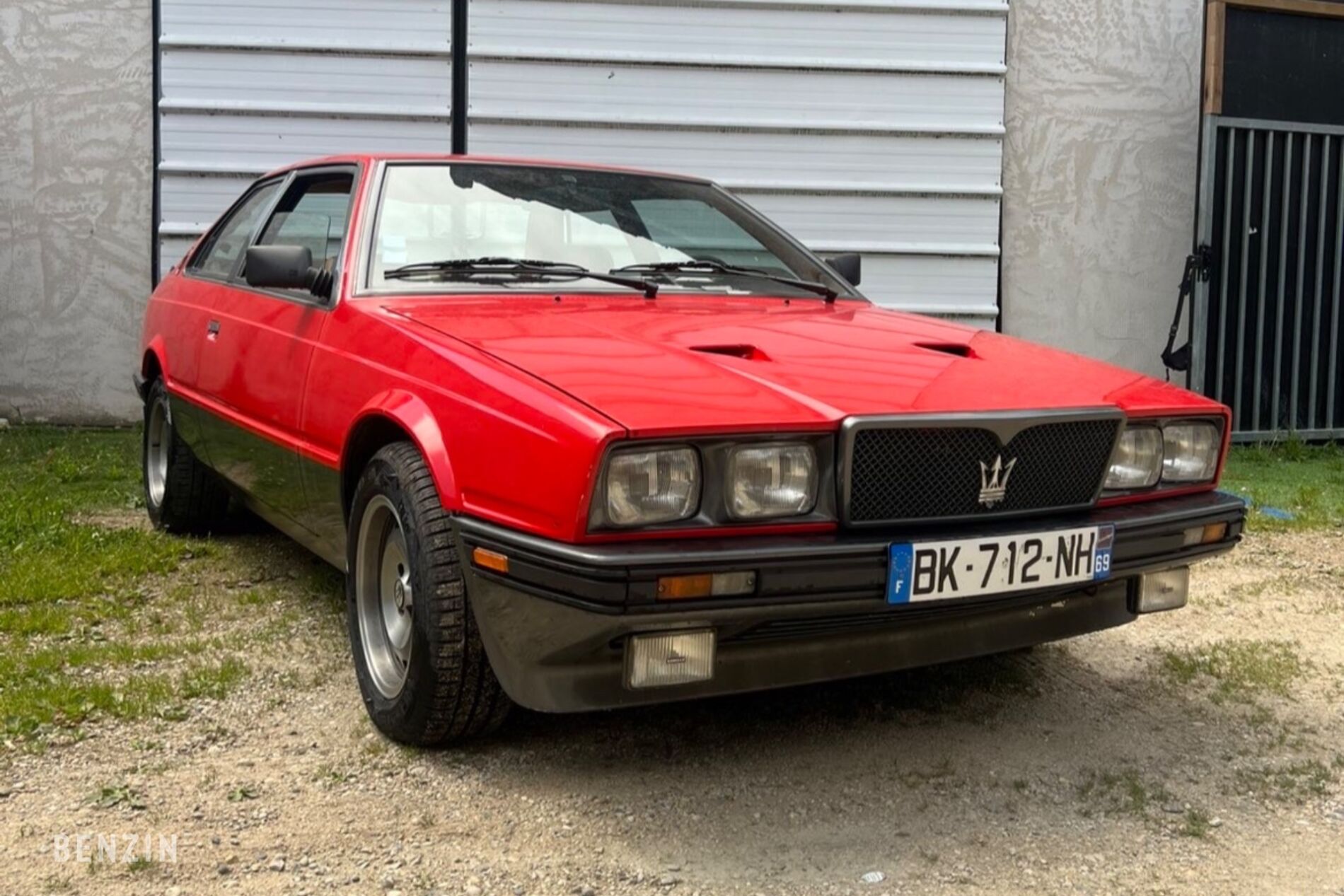
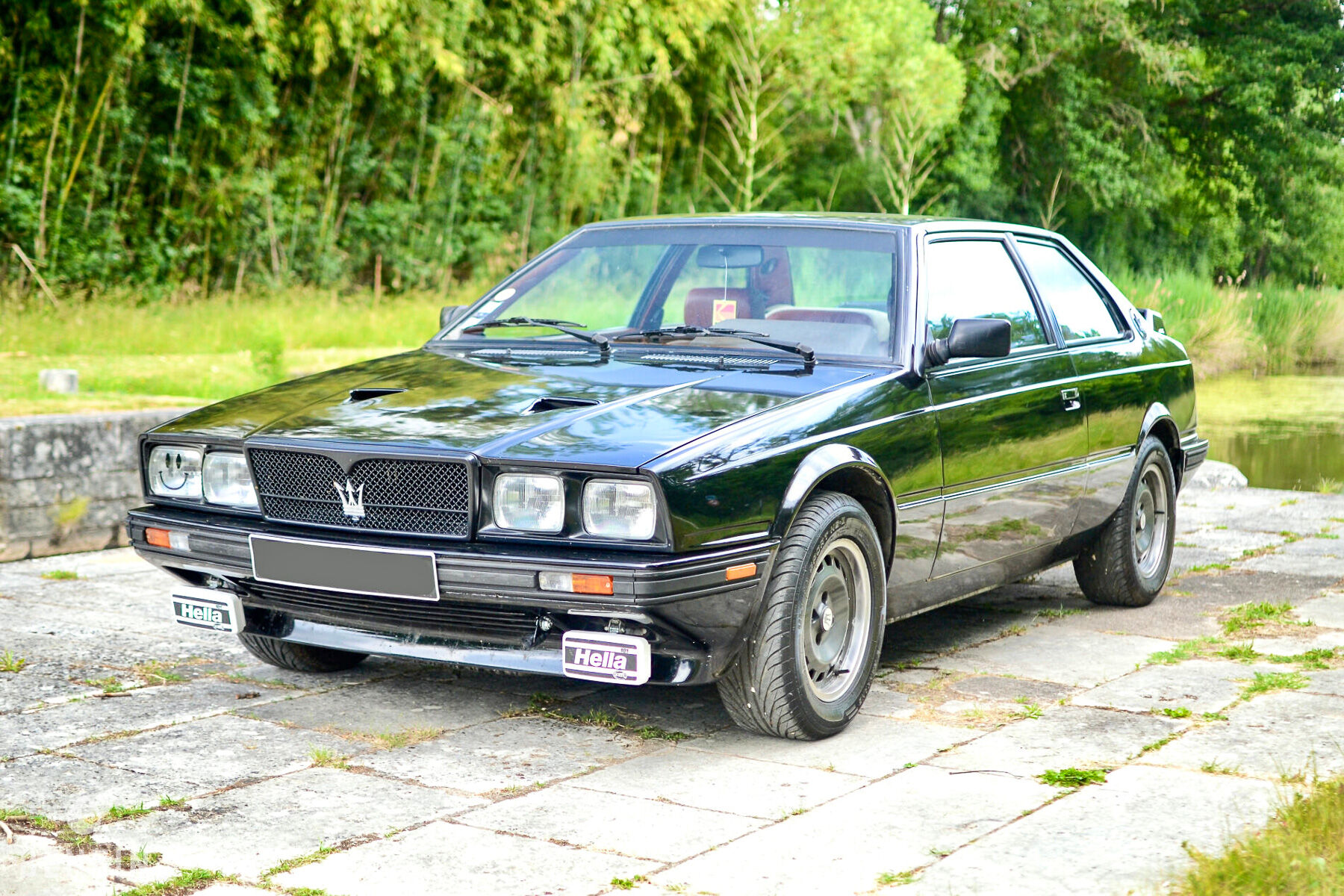
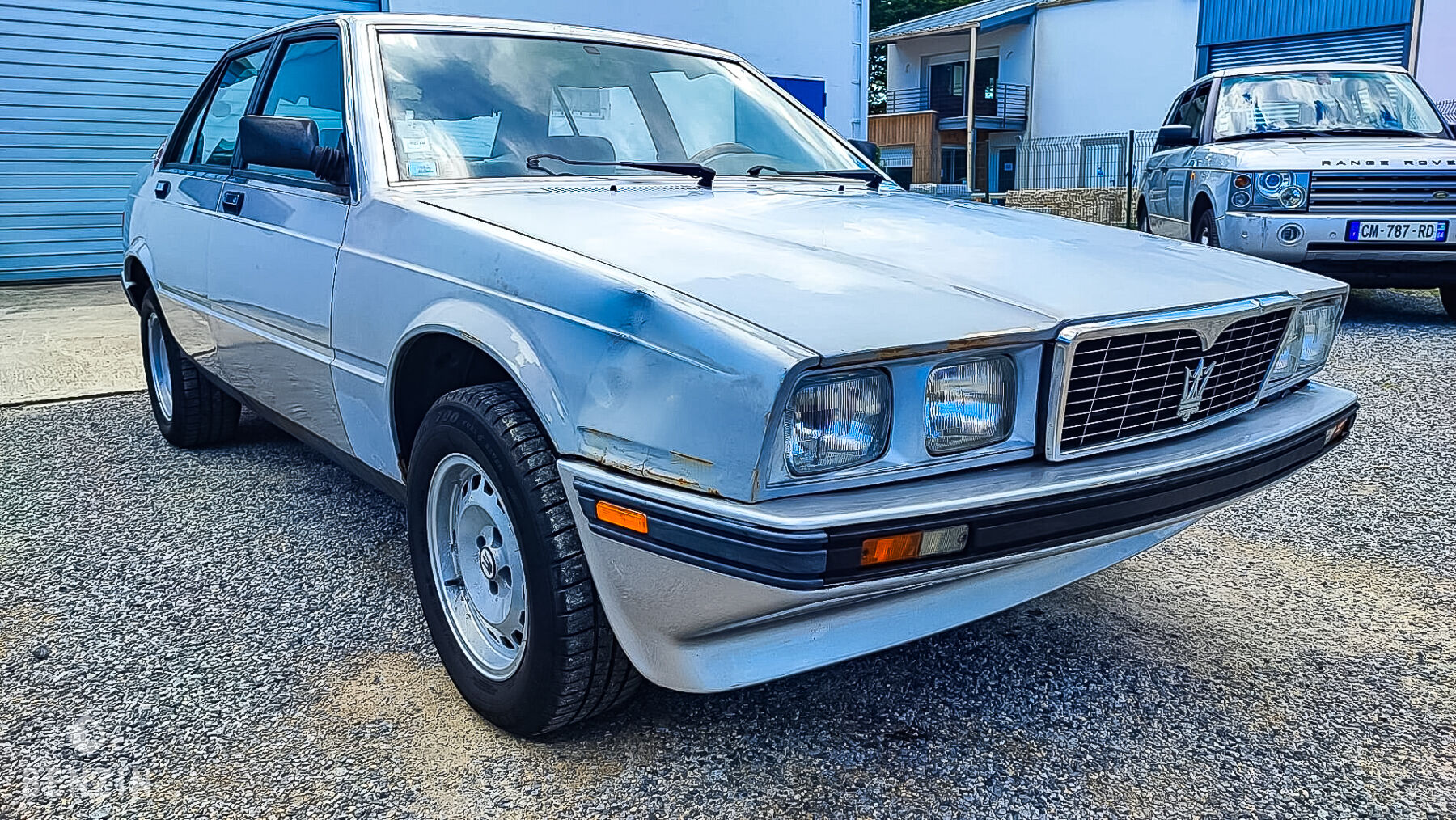
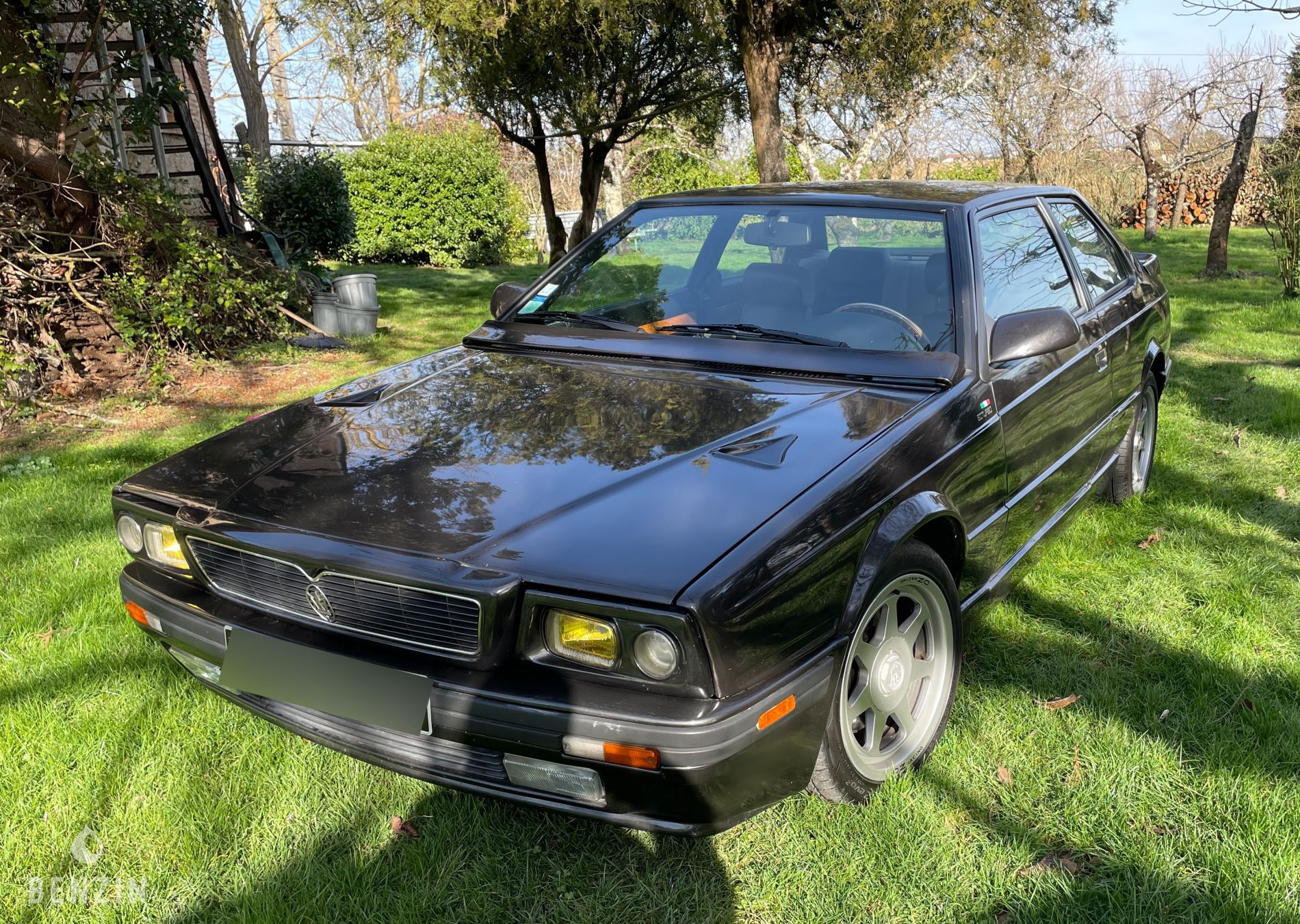
Maserati Biturbo — Sold
Frequently asked questions
How much does a Maserati Biturbo cost?
On Benzin a Maserati Biturbo has sold for 7 706 € on average, with a median price of 8 000 €. Based on the 9 sales completed on the platform.
What is a Maserati Biturbo worth?
The 9 Maserati Biturbo sold on Benzin changed hands for between 950 € and 15 200 €, depending on condition, mileage and version.
Do Maserati Biturbo sell well?
9 of the 12 Maserati Biturbo listed on Benzin found a buyer — 75 % of completed sales.
Is there a Maserati Biturbo for sale right now?
No Maserati Biturbo is for sale at the moment. Follow the model to be notified as soon as a new one is listed.
How do I buy a Maserati Biturbo on Benzin?
Every vehicle comes with a detailed photo report, its history and the public exchanges between seller and community. You bid online; if you win, Benzin secures the payment and supports you through to delivery.
How do I hear about the next Maserati Biturbo?
Follow the model from this page and you will get an e-mail as soon as a Maserati Biturbo is listed on Benzin.
Welcome to Benzin, the French online auction platform dedicated to sports cars, classics and youngtimers.
Discover detailed listings, bidders verified by credit card and payment secured in escrow. Fees among the lowest on the market, capped at €3,900. Buying and selling your car becomes a pleasure: join Benzin.
 English
 Français
 Español
 Italiano
 Deutsch
 Polski
 Magyar
