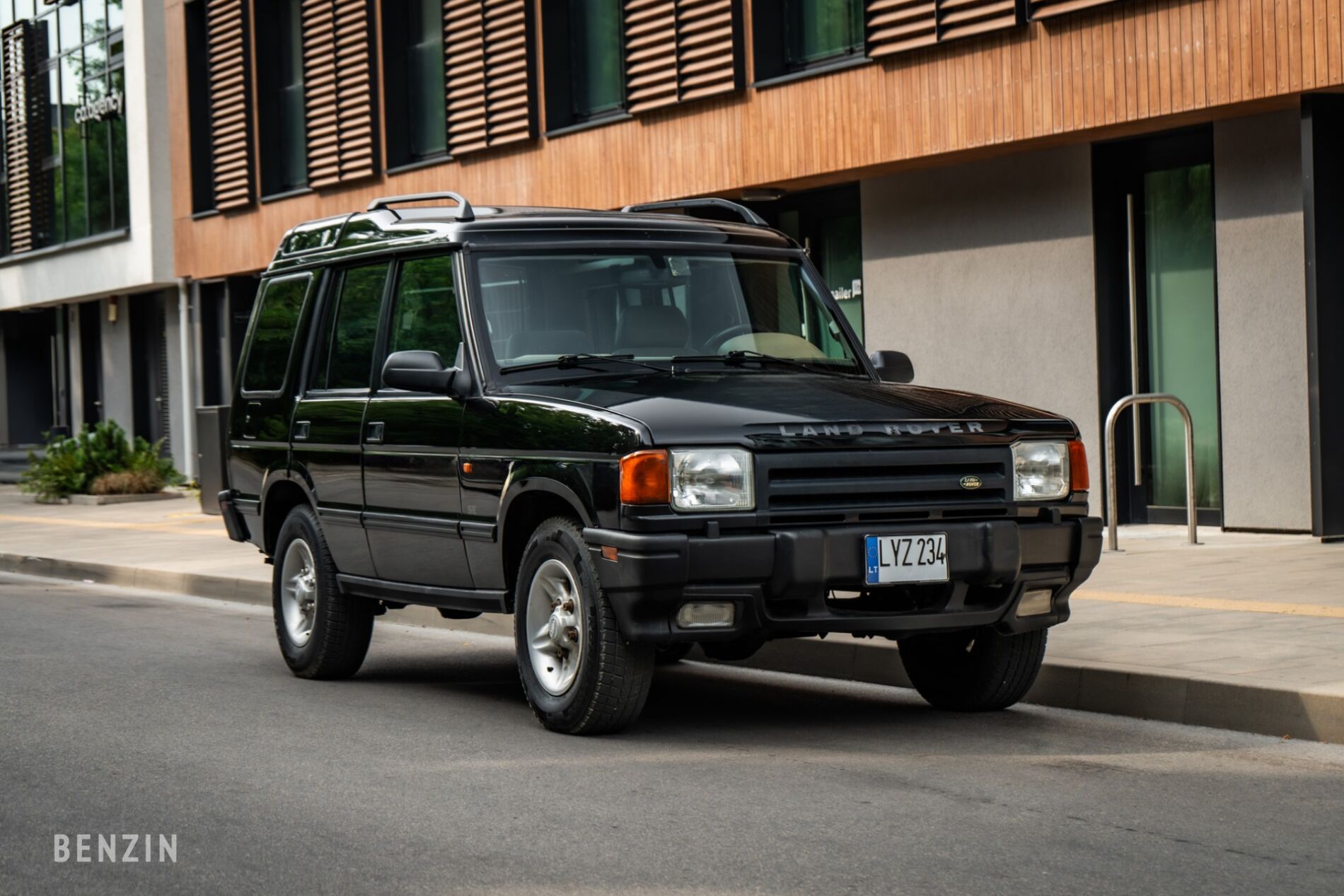
Unveiled at the 1989 Frankfurt Motor Show, the Land Rover Discovery was created to fill the gap between the rugged Defender and the more upscale Range Rover, with the idea of offering a true, more accessible and more modern family 4x4. The project was led by Tony Gilroy for the interior and exterior design, using a technical base closely derived from the Range Rover Classic: separate chassis, solid axles, transfer case and strong off-road capability. The first Discovery, now called Discovery I, are recognizable by their raised rear roof section, their “alpine lights” roof windows and a body initially available as a three-door, then very quickly as a five-door. At launch, the range was mainly based on the 3.5-litre Rover petrol V8 and the 2.5-litre 200 Tdi diesel, a engine that became central in the European market; in 1994, a major facelift brought a revised cabin, then the 300 Tdi replaced the 200 Tdi, while the V8 grew to 3.9 litres in several markets. The Discovery then established itself as a versatile 4x4, capable of towing, traveling and off-roading, which explains its strong presence in leisure raids, expeditions and many builds.
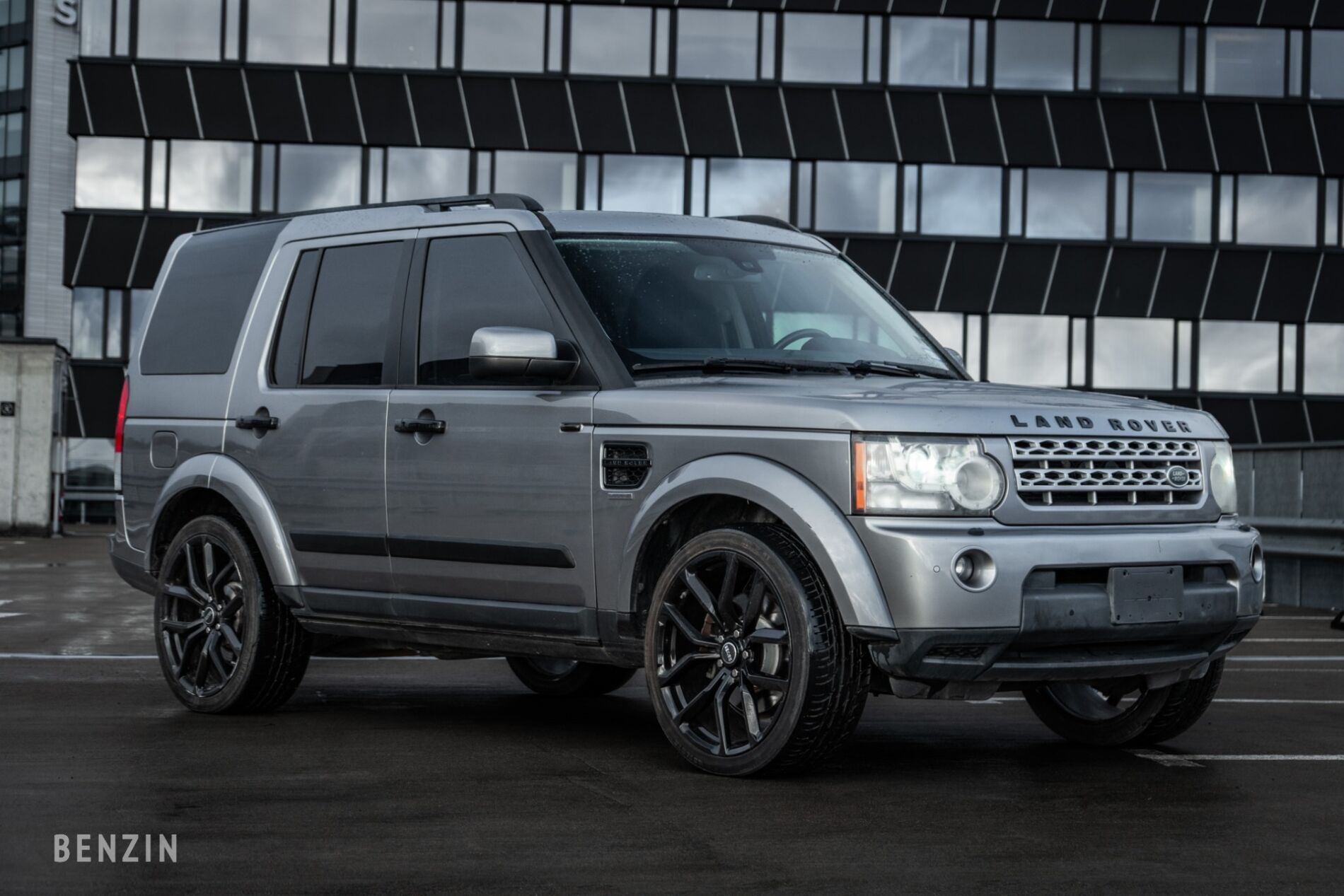
Launched in 1998, the second generation keeps the overall silhouette but evolves significantly in structure, safety and electronics; it notably receives the five-cylinder Td5 diesel, iconic among the brand’s fans, as well as a modernized V8. In 2004, the Discovery 3 breaks with the historical formula: integrated structure, independent suspension and, depending on the version, air suspension, with a spectacular gain in road manners without losing its off-road ability. Its 2009 evolution, often called Discovery 4 and sold in North America under the name LR4, adopts a more refined design, very comprehensive electronic equipment and new engines, including the 5.0-litre AJ petrol V8 in some markets such as the United States. The line continues in 2017 with the fifth-generation Discovery, more road-oriented and more luxurious, marking the model’s definitive shift toward the premium large family SUV.
The Discovery also left its mark on Land Rover culture through its widespread use in clubs, long-distance travel, agricultural or hunting support and amateur endurance competitions, more than through a major factory program. There are many special editions, from very well-equipped Camel Trophy or ES versions to editions linked to the G4 Challenge, and they now contribute to the diversity of the collector market. Among enthusiasts, the Discovery I appeals for its relative simplicity, its very distinctive styling and its true solid axles; the 200/300 Tdi is especially sought after for regular use, while the V8s retain a loyal following for their refinement and sound. Discovery 3 and 4 are less collected in the classic sense, but fine well-maintained examples are already becoming technical youngtimers, especially with the naturally aspirated V8 in markets where it was offered. The model remains appreciated because it embodies one of the last great Land Rover family 4x4s capable of combining daily use, towing and serious off-road ability.
Technical data
| Discovery I 200 Tdi | Discovery I V8i 3.9 | Discovery 4 / LR4 V8 5.0 |
| Production years | 1989-1994 | 1994-1998 | 2009-2013 depending on market |
| Body | 3- or 5-door 4x4, separate chassis | 3- or 5-door 4x4, separate chassis | 5-door 4x4, integrated body-on-frame structure |
| Engine(s) | 4-cyl. 2.5 l turbo diesel 200 Tdi | 3.9 l petrol V8 | Naturally aspirated 5.0 l petrol V8 |
| Power | 111 hp | approx. 182 hp | 375 hp |
| Transmission | Permanent four-wheel drive, 5-speed manual, short/long transfer case | Permanent four-wheel drive, 5-speed manual or 4-speed automatic | Permanent four-wheel drive, 6-speed automatic with low range |
| Curb weight | approx. 1,950 kg | approx. 1,950-2,050 kg | approx. 2,550-2,650 kg |
| 0-100 km/h | approx. 17 s | approx. 11-12 s | approx. 7.9 s |
| Top speed | approx. 145 km/h | approx. 170 km/h | approx. 195 km/h |
| Features | Solid axles, simple mechanics, strong off-road ability | Rover V8 smoothness, ES/SE high-trim versions common | Air suspension, Terrain Response, very present electronics |
Buyer’s guide
For easy-going classic use, well-maintained Discovery I 300 Tdi models are often the best compromise, but a healthy 200 Tdi or V8i remains very desirable if corrosion and leaks have been properly addressed. Discovery 4/LR4 V8s appeal thanks to their refinement and avoid some of the major issues of the V6 diesels, provided you accept dense electronics and insist on very well-documented maintenance. The examples to avoid are mainly those that combine structural rust on Discovery I or neglected air suspension/timing chain issues on LR4.
Points to watch
- Chassis and rear body : corrosion of the chassis, boot floor, body mounts, sills and rear body support, especially on Discovery I used off-road or living in a humid climate; inspect underneath, around the fuel tank, rear wheel arches and the floor under the carpet.
- Sunroofs and alpine windows : water ingress is very common on Discovery I, with a stained headliner, moisture in the boot and hidden corrosion; check the drains, seals and signs of water around the pillars and headlining trim.
- 300 Tdi timing belt : on early 300 Tdi engines, a known problem of misalignment and premature belt wear; ask whether the factory upgrade or a corrected kit has been fitted, with invoice to prove it.
- Rover V8 3.5/3.9 : overheating, head gasket issues, porous blocks or worn liners on hard-used engines; look for mayonnaise, overpressure in the cooling system, coolant consumption, difficult hot starts and stable temperature.
- ZF automatic gearbox and transfer case : hesitant shifts, oil leaks and play in the drivetrain on automatic Discovery I V8s; check for the absence of jolts, engagement of low range and seepage around the transfer case and shafts.
- Air suspension and compressor : on Discovery 3/4 and LR4, sagging when parked, slow rise or height fault message; you need to check the lift time, the operation of the four sensors and any replacements already carried out on the compressor, air springs or valve block.
- AJ 5.0 V8 timing chains : rattling on cold start, timing faults or engine warning lights on LR4 V8, especially if oil changes have been spaced out; ask whether the tensioners, guides or timing system have already been renewed.
- LR4 cooling system : leaks from plastic housings, hoses and components in the system, with a risk of rapid overheating on the 5.0 V8; inspect for traces of dried coolant in the engine valley and around the thermostat housing, and require invoices for replacement of aging plastic parts.
When buying
On a Discovery I, an inspection on a lift is almost essential to assess the chassis, floor pans and body mounts, because many defects are hidden by underbody protection, carpets or a recent treatment. For a Rover V8 or an LR4 V8, invoices related to the cooling system and, if possible, a diagnostic scan for engine, suspension and electronic parking brake faults are far more revealing than a simple road test. On an LR4 imported from North America, you also need to check the administrative and technical compliance of any European conversion: lighting, rear fog light, instrumentation and final registration.
2 of the 6 Land Rover Discovery listed on Benzin found a buyer — 33 % of completed sales.
Yes, 1 Land Rover Discovery is currently for sale on Benzin.
Every vehicle comes with a detailed photo report, its history and the public exchanges between seller and community. You bid online; if you win, Benzin secures the payment and supports you through to delivery.
Follow the model from this page and you will get an e-mail as soon as a Land Rover Discovery is listed on Benzin.

 English
 Français
 Español
 Italiano
 Deutsch
 Polski
 Magyar
