Land Rover Defender - Series I / II / III
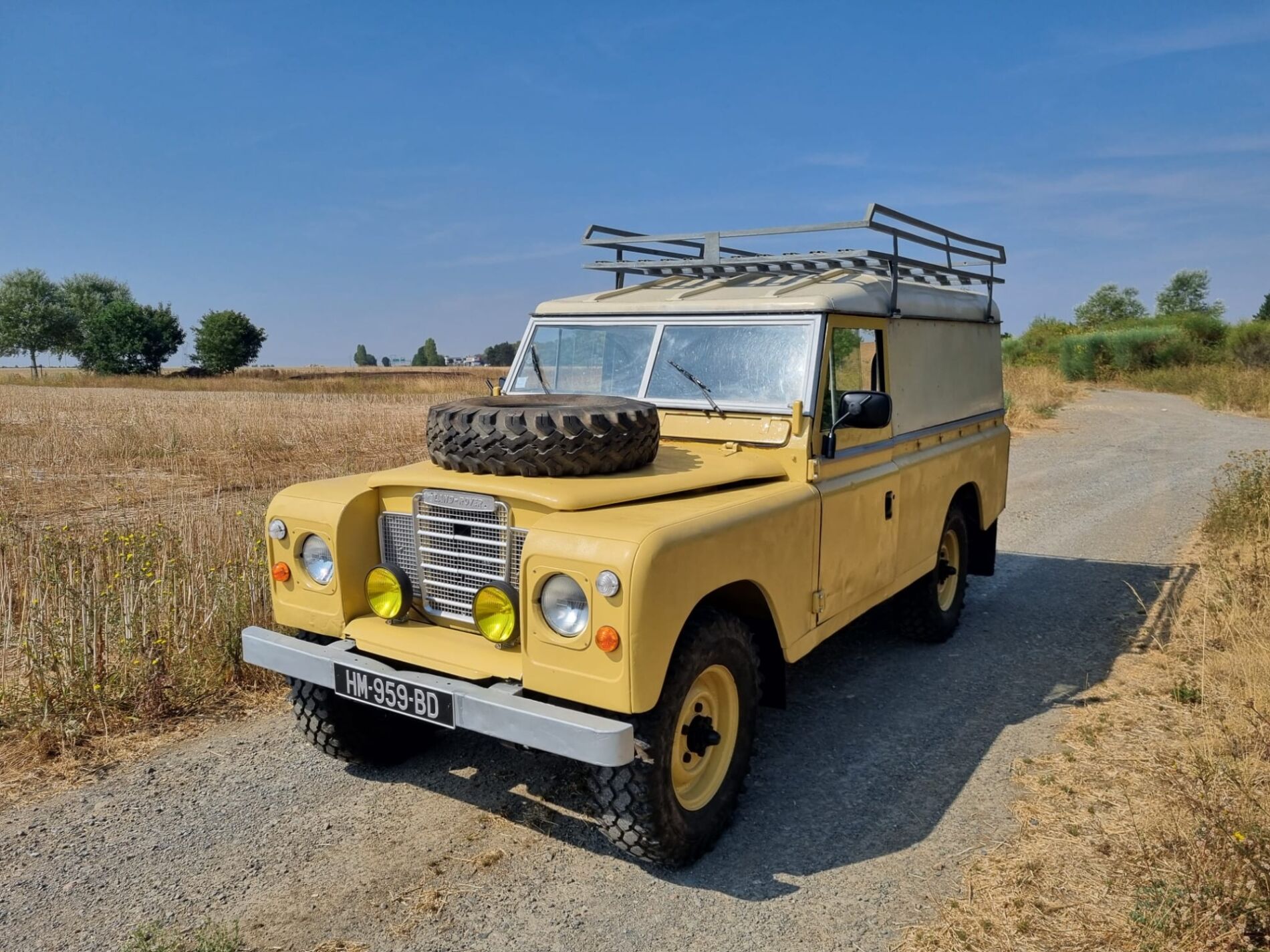
The Land Rover was born in 1948 at the initiative of the Wilks brothers at Rover, with a Birmabright aluminum body dictated by post-war steel shortages, a separate ladder chassis and four-wheel drive originally designed for agriculture, the military and colonial use. The very functional design is credited to Maurice Wilks and is recognizable by its flat panels, folding windshield and very short overhangs. The Series I was first offered in 80 inches, then in 86 and 107 inches, with a 1.6-liter then 2.0-liter petrol engine, before the arrival of utility, canvas-top and pick-up variants. In 1958, the Series II modernized the line with the “barrel side” flanks by David Bache and introduced the 88 and 109 inch wheelbases that would become the best known. The Series IIA, launched in 1961, is often considered the archetype of the classic Land Rover, with massive worldwide distribution, four-cylinder petrol and diesel engines, and then the six-cylinder petrol on some long-wheelbase versions.
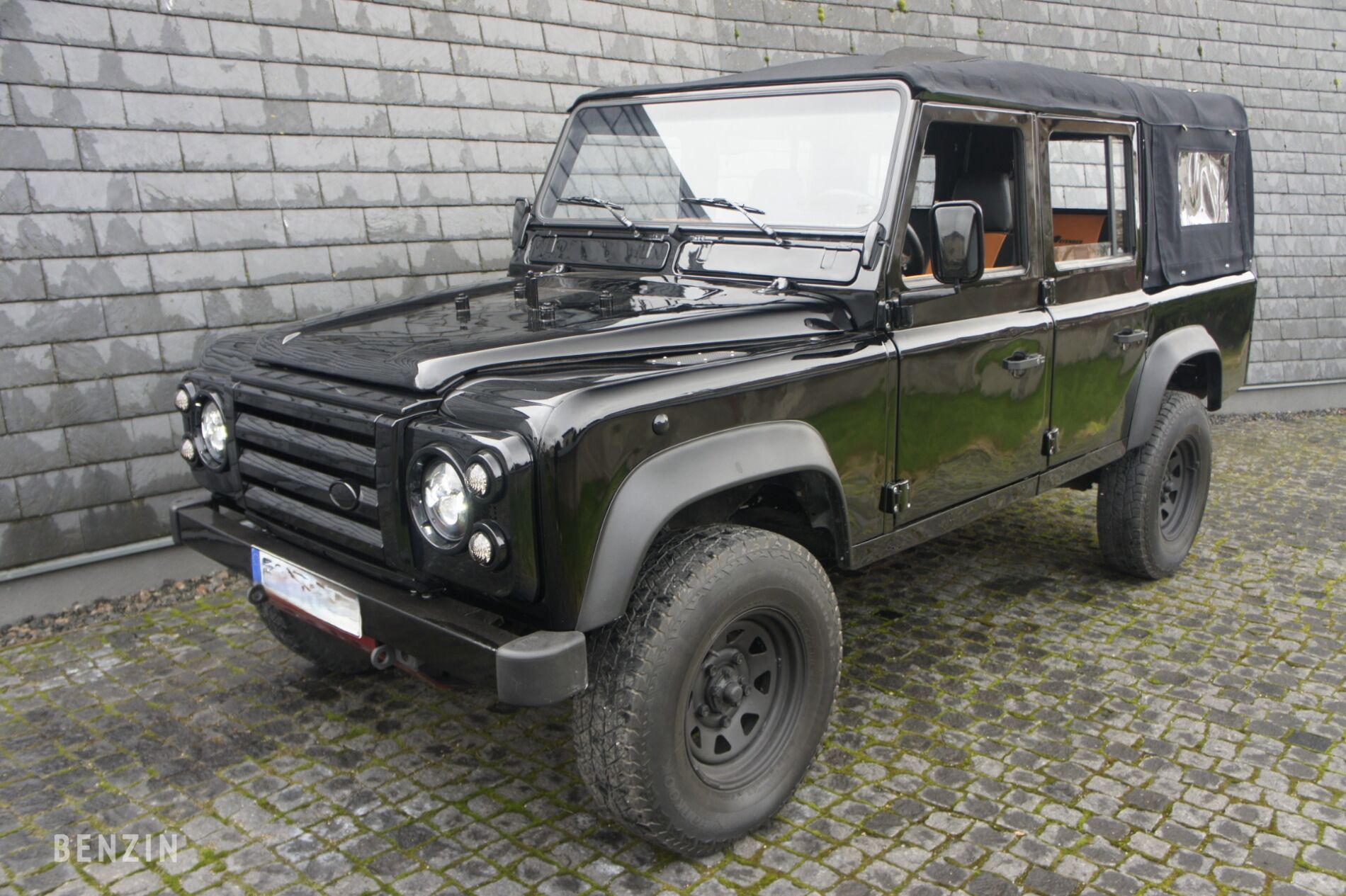
The Series III appeared in 1971 with a redesigned dashboard, a fully synchronized gearbox from 1972 on most markets and detail changes intended to civilize a vehicle that remained very rustic. At the same time, Santana in Spain produced many variants under license, sometimes with local specificities in trim, mechanics or drivetrain, which explains the presence of Santana 88, 109 and “Especial” on the collector market. The military Lightweight versions, the canvas-top 88 and 109, the pick-ups and the ambulances greatly contributed to the model’s reputation for toughness, as did its countless careers with firefighters, the UN, NATO or public services. In 1983 and 1984, the coil-sprung Ninety and One Ten gradually replaced the Series, and the Defender name was only adopted in 1990 to distinguish the range from the arrival of the Discovery. The Defender retained the architecture of its predecessors but evolved with the 200 Tdi, 300 Tdi, Td5 and then Ford-origin Puma 2.4 and 2.2 diesels, not forgetting the Rover V8 on some civilian versions and limited editions.
Among the notable derivatives are the 90 and 110 County, the Tithonus military vehicles reconditioned by the Ministry of Defence, the heavy-duty 130 HCPU utility models, the limited-edition 50th Anniversary V8 from 1998 and the final Heritage, Adventure and Autobiography models of 2015. Its competition career is not limited to a single discipline, but Land Rover built its image in rally raids, long-distance expeditions and especially in a global off-road culture where mechanical simplicity is a major selling point. Across the Series lineage and then Defender with separate chassis, production totals ran into the millions between 1948 and 2016, which still ensures exceptional parts availability. Among collectors, Series I and the early IIA are the most historic, Series III models appeal through their accessibility and versatility, while Defender 300 Tdi, Td5 and the last Td4/Tdci attract those who still want to drive regularly. The downside is well known to all enthusiasts: chassis and bulkhead corrosion, variations in quality depending on restorations and the many conversions require a very rigorous inspection of each example.
Technical sheet
| Series IIA 88 | Defender 90 300 Tdi | Defender 110 Td5 | |
|---|---|---|---|
| Production years | 1961-1971 | 1994-1998 | 1998-2007 |
| Body style | 4x4 separate chassis, canvas top, panel van, pick-up or station wagon | 4x4 separate chassis, utility, canvas top or station wagon | 4x4 separate chassis, utility, station wagon, double cab |
| Wheelbase | 88 inches | 90 inches | 110 inches |
| Engine(s) | 4-cyl. petrol or diesel, 2.25 l | 4-cyl. turbo diesel, 2.5 l 300 Tdi | 5-cyl. turbo diesel, 2.5 l Td5 |
| Power | approx. 62 to 77 hp depending on engine | 111 hp | 122 hp |
| Torque | approx. 141 to 174 Nm depending on engine | 265 Nm | 300 Nm |
| Transmission | 4-wheel drive, 4-speed manual gearbox, low range | permanent 4-wheel drive, 5-speed manual gearbox, LT230 transfer case | permanent 4-wheel drive, 5-speed manual gearbox, LT230 transfer case |
| Curb weight | approx. 1,300 to 1,450 kg | approx. 1,650 to 1,750 kg | approx. 1,850 to 2,000 kg |
| 0-100 km/h | not significant depending on versions | approx. 18 s | approx. 16 to 19 s depending on body style |
| Top speed | approx. 95 to 110 km/h | approx. 125 km/h | approx. 125 to 135 km/h |
| Specific features | rigid axles with leaf springs, aluminum bodywork | rigid axles with coil springs, highly sought-after engine for its simplicity | engine electronic management, better road manners |
Buyer’s guide
For regular use, Defender 300 Tdi models often offer the best compromise between mechanical simplicity, parts availability and adequate performance, while Td5s appeal thanks to their drivability provided they are maintained by a specialist who knows their electronics well. Purists favor Series I, IIA and lightly modified military utility vehicles, while it is wiser to be more cautious with heavily modified examples, re-engined vehicles or those converted from hard top to soft top without clear homologation paperwork. Late Td4/Tdci models are more comfortable, but their appeal depends heavily on the condition of the chassis and the quality of drivetrain maintenance.
Points to watch
- Chassis : perforating corrosion of the rear crossmember, the chassis rails at the suspension mounts, the rear part of the fuel tank and the outriggers, on Series as well as Defender; you must check whether the chassis is original, repaired with patches or replaced with a galvanized one, and ask for photos of the work.
- Firewall / bulkhead : rust in the footwells, door pillars and under the vents, very common across all generations; check for the presence of filler, patch panels or a full replacement, an expensive but common operation.
- R380 gearbox : rear bearing wear and stiff shifting especially on Defender 300 Tdi and Td5; during the test drive, look for crunching in 2nd/3rd/5th, whining when hot and ask whether the gearbox has already been rebuilt with improved parts.
- LT230 transfer case and drivetrain : play in the drivetrain, heavy leaks, clunks when lifting off the throttle and worn intermediate shaft or mainshaft splines on some Defender; check the condition of the universal joints, driveshafts and the absence of vibrations under load.
- 300 Tdi engine : oil leak at the front, timing incorrectly set after belt replacement on early installations, cracked cylinder head or head gasket if overheated; ask exactly when the timing belt, water pump and radiator were done.
- Td5 engine : injector harness soaked in oil, leaking pressure regulator, cylinder head sometimes porous or cracked on certain model years, oil pump whose bolt was subject to known campaigns on early engines; check cold starting, smoke, absence of mayonnaise and fault reading with diagnostics.
- Axles, swivels and hubs : leaks at the axle swivel housings, pitted swivels, wheel bearing play and worn half-shafts, especially on vehicles that have towed or been used off-road; check for seepage on the front swivels, bearing noise and correct locking of the drivetrain.
- Configuration and homologation : number of seats, side benches, soft top conversion, engine change or bodywork different from the original specification are very common on Defender and ex-military vehicles; the registration document, chassis number, present bodywork and conversion invoices must be compared before any purchase.
When buying
On this lineage, the ideal file includes proof of matching between the chassis number and the actual version, chassis or bulkhead invoices if replaced, as well as precise documentation for any engine swap or conversion to pick-up, station wagon or soft top. For a Td5, a diagnostic scan is very useful; for a 300 Tdi, checking the timing and compression can clear up many doubts. On a Series or an imported Santana, the homologation documents, the number of seats listed and the consistency between the current configuration, the registration document and the fitted equipment must also be closely examined.
Land Rover Defender - Series I / II / III — Sold
Frequently asked questions
How much does a Land Rover Defender - Series I / II / III cost?
On Benzin a Land Rover Defender - Series I / II / III has sold for 18 575 € on average, with a median price of 15 150 €. Based on the 16 sales completed on the platform.
What is a Land Rover Defender - Series I / II / III worth?
The 16 Land Rover Defender - Series I / II / III sold on Benzin changed hands for between 6 000 € and 52 700 €, depending on condition, mileage and version.
Do Land Rover Defender - Series I / II / III sell well?
16 of the 56 Land Rover Defender - Series I / II / III listed on Benzin found a buyer — 29 % of completed sales.
Is there a Land Rover Defender - Series I / II / III for sale right now?
No Land Rover Defender - Series I / II / III is for sale at the moment. Follow the model to be notified as soon as a new one is listed.
How do I buy a Land Rover Defender - Series I / II / III on Benzin?
Every vehicle comes with a detailed photo report, its history and the public exchanges between seller and community. You bid online; if you win, Benzin secures the payment and supports you through to delivery.
How do I hear about the next Land Rover Defender - Series I / II / III?
Follow the model from this page and you will get an e-mail as soon as a Land Rover Defender - Series I / II / III is listed on Benzin.
Welcome to Benzin, the French online auction platform dedicated to sports cars, classics and youngtimers.
Discover detailed listings, bidders verified by credit card and payment secured in escrow. Fees among the lowest on the market, capped at €3,900. Buying and selling your car becomes a pleasure: join Benzin.
 English
 Français
 Español
 Italiano
 Deutsch
 Polski
 Magyar
