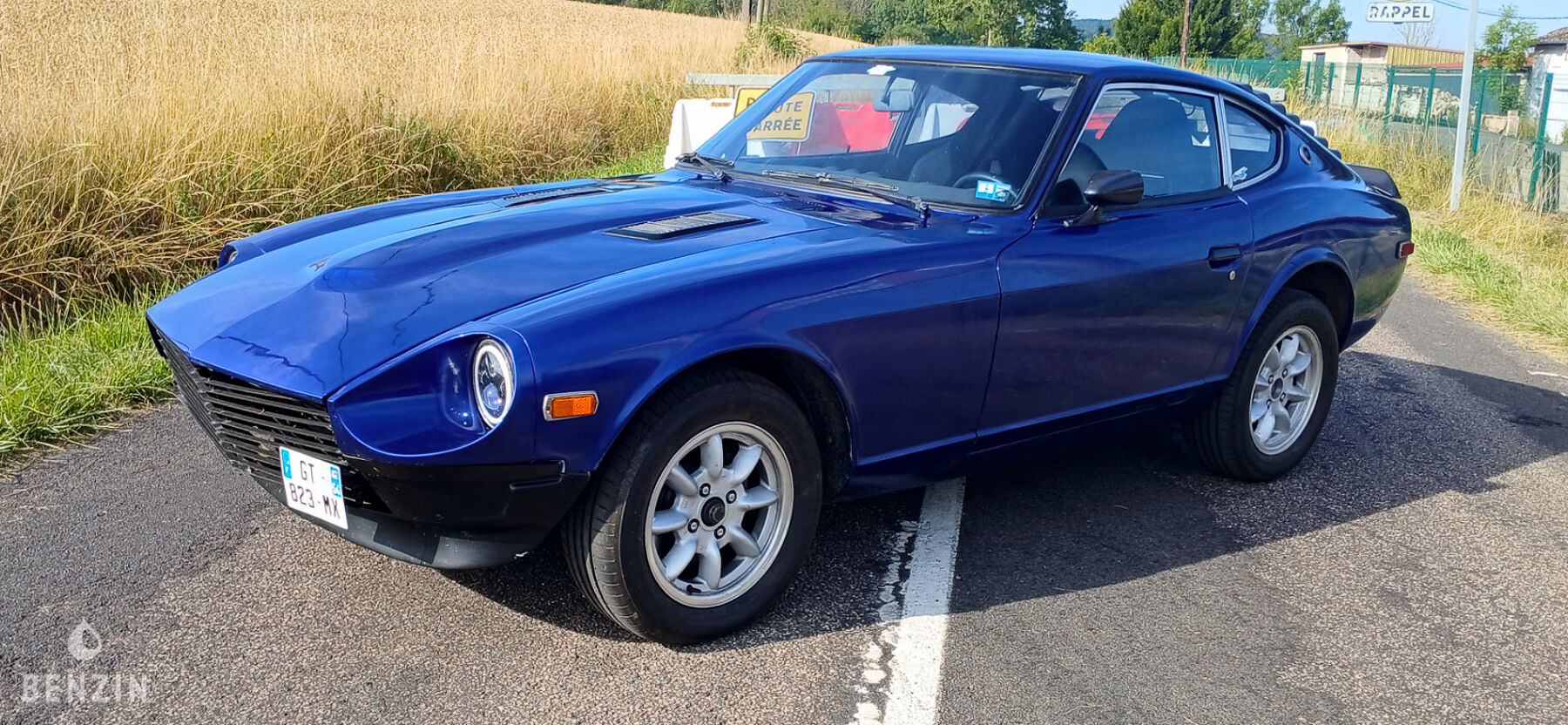
The Fairlady name appeared at Datsun in the late 1950s to designate the small Sports-series roadsters, then in Japan it became the name for the Z coupes, whereas exports were mainly called 240Z, 260Z, 280Z and then 280ZX. The Fairlady Roadster 1500, 1600 and 2000 were developed on a simple, robust layout, with a separate chassis, rear-wheel drive and a convertible body, in the spirit of the British sports cars Nissan intended to compete against in the American market. The Fairlady 1600 Roadster, known under the SP311 or SPL311 codes depending on the market, was launched in the mid-1960s with a 1.6-liter four-cylinder engine, a manual gearbox and lively handling without excessive sophistication. Its styling, with curved wings and a low beltline, preceded the more powerful Fairlady 2000, now often considered the sportiest version of this first lineage. These roadsters built Datsun’s reputation in the United States thanks to their reliability, reasonable running costs and a real presence in local competition.
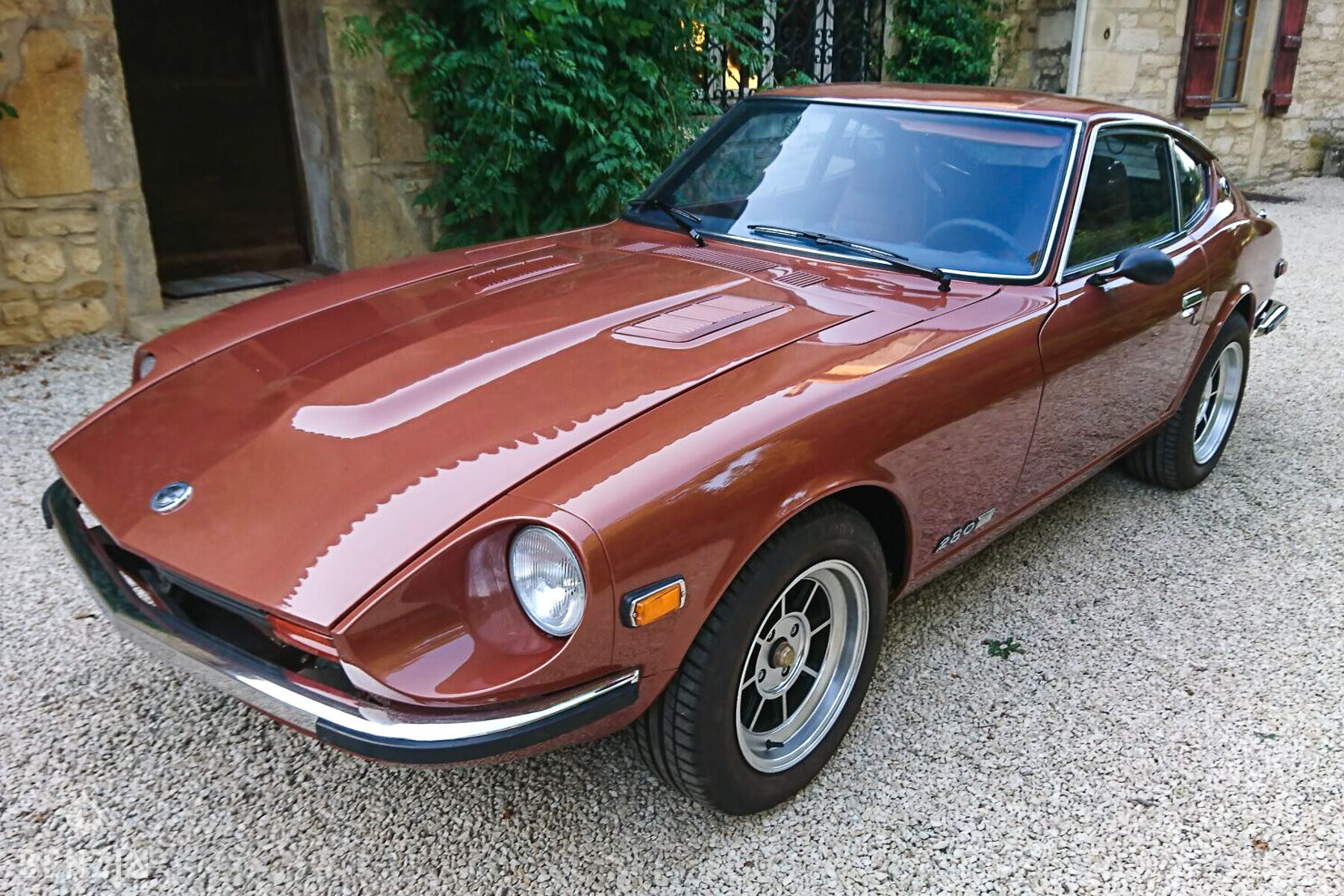
In 1969, the Fairlady Z changed scale: designed under the direction of Yoshihiko Matsuo, the S30 adopted a long-hood fastback silhouette that blended European influences with Japanese rationality. Depending on the market, it received the L24, L26 or L28 inline six-cylinder engines, and the U.S. export versions culminated in the 280Z with Bosch L-Jetronic injection from 1975 onward. Heavier and more standardized than the original 240Z, the 280Z is still appreciated for its torque, flexibility and better suitability for regular road use, especially with the manual gearbox. In 1978 came the 280ZX, the S130 generation, more oriented toward grand touring with greater sound insulation, more equipment and a modernized rear suspension; the 2+2 version lengthened the wheelbase to provide two small rear seats and a more upscale presentation. The 280ZX also came in naturally aspirated and turbo variants in some markets, but European and French-imported examples are often naturally aspirated L28E cars. From Fairlady roadsters to the Z cars of the 1970s, the lineage has become central among classic Japanese-car enthusiasts: the 1600s appeal through their analog charm, the 280Z through their balance, and the 280ZX through their comfort, provided one accepts a less radical philosophy.
Technical data
| Feature | Fairlady 1600 Roadster | 280Z | 280ZX 2+2 |
| Production years | 1965-1970 | 1975-1978 | 1979-1983 |
| Generation code | SP311 / SPL311 | S30 | S130 |
| Body style | 2-seater roadster | 2-seater coupe | 2+2 coupe |
| Engine(s) | Inline 4-cylinder 1,595 cc, single overhead camshaft | Inline 6-cylinder 2,753 cc, fuel injection | Inline 6-cylinder 2,753 cc, fuel injection |
| Power | approx. 96 hp SAE | approx. 149-170 hp SAE depending on year and market | approx. 135-145 hp SAE depending on year and market |
| Transmission | Rear-wheel drive, 4-speed manual | Rear-wheel drive, 4- or 5-speed manual / automatic optional | Rear-wheel drive, 5-speed manual / automatic optional |
| Weight | approx. 950-1,000 kg | approx. 1,250-1,320 kg | approx. 1,300-1,380 kg |
| 0-100 km/h | approx. 11-12 s | approx. 9-10 s | approx. 10-11 s |
| Top speed | approx. 165 km/h | approx. 190-200 km/h | approx. 185-195 km/h |
Buyer’s guide
For enjoyable classic use, the Fairlady 1600 Roadster appeals through its mechanical simplicity and rarity, but the 2000 remains the most sought-after if performance is the goal within the roadster range. Among the Z cars, a sound-bodied manual 280Z often offers the best compromise between S30 style, driving pleasure and parts availability, while the 280ZX 2+2 is better suited to those who prioritize comfort and touring; modified cars can be interesting, but only if the conversion is properly documented.
Points to watch
- Chassis rails and floor rails : crushed jacking points, very often reported on Z S30 and S130 models; check under the car whether the rails are merely marked or actually bent, and ask how the car was lifted and stored.
- Body corrosion : weak spots on the lower wings, floors, sills, battery tray, windshield surrounds, trunk floor and suspension mounting areas, especially on 280Z/280ZX imported from the United States; inspect the underside, welds and consistency of any recent underbody protection.
- Bosch L-Jetronic injection : unstable idle, hard hot starts, excessive fuel consumption or flat spots on acceleration on naturally aspirated 280Z and 280ZX models; check the condition of the wiring harness, the flap-type airflow meter, air leaks, the pressure regulator and the presence of a proper setup rather than a bodge.
- Cylinder head and cooling system : on L28 six-cylinders, chronic overheating eventually wears out the head gasket, water pump, viscous fan coupling and radiator; ask whether the system has been upgraded and check for any sign of mayonnaise, bubbles or coolant expulsion.
- 5-speed gearbox and synchros : frequent crunching in 2nd or 3rd on Z cars that have covered a lot of miles, and possible non-original installations on imported or modified cars; verify the exact gearbox type, the quality of shifting when cold, and the presence of invoices if a replacement unit has been fitted.
- Differential and driveshaft universal joints : rumbling under load, knocking when getting back on the throttle, and vibrations on 280Z/280ZX; check clearances, the condition of the flex discs or universal joints depending on the setup, and ask whether the differential has ever been opened.
- Carburetors and throttle linkage : on the Fairlady 1600 Roadster, carburetor imbalance, worn shafts and tired linkages lead to an uneven idle and poor response; check idle stability, throttle response and the absence of fuel leaks.
- Brakes and clutch hydraulics : master cylinders, slave cylinders and hoses age poorly on both the Fairlady Roadster and the Z; on a lightly used example, check for a pedal that sinks, leaks at the bulkhead, or incomplete disengagement of the clutch.
When buying
On a Fairlady or an imported Z, it is important to note the chassis and engine numbers, check that they match the exact type advertised, and ask for the import papers or previous U.S./Japanese registration documents. A compression test is very useful on R16 and L28 engines, as is a careful inspection of the body shell on a lift, because structural condition matters more than many mechanical items that are easy to rebuild. If the gearbox has been replaced, the injection removed, or other modifications made, you should insist on the invoices, the list of fitted parts, and, if possible, the original components supplied with the car.
2 of the 8 Datsun Fairlady listed on Benzin found a buyer — 25 % of completed sales.
No Datsun Fairlady is for sale at the moment. Follow the model to be notified as soon as a new one is listed.
Every vehicle comes with a detailed photo report, its history and the public exchanges between seller and community. You bid online; if you win, Benzin secures the payment and supports you through to delivery.
Follow the model from this page and you will get an e-mail as soon as a Datsun Fairlady is listed on Benzin.
 English
 Français
 Español
 Italiano
 Deutsch
 Polski
 Magyar