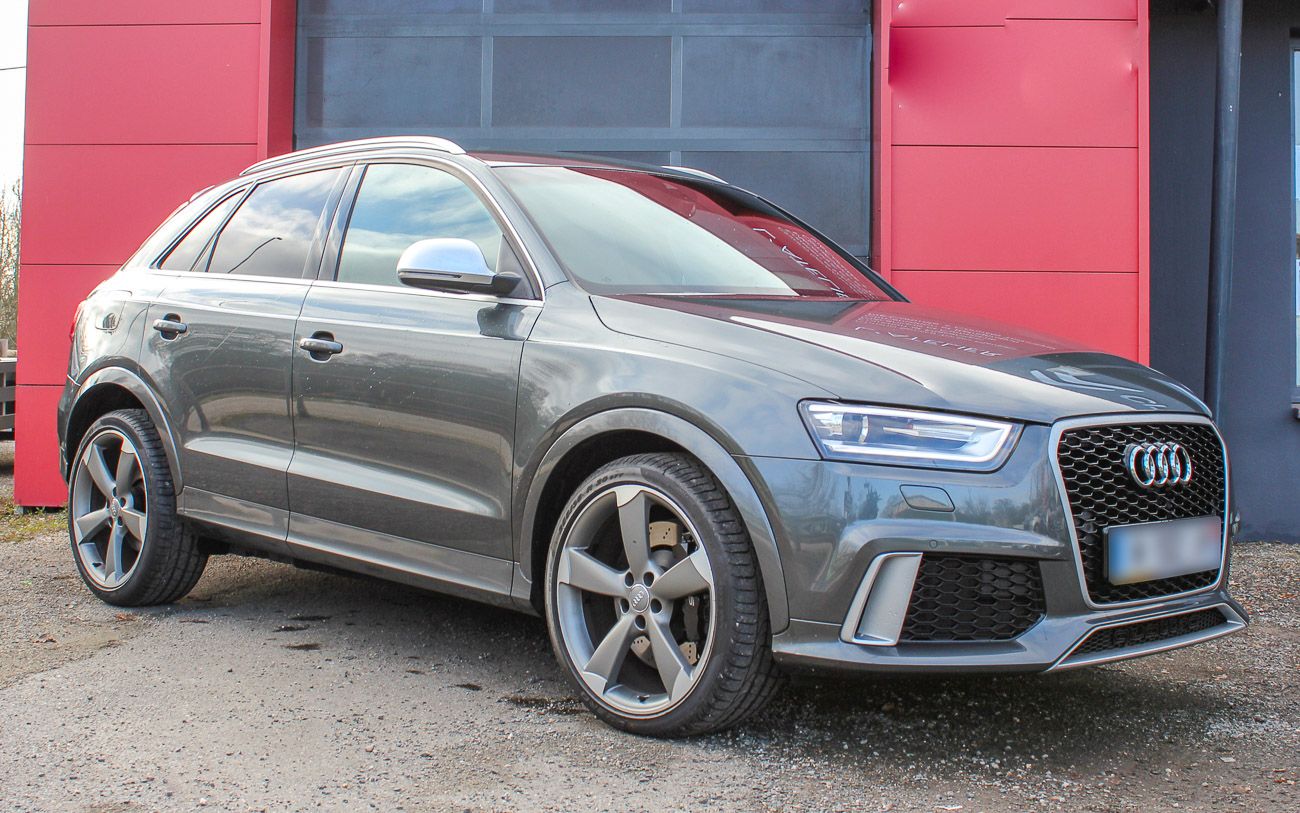
Launched in 2011, the Audi Q3 is Ingolstadt’s answer to the emerging success of premium compact SUVs, following in the wake of the BMW X1 and Range Rover Evoque. The first generation, type 8U, is based on the Volkswagen Group PQ35 platform and adopts Audi’s Walter de Silva-era styling, with an interior presentation very close to the A3 and Q5. European production was initially handled in Martorell, Spain, a choice that reflects its positioning as a high-volume rather than niche model. At launch, the range centered on the 2.0 TDI and 2.0 TFSI, with front-wheel drive or quattro depending on the market and power output, and with either a manual gearbox or S tronic. In 2013, the RS Q3 arrived, powered by the 2.5 TFSI five-cylinder, a mechanical layout already cult status at Audi Sport, giving the small SUV a far more distinctive personality than its rivals. The 2014 facelift modernized the front end, improved equipment and updated several engines, while the RS Q3 later gained more power up to the Performance version.
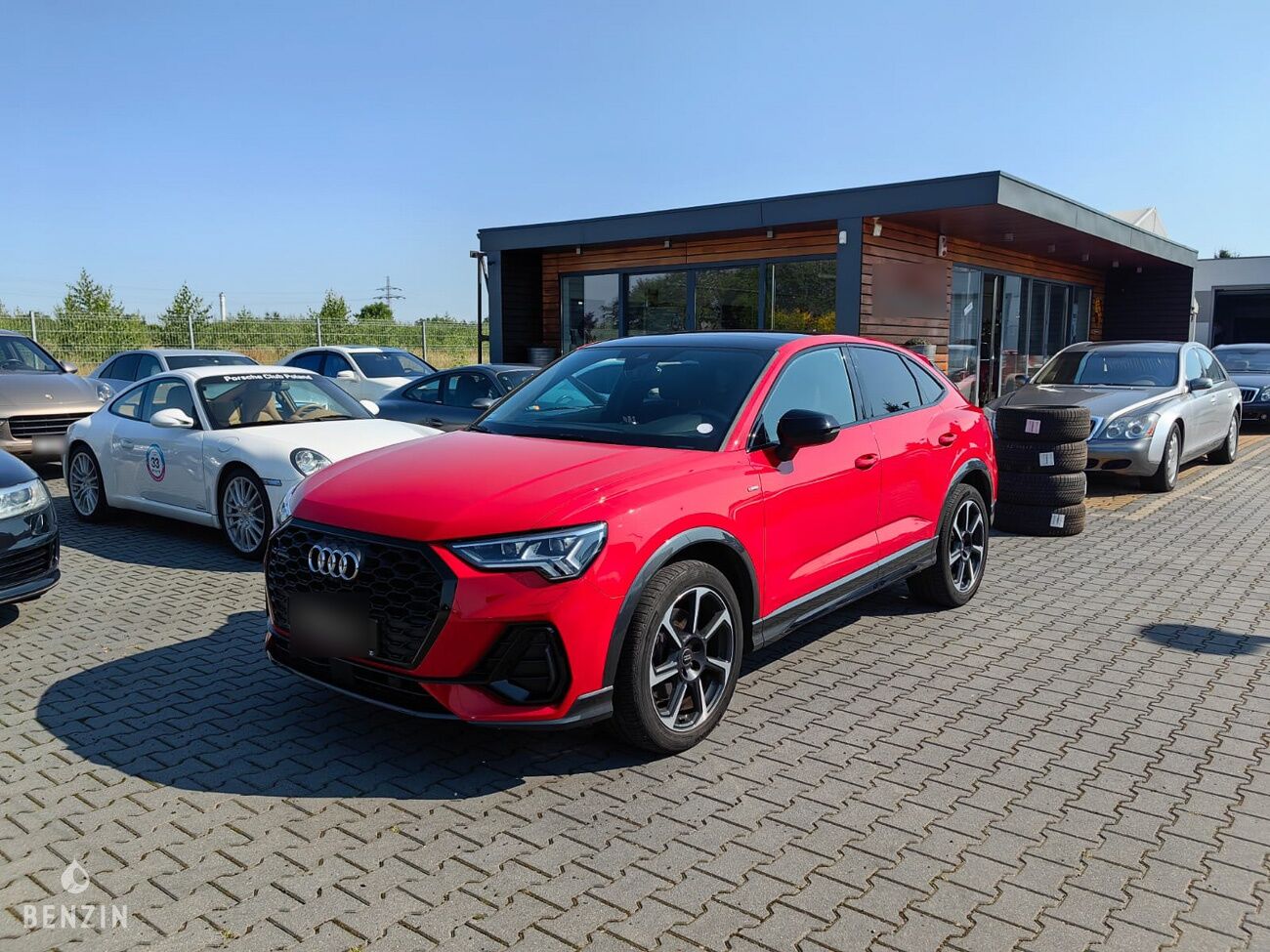
The second generation, type F3, was introduced in 2018 on the MQB modular platform, with a clear gain in interior space, ergonomics and driver-assistance systems. In 2019, Audi derived the Q3 Sportback from it, with a more sloping roofline, prioritizing style without fundamentally changing the standard model’s engineering. The TFSI petrol and TDI diesel engines were carried over, with mild hybridization on certain versions depending on the market, and quattro remains at the heart of the most powerful variants. The new RS Q3, as well as the RS Q3 Sportback, retain the 2.5 TFSI five-cylinder and reinforce the image of a very high-performance compact SUV, often also favored by tuners such as ABT. The Q3 has no real motorsport career, but the RS Q3 has played an important cultural role in bringing Audi’s five-cylinder engine to a wider audience than that of the TT RS and RS 3.
Across all generations, the Q3 has been produced in more than one million units, making it one of the pillars of Audi’s contemporary range. On the enthusiast market, the regular versions are sought after for their versatility and perceived build quality, while the RS Q3 appeals more to enthusiasts for its engine, its sound and its tuning potential. The early 2.0 TFSI models, however, require careful selection, whereas the diesels and well-maintained S tronic versions generally remain the most rational. Recent Q3 Sportback models are especially appealing for their styling and equipment, but it is the RS Q3, standard or ABT-prepared, that now carries the model’s collectible and emotional appeal.
Technical data
| Version | Q3 2.0 TDI quattro (8U) | RS Q3 Performance (8U) | Q3 Sportback 45 TFSI quattro (F3) |
| Production years | 2011-2018 | 2016-2018 | since 2019 |
| Body style | 5-door SUV | 5-door SUV | 5-door coupé SUV |
| Engine(s) | 4-cyl. 2.0 l turbo TDI | 5-cyl. 2.5 l turbo TFSI | 4-cyl. 2.0 l turbo TFSI |
| Power | 177 hp | 367 hp | 230 hp |
| Transmission | quattro all-wheel drive, manual or S tronic depending on version | quattro all-wheel drive, S tronic | quattro all-wheel drive, S tronic |
| Weight | approx. 1,600 kg | approx. 1,700 kg | approx. 1,670 kg |
| 0-100 km/h | approx. 8.2 s | 4.4 s | approx. 6.5 s |
| Top speed | approx. 212 km/h | 270 km/h | 233 km/h |
| Production | Mass-produced | Audi Sport regular series | Mass-produced |
Buyer’s guide
For versatile use, the first-generation facelifted Q3 with the 2.0 TDI or the second-generation 2.0 TFSI are the most coherent choices, as they combine a more accomplished setup with more modern electronics. Enthusiasts will naturally aim for the RS Q3, especially in Performance or Sportback form, for its unique five-cylinder engine; an ABT-prepared example only makes sense if the transformation is documented and properly declared. The early 2.0 TFSI engines of the 8U generation are the ones that need the strictest selection because of known oil consumption and timing issues.
Points to watch
- 2.0 TFSI EA888 : abnormal oil consumption and, on some early 8U model years, timing chain/tensioner issues; this mainly concerns pre-facelift petrol versions. Check the invoices for engine updates, the frequency of top-ups and any chain noise on cold start.
- S tronic gearbox : jerks, hesitation at low speed or irregular gear changes, especially if oil changes have been neglected. On Q3 quattro and RS Q3, ask for proof of gearbox servicing at the correct mileage and test it with slow maneuvers followed by hard acceleration.
- Haldex/quattro coupling : reduced traction, transmission faults or delayed rear-axle operation if the oil and strainer/pump have not been maintained. This is a classic point on Q3 quattro and RS Q3 models; check the specific maintenance invoices for the system, not just those for the gearbox.
- Water pump and thermostat housing : coolant seepage or a dropping level on several Volkswagen Group engines fitted to the Q3, notably the 2.0 TFSI. Inspect any signs of replacement, leaks on the timing/accessory side, and ask whether the housing has already been replaced.
- EGR valve and DPF : clogging, engine warning light or frequent regenerations on 2.0 TDI models used mainly in town. Check the stored faults, the consistency of the mileage with the usage, and the absence of deletion or dubious remapping.
- Panoramic sunroof and drains : water ingress, moisture in the cabin or faults with the sunblind/opening on equipped examples. Check the drains, the carpets, the boot and any signs of oxidation on connectors near the floor.
- Brakes and suspension on RS Q3 : discs quickly marked, braking vibrations and accelerated tire wear if the car has been driven hard. On an RS Q3 or an ABT, inspect the condition of the discs and dampers, and check the alignment as well as the quality of the parts fitted.
- ABT preparation or remapping : modified turbocharging, non-original mapping or a changed exhaust can complicate insurance, approval and reliability if the work is incomplete. Ask for the ABT file, the part numbers, the corresponding certificate, and make sure the actual configuration matches the documents.
At the time of purchase
On a modern Q3, a diagnostic scan is particularly useful for reading the history of faults relating to the gearbox, all-wheel drive, EGR/DPF and driver-assistance systems. For an RS Q3 or an ABT-prepared example, you also need the detailed preparation invoices, the part numbers, the European certificate of conformity if the vehicle is imported, and proof that the power output or modifications have been properly legalized if necessary. On early 2.0 TFSI models, evidence of work on the timing system, piston rings or oil consumption management carries far more weight than a simple stamped service book.
0 of the 3 Audi Q3 listed on Benzin found a buyer — 0 % of completed sales.
No Audi Q3 is for sale at the moment. Follow the model to be notified as soon as a new one is listed.
Every vehicle comes with a detailed photo report, its history and the public exchanges between seller and community. You bid online; if you win, Benzin secures the payment and supports you through to delivery.
Follow the model from this page and you will get an e-mail as soon as a Audi Q3 is listed on Benzin.
 English
 Français
 Español
 Italiano
 Deutsch
 Polski
 Magyar
