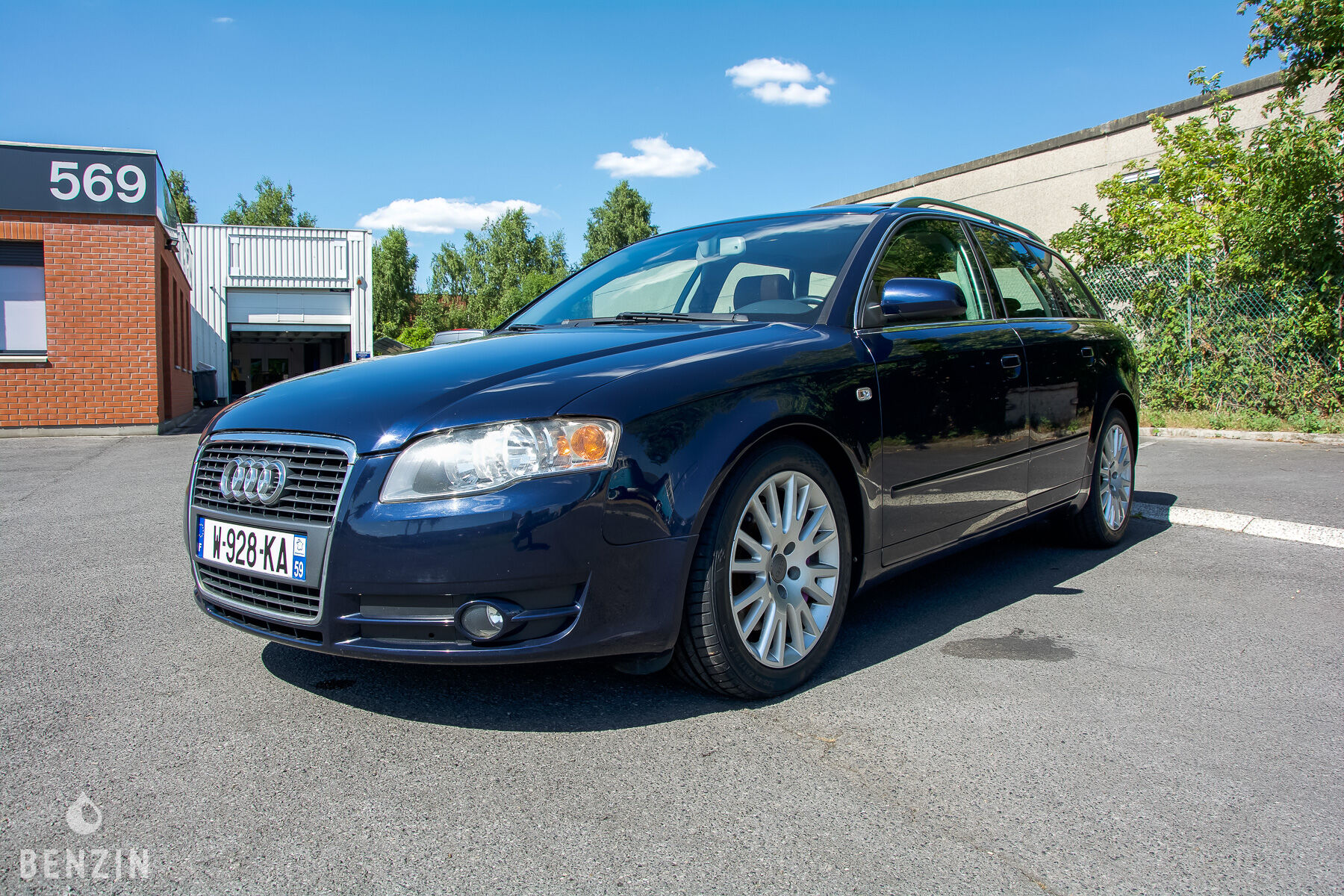
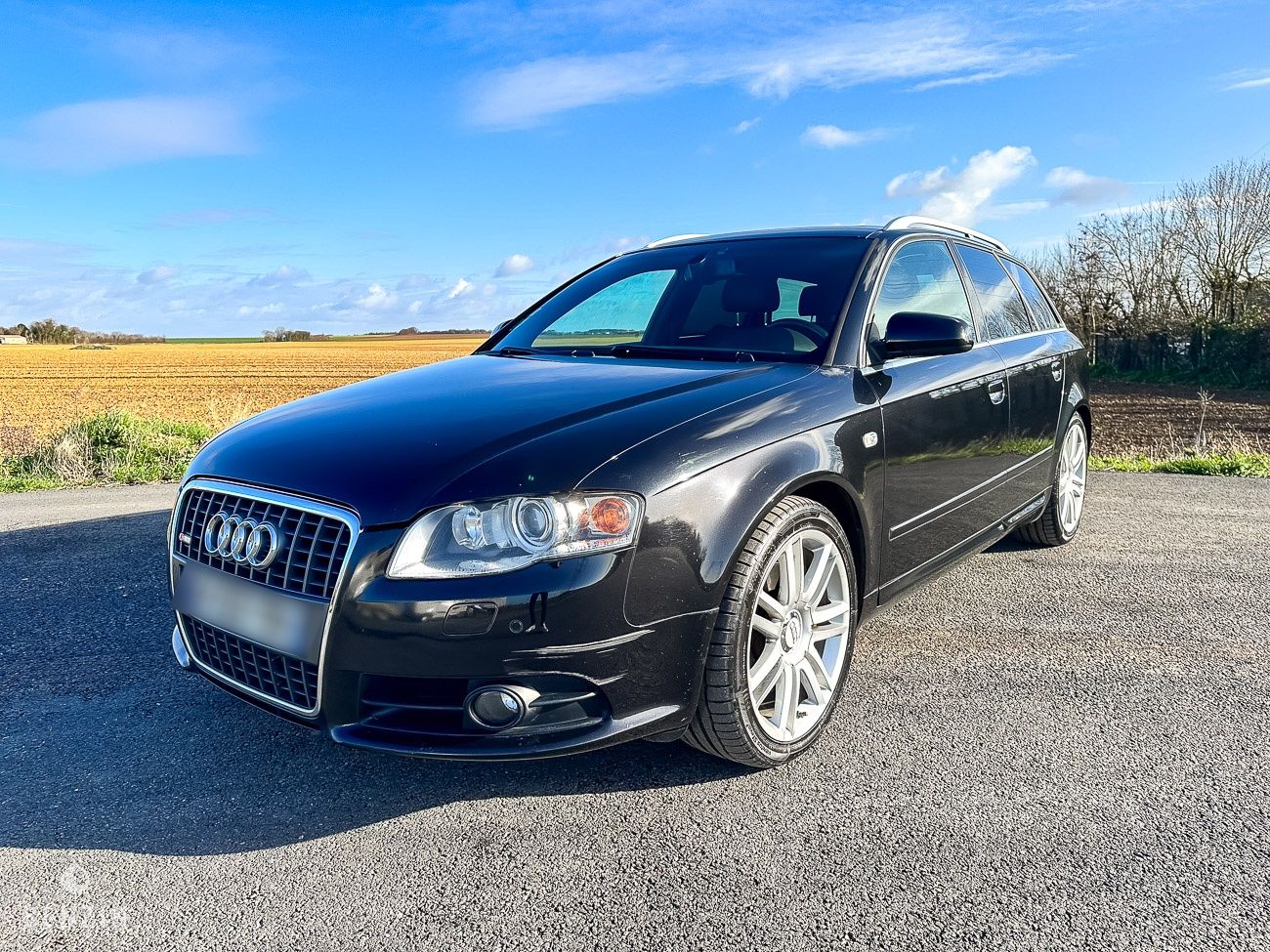
The Audi A4 B7 appeared in autumn 2004 for the 2005 model year as a major update of the B6, to the point that it is often described as an intermediate generation based on the same PL46 platform but with a heavily revised body. Its design fits Audi’s new visual identity from the Walter de Silva era, with the large “single frame” grille, redesigned fenders, a more taut front end, and perceived quality that remains a benchmark in the segment. The range includes sedan, Avant, and Cabriolet, with naturally aspirated and FSI petrol engines, unit-injector TDI engines and later developments, as well as front-wheel drive, quattro, manual, Tiptronic, and Multitronic transmissions depending on the version. In Europe, the B7 was sold until 2008, before being replaced by the A4 B8.
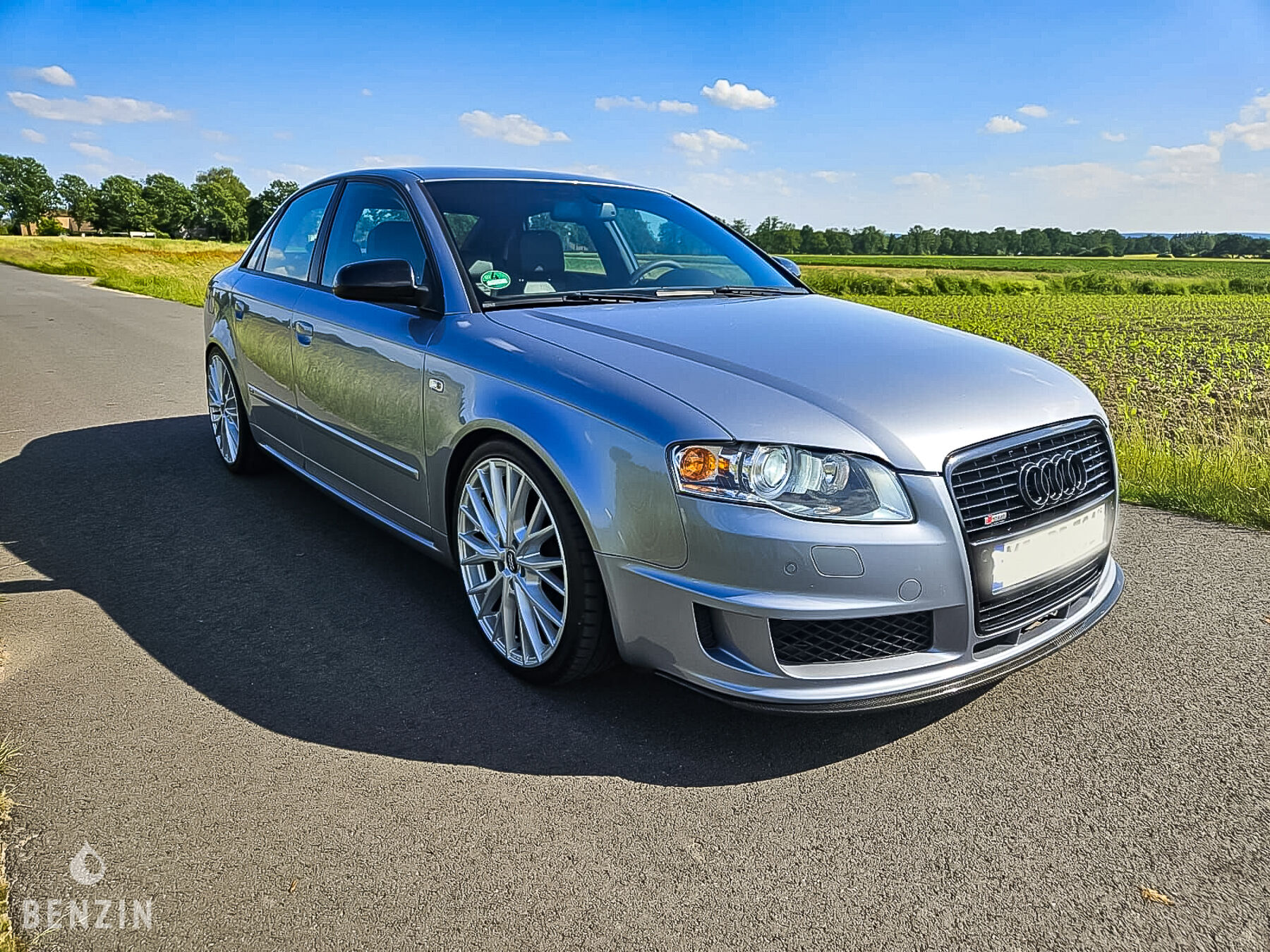
At the heart of the range, the 2.0 TFSI and 3.2 V6 FSI represent the most common petrol side outside the S4 and RS4, with the 3.2 standing out for its standard quattro drivetrain in many markets and its chain-driven timing system at the gearbox end. The A4 3.2 V6 FSI, in both sedan and Avant form, offers a more discreet alternative to the S4, with very linear performance and often a well-equipped presentation, but a more heavily loaded front end and maintenance that should not be neglected. In 2005, Audi also launched the A4 DTM Edition to celebrate its DTM successes, with a specific exterior look inspired by racing, a sharpened chassis, and, depending on the market, a 2.0 TFSI boosted to 220 hp. At the top, the 4.2-liter V8 S4 and especially the RS4 B7 with its 420 hp FSI V8 engine strongly shaped the generation’s image.
The B7 does not represent the technical leap of a completely new platform, but it is generally considered more accomplished in finish, sound insulation, and driving precision than the B6 from which it is derived. It also had a real cultural presence in the mid-2000s, between the rise of German performance estates, the popularity of S line series, and the prestige Audi gained in the DTM championship. Production figures are included in those of the A4 family as a whole from that era and are not always broken down precisely by body style or engine. Today, enthusiasts mainly seek well-maintained examples, in quattro, with coherent specifications and a clear history, while the DTM Edition and petrol V6 models are beginning to attract a more knowledgeable audience. The RS4 remains the most iconic collector version, but a fine A4 B7 3.2 FSI or an authentic DTM Edition appeals through its mix of discretion, build quality, and the character typical of Audi models from this period.
Technical data
| Version | A4 2.0 TFSI DTM Edition | A4 3.2 V6 FSI quattro | RS4 B7 quattro |
| Production years | 2005-2006 | 2004-2008 | 2005-2008 |
| Body style | Sedan, sometimes Avant depending on market | Sedan, Avant, Cabriolet depending on market | Sedan, Avant, Cabriolet |
| Engine | Inline 4-cylinder 1984 cc turbo, direct injection | 90° V6 3123 cc, FSI direct injection | V8 4163 cc, FSI direct injection |
| Power | 220 hp | 255 hp | 420 hp |
| Transmission | Front-wheel drive or quattro depending on market, 6-speed manual gearbox | quattro, 6-speed manual gearbox or Tiptronic depending on version | quattro, 6-speed manual gearbox |
| Curb weight | About 1450-1550 kg | About 1610-1700 kg | About 1650-1710 kg |
| 0-100 km/h | About 7.1 s | About 6.4-6.8 s | 4.8 s |
| Top speed | About 247 km/h | 250 km/h | 250 km/h |
Buyer’s guide
The versions to favor are the well-documented 3.2 V6 FSI quattro models, for their refinement, relative rarity, and the absence of the major issues specific to some early 2.0 TDI engines. The DTM Edition is the most desirable for its distinct identity, provided you verify that it is authentic and not a standard A4 dressed up with body parts. To approach with caution across the broader B7 range: the early 2.0 TDI 140 models, especially code BLB, because of their well-known balancer module and oil pump drive problems.
Points to watch
- Timing chains and tensioners on the 3.2 FSI : metallic noise on cold start, rough idle, or timing faults on the petrol V6s; the 3.2 B7s are affected because the timing system is at the rear of the engine; ask whether timing value checks have been carried out and whether work on the tensioners or cam phasers has already been done.
- Oil seepage on the V6 3.2 : traces coming from the top end, valve covers, oil filter housing, or the front/rear timing covers; common on older cars; inspect the underside of the engine after parking and check whether the leak has been precisely located, as a simple cleaning can hide the source.
- High-pressure pump and pump follower on the 2.0 TFSI : power loss, fuel delivery faults, or metal shavings linked to wear of the cam follower; a very well-known issue on B7 EA113 engines, especially more highly tuned versions like the DTM Edition; you should ask for proof of regular follower inspections and the condition of the camshaft lobe.
- Dump valve, PCV, and coils on the 2.0 TFSI : hesitation on acceleration, unstable idle, overconsumption, or engine warning light; common on B7 2.0 TFSI models; check whether the dump valve has been replaced with an updated part number and whether the oil separator/PCV has already been changed.
- Multitronic gearbox : jerks on takeoff, engine speed rising without a clear link to road speed, flashing PRNDS lights, or limp mode; affects front-wheel-drive A4 B7 models equipped with this transmission, less so quattro; require proof of regular gearbox fluid changes and a hot test drive in slow traffic.
- Four-link front suspension : knocking over small bumps, vague steering, inner tire wear; a classic weak point of A4 B6/B7 cars, especially heavy V6 models and those fitted with large wheels; check the upper control arms, ball joints, and bushings rather than relying on a recent wheel alignment alone.
- Balancer module and oil pump on 2.0 TDI BLB : abnormal lower-engine noise or oil pressure drop that can lead to engine failure; especially on the first diesel B7 140 hp cars before the system revision; if the car in question is a TDI from this period, you need to know whether the conversion or preventive repair has been done.
- Headliner and interior trim : fabric peeling away, especially on aging sedans, Avant and Cabriolet exposed to heat; it is not mechanical but it is a recurring issue on the B7; check whether the trim has been properly redone or simply glued back in place locally, which rarely lasts.
When buying
On a 3.2 FSI, a diagnostic scan to identify engine faults and, if possible, timing values is much more useful than a simple road test. On a DTM Edition, you need to check the engine code, the consistency of the specific equipment, and the invoices related to the 2.0 TFSI, especially around the high-pressure pump and crankcase ventilation. For any B7 with an automatic gearbox, proof of transmission fluid changes is essential, and on a car showing seepage, an inspection on a lift after cleaning the engine makes it possible to distinguish a simple valve cover issue from a more serious leak on the timing side.
2 of the 4 Audi A4 B7 listed on Benzin found a buyer — 50 % of completed sales.
No Audi A4 B7 is for sale at the moment. Follow the model to be notified as soon as a new one is listed.
Every vehicle comes with a detailed photo report, its history and the public exchanges between seller and community. You bid online; if you win, Benzin secures the payment and supports you through to delivery.
Follow the model from this page and you will get an e-mail as soon as a Audi A4 B7 is listed on Benzin.
 English
 Français
 Español
 Italiano
 Deutsch
 Polski
 Magyar
