The Audi 100 appeared in 1968 in a decisive context for the brand: at Auto Union, integrated into the Volkswagen Group, the project was revived under the impetus of Ludwig Kraus even as the future of large Audi models remained uncertain. The first generation, known as the C1, was presented as a modern front-wheel-drive sedan with clean lines and lightweight construction, quickly supplemented by two-door, fastback and Coupé S versions. Its position is important in Audi’s history, because the 100 firmly established the brand in the field of more ambitious family touring cars. The C2, launched in 1976, grew significantly and introduced one of Audi’s technical signatures of the late 1970s: the inline five-cylinder gasoline engine, appreciated for its rev range and sound. This generation also saw the arrival of the Avant, still close to a fastback hatchback, as well as diesels that gave the 100 a real career as a long-distance cruiser.
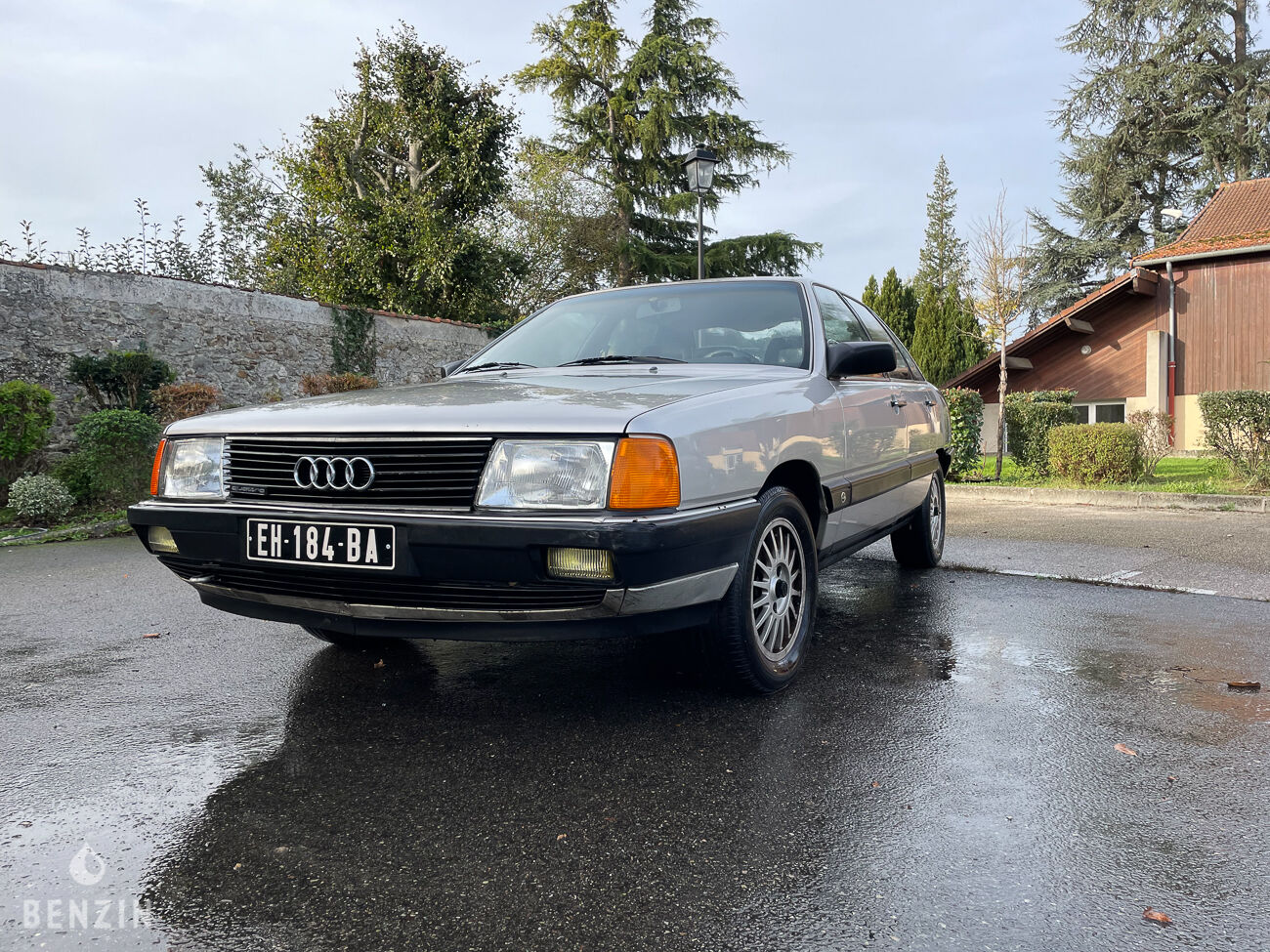
In 1982 came the C3, known internally as Type 44, probably the most emblematic of the classic Audi 100s. Its highly aerodynamic body, with a drag coefficient of around 0.30 depending on the version, makes a strong impression and contributes to the brand’s modern image; it is also the era when galvanization became widespread, greatly benefiting corrosion resistance. The range extends from modest four-cylinders to fuel-injected five-cylinders, with quattro versions giving Audi’s large sedan very distinctive traction and character, such as the 1986 100 CS quattro. At the top end, some derivatives naturally led to the Audi 200, then to the S4 and S6 of the next generation, even if they were already outside the core 100 range. The C4, launched in 1990, evolved the formula with a more substantial appearance, refined five-cylinder engines and then V6s, before the Audi 100 definitively became the A6 in 1994.
Produced in several million examples across all generations, the Audi 100 played a major role in Audi’s move upmarket, both through its build quality and its perceived lead in aerodynamics, drivetrain technology and safety. It did not build its reputation in competition like a rally Quattro, but the five-cylinder versions and all-wheel-drive models greatly shaped the brand’s sporty, technical image. Today, enthusiasts mainly seek well-preserved C1 and C2 cars for their rarity, as well as C3 and C4 five-cylinder cars for their still very enjoyable usability. The quattro versions, especially with the five-cylinder engine, are the most closely followed by enthusiasts, provided they are complete, sound and faithful to their original specification.
Technical data
| Version | Audi 100 LS (C1) | Audi 100 5E (C2) | Audi 100 CS quattro (C3) |
| Production years | 1968-1976 | late 1970s - early 1980s | mid-1980s |
| Body | 2- or 4-door sedan | 4-door sedan | 4-door sedan |
| Engine(s) | inline 4-cylinder gasoline, approx. 1.8 l | inline 5-cylinder gasoline injection, 2144 cm³ | inline 5-cylinder gasoline injection, 2226 cm³ |
| Power | approx. 100 hp | 136 hp | approx. 138 hp |
| Transmission | front-wheel drive, manual gearbox | front-wheel drive, manual gearbox | quattro all-wheel drive, manual gearbox |
| Weight | approx. 1050 kg | approx. 1150 kg | approx. 1300 kg |
| 0-100 km/h | approx. 12 s | approx. 10 s | approx. 9.5 s |
| Top speed | approx. 170 km/h | approx. 190 km/h | approx. 200 km/h |
| Production | family produced in several million examples, across four main generations before the move to the A6 name |
Buyer’s guide
For regular use, the C3 and C4 five-cylinder cars are the most recommendable, with a preference for well-maintained front-wheel-drive versions if you want simplicity, and for quattro versions if you want the most desirable variant. The C1 and C2 are more appealing for their rarity and elegance, but they require much greater vigilance regarding corrosion and the availability of certain parts. Incomplete quattro projects, or poorly tuned mechanical-injection versions, should be approached with caution because restoring them can become long and expensive.
Points to watch
- Body corrosion : perforations or old repairs on sills, wheel arches, windshield surrounds and suspension mounting points, especially on C1 and C2; on C3, galvanization helps a lot but you must beware of cars that have been crashed or poorly repaired. Check the wing roots, floorpans and the quality of the welds carefully.
- K-Jetronic / KE-Jetronic injection : difficult hot starts, unstable idle, hesitation under acceleration on 5-cylinder gasoline engines with mechanical or electro-mechanical injection in the C2, C3 and early C4. Ask whether the pressure accumulator, fuel distributor, air leaks and control components have already been checked or refurbished.
- quattro drivetrain : vibrations, drivetrain rumble or ineffective differential lock on all-wheel-drive versions such as the 100 CS quattro. The driveshaft, differentials, condition of the boots and proper operation of the locking controls or actuators must be checked depending on the model year.
- Manual gearbox : worn synchros, especially when cold, with crunching when shifting into 2nd or 3rd on high-mileage cars, particularly the more torquey five-cylinder versions. A long test drive helps determine whether the gearbox is simply firm or genuinely worn.
- Cooling system : abnormal pressure build-up, coolant loss or overheating in traffic jams on the 5-cylinder models, often made worse by a clogged radiator, an old water pump or a worn viscous coupling. Check the timing and water pump invoices, and observe behavior when hot.
- Electrical and vacuum systems : sluggish central locking, temperamental heating/ventilation controls, intermittent instrument cluster or onboard computer, especially on C3 and C4. These are not immobilizing faults at first, but fixing them takes time and specific parts.
- Front suspension : play, knocking or uneven tire wear on Type 44 and C4, often linked to the bushings, ball joints or top mounts. On a large five-cylinder Audi, a tired front end is felt quickly and noticeably worsens the handling.
When buying
On a five-cylinder Audi 100, evidence of work on the timing system, water pump and injection system matters more than a simple routine service. For a quattro, it is essential to check on a lift that the all-wheel-drive system works properly, that there is no differential noise, and that the tire sizes fitted on all four wheels are consistent. On a C1 or C2, a body inspection by a specialist is often more important than a nice presentation, because structural corrosion determines everything else.
1 of the 1 Audi 100 listed on Benzin found a buyer — 100 % of completed sales.
No Audi 100 is for sale at the moment. Follow the model to be notified as soon as a new one is listed.
Every vehicle comes with a detailed photo report, its history and the public exchanges between seller and community. You bid online; if you win, Benzin secures the payment and supports you through to delivery.
Follow the model from this page and you will get an e-mail as soon as a Audi 100 is listed on Benzin.
 English
 Français
 Español
 Italiano
 Deutsch
 Polski
 Magyar
