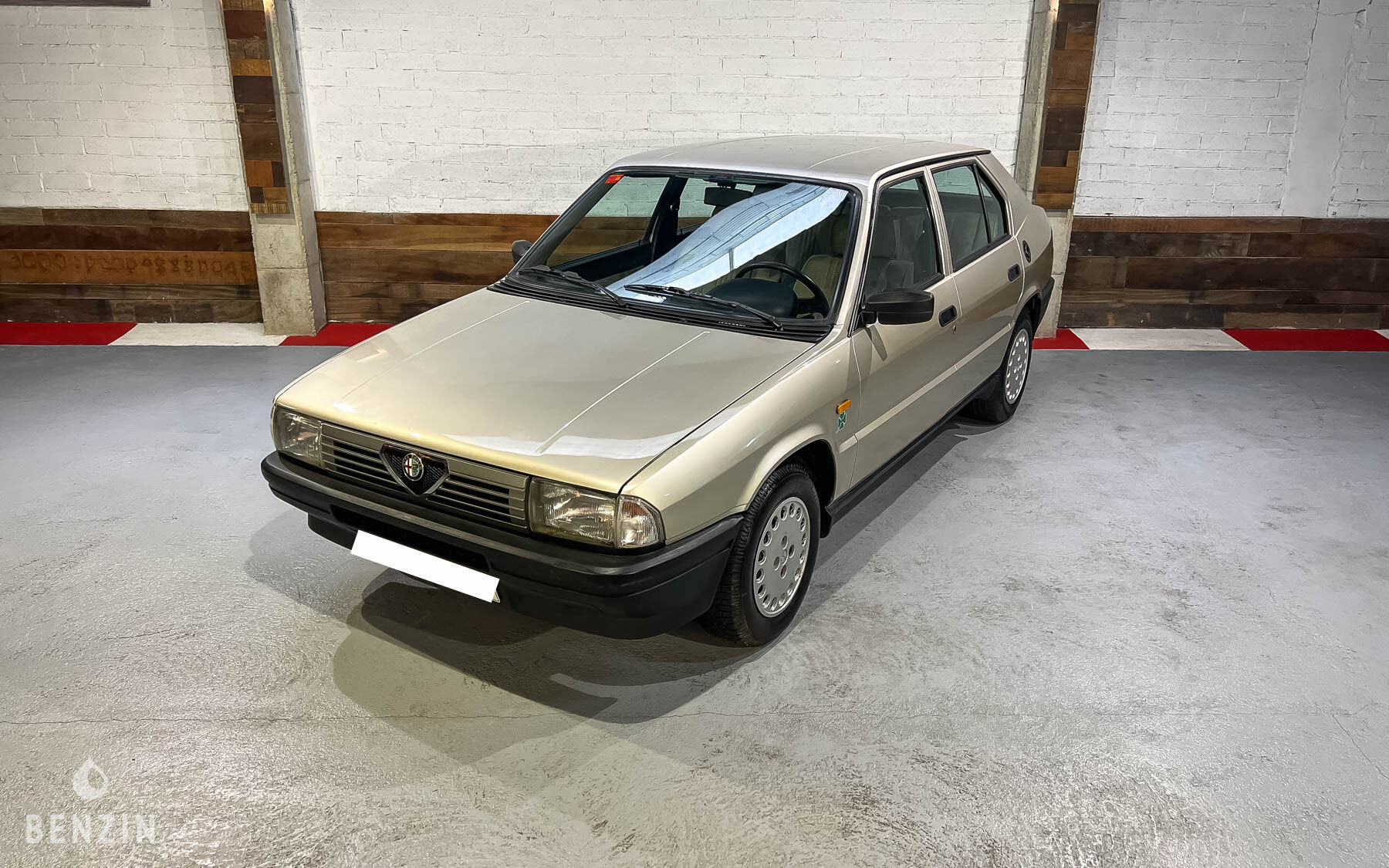
The Alfa Romeo 33 appeared in autumn 1983 to replace the Alfasud, whose overall layout it inherited: front-wheel drive, front-mounted boxer engine and excellent front suspension. Its angular styling was created by the Centro Stile Alfa Romeo, in the very 1980s spirit of Ermanno Cressoni, with a practical tailgate that made it one of the most versatile Alfa models of its era. Initially produced in Pomigliano d'Arco, it was launched as a 5-door sedan, then quickly offered as the Giardinetta estate, later renamed Sport Wagon. The early versions retained the carbureted 1.2, 1.3 and 1.5-liter boxers, joined by sportier variants such as the 1.3 S, 1.5 Quadrifoglio Verde and 1.5 Ti.
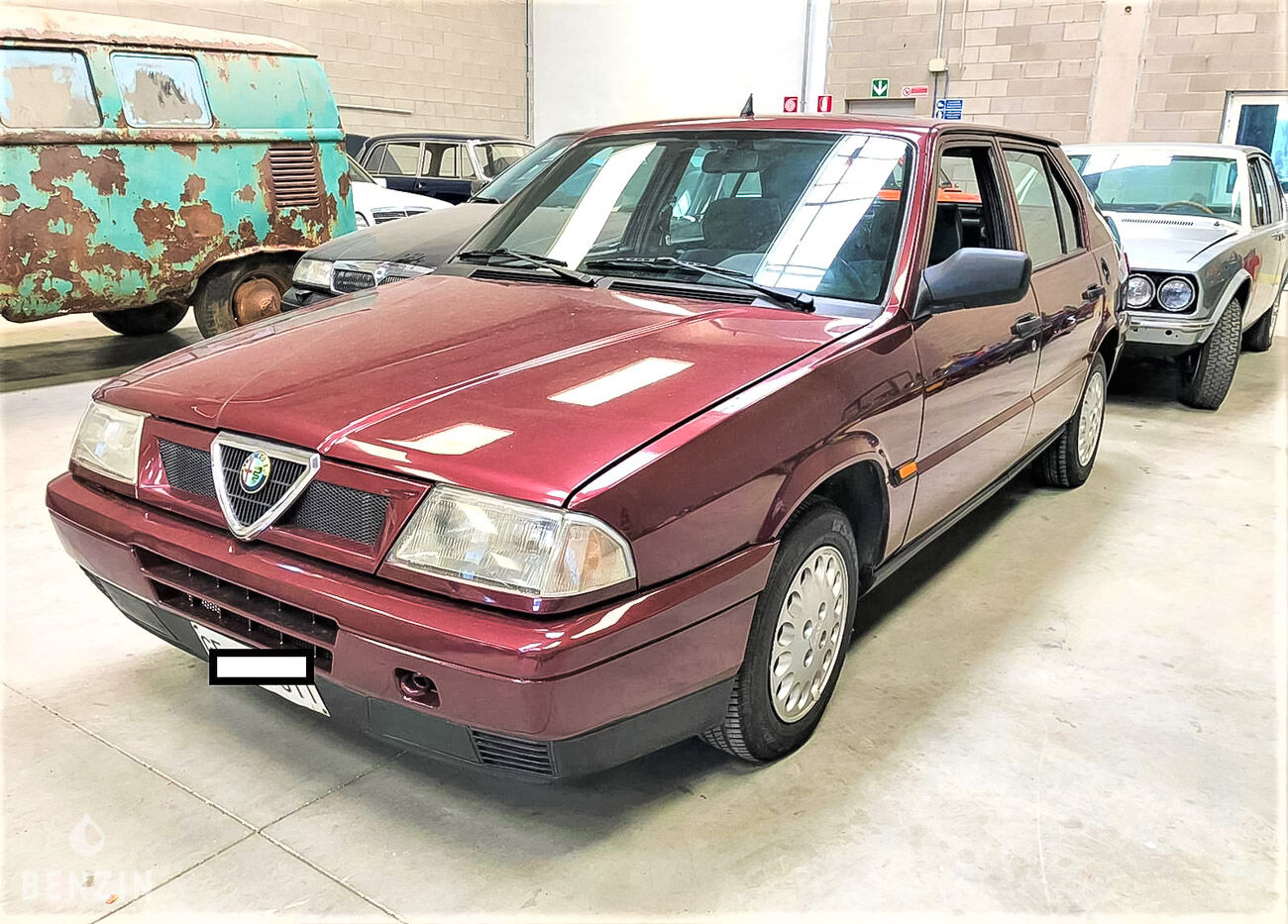
The range evolved significantly in 1986-1987 with a first visible redesign at the front and rear, then again in 1990 with a smoother front end and a modernized cabin: enthusiasts generally refer to series 1, 2 and 3. Over the course of its career, the 33 received injection on several engines, 4x4 and Permanent 4 versions, as well as a highly regarded estate that combined compact dimensions with mechanical character. The best-known versions today are the 1.3 Veloce, 1.5 Ti and Ti S, as well as the 1.7 16V Quadrifoglio Verde, the pinnacle of the line with 16-valve cylinder heads and a very lively temperament. The 33 did not have a major international motorsport program like some other Alfa models, but it raced extensively in national cups, amateur rallying and in the hands of gentleman drivers, thanks to its eager boxer engine and balanced chassis.
Production ended in 1994, after just under one million units, when the 145 took over. Long underestimated, the 33 is now sought after by Alfisti for its very distinctive boxer engine, light steering, relative simplicity and a personality that later compact models partly lost. The most sought-after examples are healthy-bodied cars, little modified, still in original configuration, because corrosion, LPG conversions or replacement of parts with items from other series are common on the market.
Technical sheet
| Feature | 33 1.3 Veloce (series 3) | 33 1.5 Ti / Ti S (series 2) | 33 1.7 16V QV (series 3) |
| Production years | 1990-1994 | 1986-1990 | 1990-1994 |
| Body style | 5-door sedan | 5-door sedan | 5-door sedan |
| Engine(s) | flat-4, 1,351 cc, boxer | flat-4, 1,490 cc, boxer | flat-4, 1,712 cc, 16-valve boxer |
| Fuel system | injection depending on market and model year | twin carburetor | injection |
| Power | around 86 hp | around 105 hp | around 132 hp |
| Transmission | front-wheel drive, 5-speed manual gearbox | front-wheel drive, 5-speed manual gearbox | front-wheel drive, 5-speed manual gearbox |
| Curb weight | around 920 kg | around 930 kg | around 980 kg |
| 0-100 km/h | around 11 s | around 9 s | around 8 s |
| Top speed | around 170 km/h | around 185 km/h | around 205 km/h |
| Production | nearly one million units across all versions |
Buyer’s guide
For a good compromise, the 1.5 Ti and Ti S of series 2 are often the most appealing: they retain the raw character of the carbureted boxer without reaching the complexity or demands of a 1.7 16V. A healthy, original 1.3 Veloce of series 3 is also a very good choice for driving, with a more modern presentation and often easier everyday use. Heavily modified cars, converted then reconverted from LPG, or assembled with parts from other series deserve greater caution.
Points to watch
- Body corrosion : holes or blisters in the floors, jacking points, sills, rear wheel arches, windshield scuttle and lower edge of the tailgate, especially on early years; the underside, under the carpets and inside the cavities must be inspected, because many 33s have been superficially repaired.
- Boxer timing : neglected replacement of the belts and water pump, with major mechanical risk on all versions; ask for the exact date and mileage of the last intervention, with invoice to back it up, as this is one of the first points owners check.
- Cooling system and head gaskets : overheating, mayonnaise-like sludge, dirty expansion tank or temperamental fan, especially on cars that have been little used or poorly bled; check temperature stability, radiator condition and the absence of abnormal pressure in the system.
- Gearbox : worn 2nd-gear synchro, imprecise shifting and leaks at the differential outputs, a classic on high-mileage or hard-driven 33s; check both cold and hot, as well as the condition of the boots and the presence of oil on the casing.
- Carburetion : unstable idle, flat spots on acceleration, difficult hot starts and excessive consumption on 1.3 and 1.5 twin-carburetor versions; make sure the carburetors have been set up correctly, with no air leaks, and that the shafts are not worn.
- Electrical system and instrument cluster : temperamental grounds, inaccurate gauges, slow power windows, cabin fan or dashboard replaced by an item from another series; check that the wiring loom has not been tampered with and that the presentation matches the model year.
- Front suspension : bushings, ball joints, top mounts and steering rack can cause knocks or vagueness, which spoils the normally very precise handling of the 33; a car that pulls to one side, uneven tire wear or unstable braking should raise concern.
- LPG installations and homologation modifications : some Italian cars were later fitted with LPG equipment that was then removed, with paperwork not always updated; check that the foreign registration document, any LPG deregistration and the car’s actual configuration all match before any registration.
When buying
On a 33, priority should be given to evidence of recent replacement of the timing belts, water pump and cooling work, ideally with detailed invoices from an Alfa boxer specialist. A compression test and a careful inspection of the body shell on a lift are particularly useful, because an engine is easier to rebuild than a badly rusted shell. On an imported car, also check the consistency between the chassis number, engine type, dashboard series and registration documents, especially if the car has had LPG or been rebuilt with parts from another phase.
On Benzin a Alfa Romeo 33 has sold for 2 917 € on average, with a median price of 3 500 €. Based on the 3 sales completed on the platform.
The 3 Alfa Romeo 33 sold on Benzin changed hands for between 1 100 € and 4 150 €, depending on condition, mileage and version.
3 of the 5 Alfa Romeo 33 listed on Benzin found a buyer — 60 % of completed sales.
No Alfa Romeo 33 is for sale at the moment. Follow the model to be notified as soon as a new one is listed.
Every vehicle comes with a detailed photo report, its history and the public exchanges between seller and community. You bid online; if you win, Benzin secures the payment and supports you through to delivery.
Follow the model from this page and you will get an e-mail as soon as a Alfa Romeo 33 is listed on Benzin.

 English
 Français
 Español
 Italiano
 Deutsch
 Polski
 Magyar