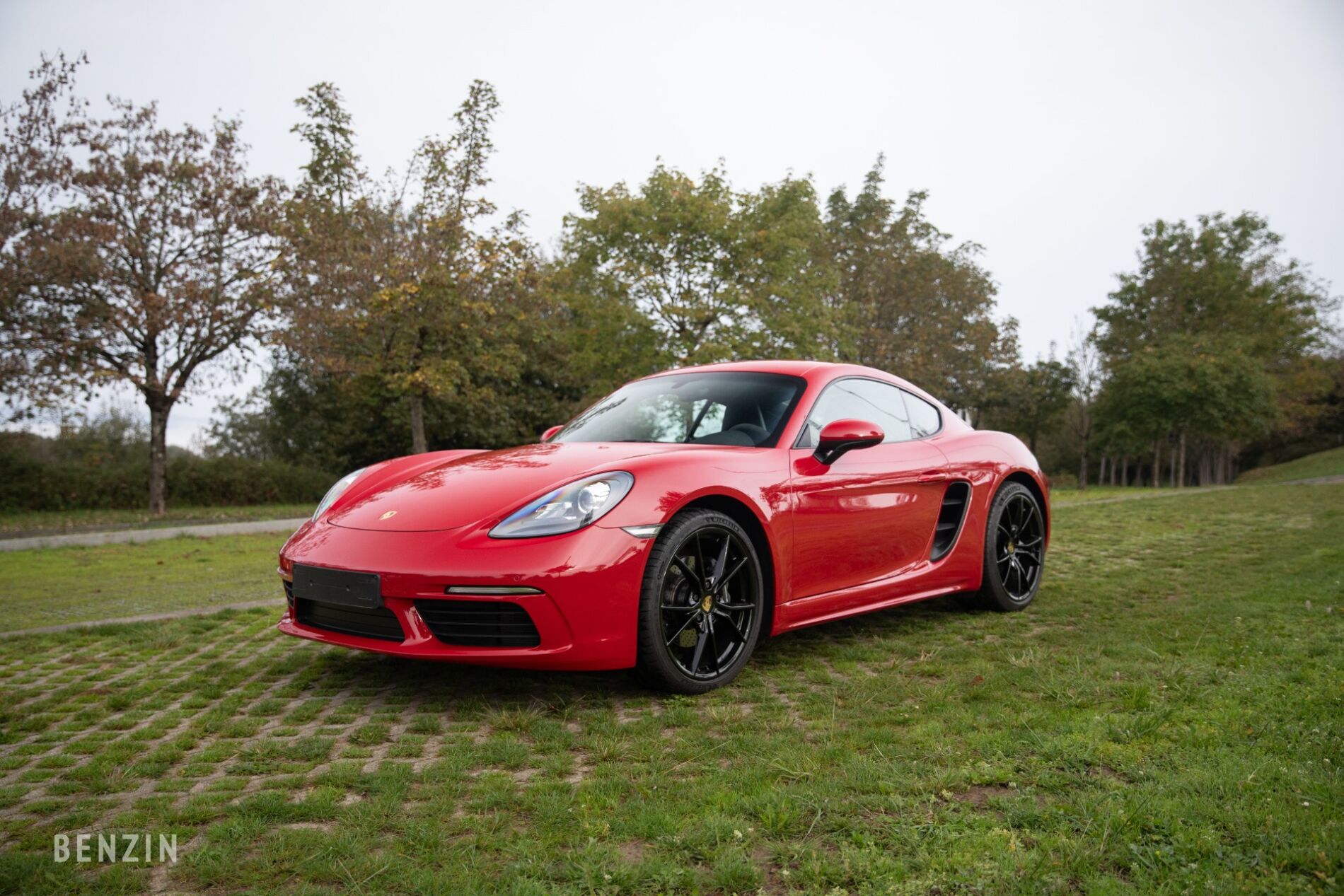
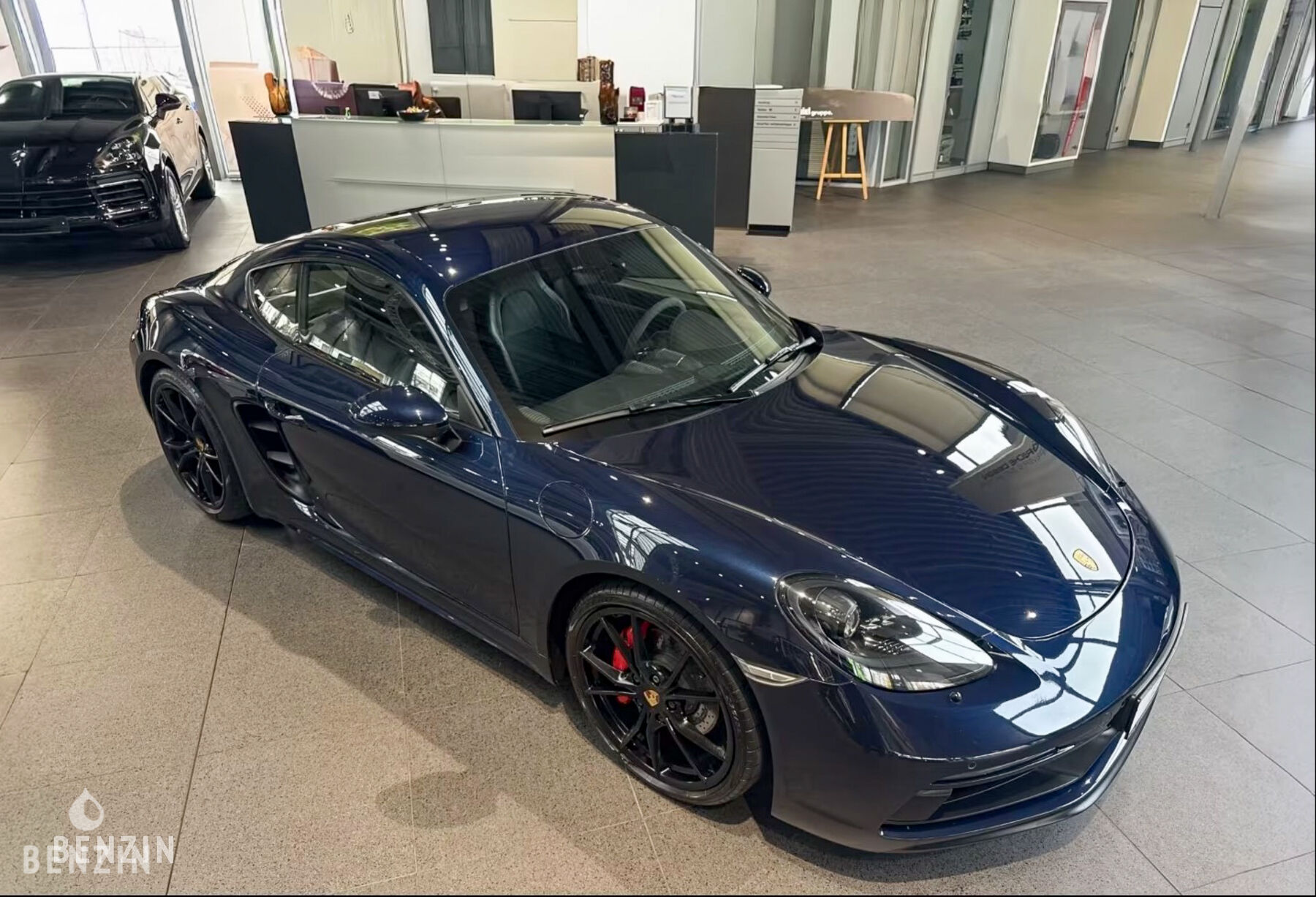
The Porsche 718 Cayman is the modern second generation of the brand’s mid-engined coupé, coded 982, derived from the 981 Cayman but extensively revised and launched in 2016 as a 2017 model year. Its 718 name refers to the Porsche racing cars with four-cylinder engines from the late 1950s, a choice intended to accompany the abandonment of naturally aspirated flat-sixes on the regular versions in favor of new turbocharged flat-fours. The design, led by Michael Mauer at Style Porsche, remains faithful to the Cayman’s proportions, with redesigned front and rear ends, reworked side air intakes, and a modernized cabin centered around the PCM. At launch, the range included the 718 Cayman 2.0-liter with 300 hp and the 718 Cayman S 2.5-liter with 350 hp, both paired with a six-speed manual gearbox or the dual-clutch PDK. In 2017, the 718 Cayman GTS arrived, initially with a 2.5-liter engine producing 365 hp, positioned as the sporty synthesis of the range with enhanced equipment, PASM chassis, and specific styling.
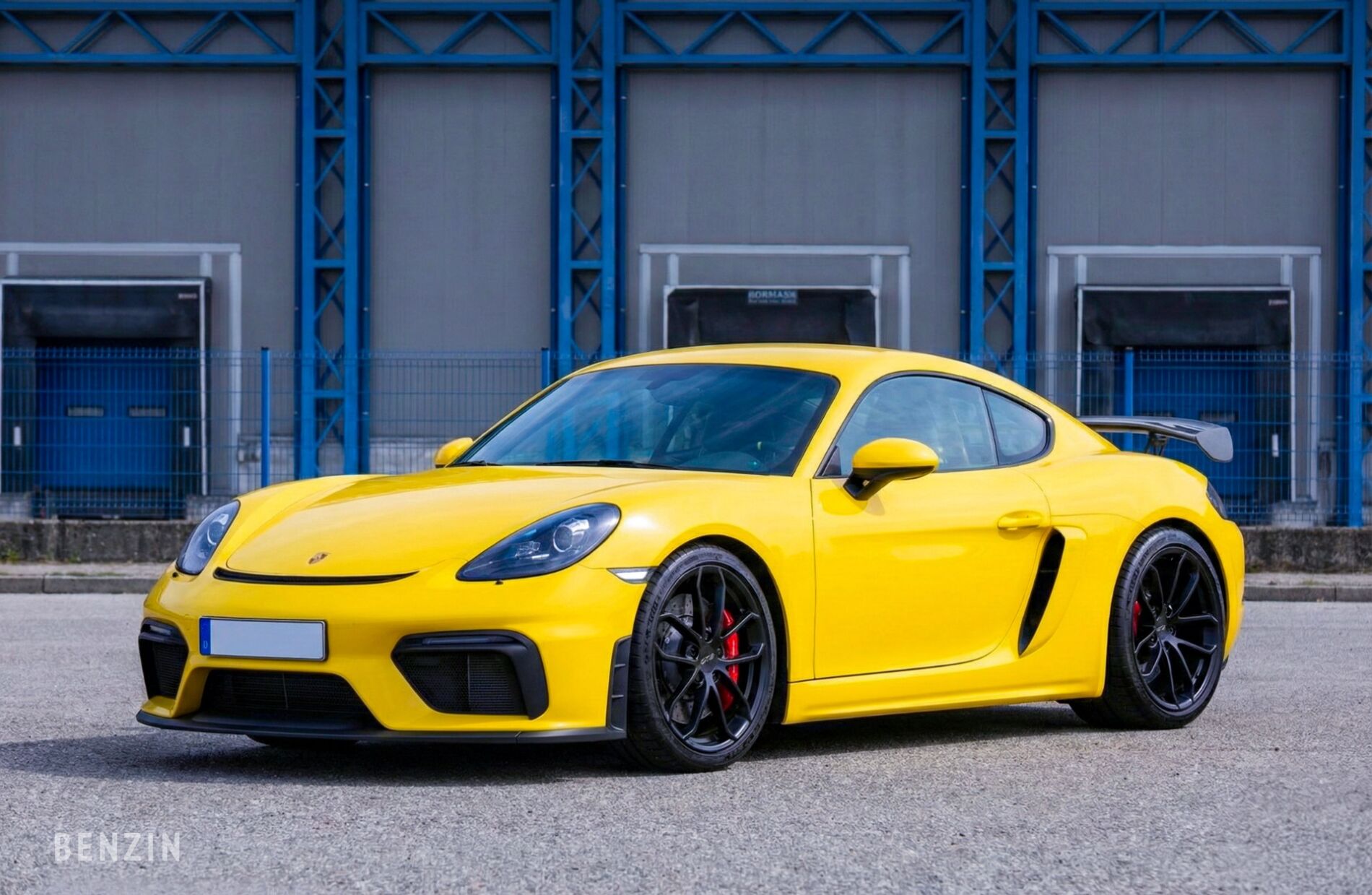
The model’s career took a different turn in 2019-2020 with the return of the 4.0-liter naturally aspirated flat-six, first on the 718 Cayman GT4 with 420 hp, then on the 718 Cayman GTS 4.0 with 400 hp. This development directly answered the expectations of enthusiasts, many of whom regretted the sound and character of the six-cylinder engines in the early 718s. The GT4, developed by the GT department, stands out for its specific aerodynamics, sharper chassis, and genuine track vocation, while remaining road legal. Porsche then expanded the range with the PDK gearbox on the GT4 and the GTS 4.0, while the T and Style Edition versions increased the appeal of the range without changing its philosophy. In competition, the 718 Cayman also serves as the basis for the Cayman GT4 Clubsport and then RS Clubsport, very present in track days and customer series, which has reinforced its image as a driver’s sports car.
Porsche does not highlight any simple overall production figure for the 718 Cayman alone, as the 718 family is counted together with the Boxster depending on the market and the year. In the recent collector market, four-cylinder 718s are appreciated for their efficiency and generally lower running costs, but the versions now most sought after by enthusiasts are clearly the GTS 4.0 and especially the GT4. Well-specified examples, fully maintained within the network or by a recognized specialist, and without poorly documented intensive track use, remain the most desirable.
Technical data
| 718 Cayman | 718 Cayman S | 718 Cayman GT4 |
| Production years | 2016-2024 | 2016-2021 | 2019-2024 |
| Body style | 2-seat coupé | 2-seat coupé | 2-seat coupé |
| Engine | Turbo flat-4, 1,988 cc | Turbo flat-4, 2,497 cc | Naturally aspirated flat-6, 3,995 cc |
| Power | 300 hp | 350 hp | 420 hp |
| Torque | 380 Nm | 420 Nm | 420 Nm |
| Transmission | Rear-wheel drive, 6-speed manual or PDK | Rear-wheel drive, 6-speed manual or PDK | Rear-wheel drive, 6-speed manual then PDK |
| Curb weight | approx. 1,365-1,390 kg | approx. 1,385-1,410 kg | approx. 1,420-1,450 kg |
| 0-100 km/h | 4.7 s to 5.1 s | 4.2 s to 4.6 s | 3.9 s to 4.4 s |
| Top speed | 275 km/h | 285 km/h | 302-304 km/h |
| Specifics | Entry-level, remarkable balance | Variable-geometry turbo | GT version, specific chassis and aero |
Buyer’s guide
For sporty road use, the base 718 Cayman is often the best compromise, especially with the manual gearbox, thanks to its balance and more reasonable mechanical running costs. Enthusiasts are more drawn to the GTS 4.0 and GT4 for their naturally aspirated flat-six, their emotional appeal, and their character closer to Porsche GT cars. The 2.5-liter S and early GTS deserve a careful test drive: they are very capable, but their sound and certain tuning points make them purchases that should be selected more carefully.
Points to watch
- Turbo and wastegate actuator : metallic noises when hot, engine warning light, or irregular boost pressure, especially on the 2.5-liter engines in the Cayman S and early GTS; ask whether the turbo or its actuator has already been replaced and check for any boost-related faults.
- Front radiators and air-conditioning condensers : very exposed to gravel, leaves, and debris on all 718s; check the condition of the fins behind the air intakes, any possible air-conditioning leaks, and whether preventive cleaning has been carried out.
- Engine and transmission mounts : vibrations at idle, jerks when getting back on the throttle, or increased imprecision of the lever, especially on high-mileage cars or those used intensively; on GT4 and GTS 4.0, track use increases wear.
- PDK gearbox : hesitation at low speed, jerks when cold, or abnormal gear changes on some cars; software updates, the specific gearbox service history, and the absence of diagnostic faults should be checked.
- PCCB braking : if the car is equipped with them, ceramic discs do not tolerate impacts well and can suffer from repeated track use; carefully inspect the disc surfaces, the condition of the edges, and ask whether the pads have always been suitable for the system.
- Front axle and alignment : pronounced wear on the inside edges of the tires, steering pull, or a car that feels nervous under braking, especially on GT4s and cars used on track; check recent alignment figures and the condition of the wheels, tie rods, and control arms.
- PCM, battery, and comfort electronics : infotainment bugs, rear-view camera dropouts, battery discharge after storage; this is a point often noted on cars that are driven little, and you should ask whether the battery has been replaced and whether the software campaigns have been carried out.
- Track use and over-revs : particularly important on GT4 and GTS 4.0; a PIWIS readout makes it possible to read over-rev ranges, engine hours, and certain stored faults, which gives a better picture than mileage alone of the car’s real life.
When buying
On an imported 718, it is useful to gather the foreign registration documents, the European certificate of conformity, and the original invoices, as many examples move between Germany, Austria, Spain, or France. A PIWIS diagnostic check is strongly recommended to read fault codes, confirm recorded maintenance, verify engine hours and, on the sportier versions, over-rev ranges. For a GT4 or a car that may have been used on track, it is also necessary to inspect the underbody, brakes, alignment, and any invoices for tires, dampers, or suspension components that are replaced more often than in simple road use.
0 of the 7 Porsche Cayman type 718 listed on Benzin found a buyer — 0 % of completed sales.
Yes, 1 Porsche Cayman type 718 is currently for sale on Benzin.
Every vehicle comes with a detailed photo report, its history and the public exchanges between seller and community. You bid online; if you win, Benzin secures the payment and supports you through to delivery.
Follow the model from this page and you will get an e-mail as soon as a Porsche Cayman type 718 is listed on Benzin.
 English
 Français
 Español
 Italiano
 Deutsch
 Polski
 Magyar
