Land Rover Range Rover Classic
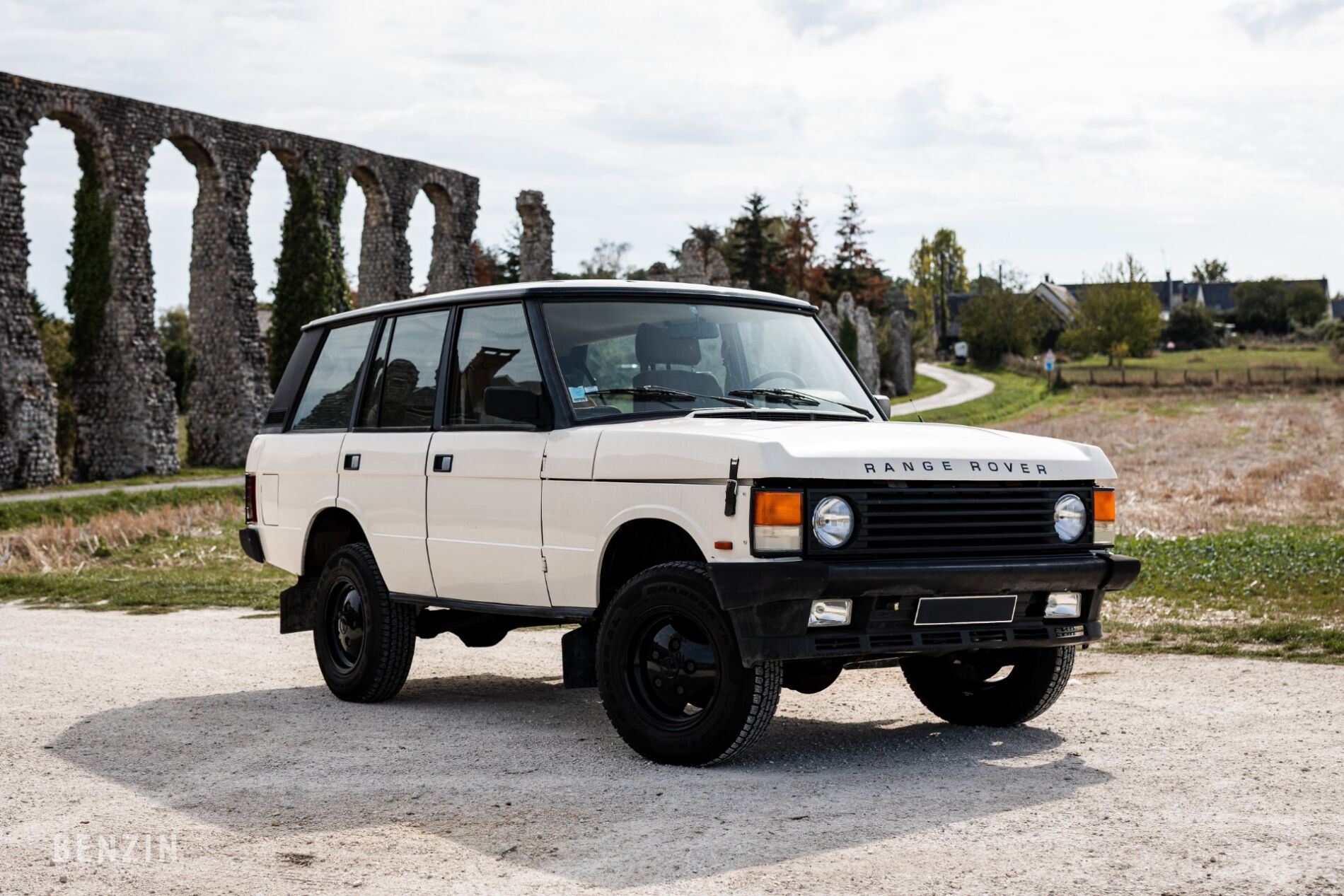
The Range Rover was born at Rover in the late 1960s from the idea of Charles Spencer “Spen” King and Gordon Bashford: to create a 4x4 as capable off-road as a saloon car was on the road, faster, more comfortable and more civilised than utilitarian Land Rover models. Its styling, largely by David Bache, was launched in June 1970 in the form of an elegant two-door with tailgate, with aluminium-panel bodywork on a steel structure, coil-spring suspension, disc brakes on all four wheels and an alloy Rover V8. From the outset, the concept was innovative enough to be exhibited at the Louvre as an example of industrial design, while its off-road and grand-touring qualities established a formula that would set the standard. The first examples, now called “Suffix” by enthusiasts in reference to the final letter of their chassis number, are particularly sought after for their purity of design and specific details.
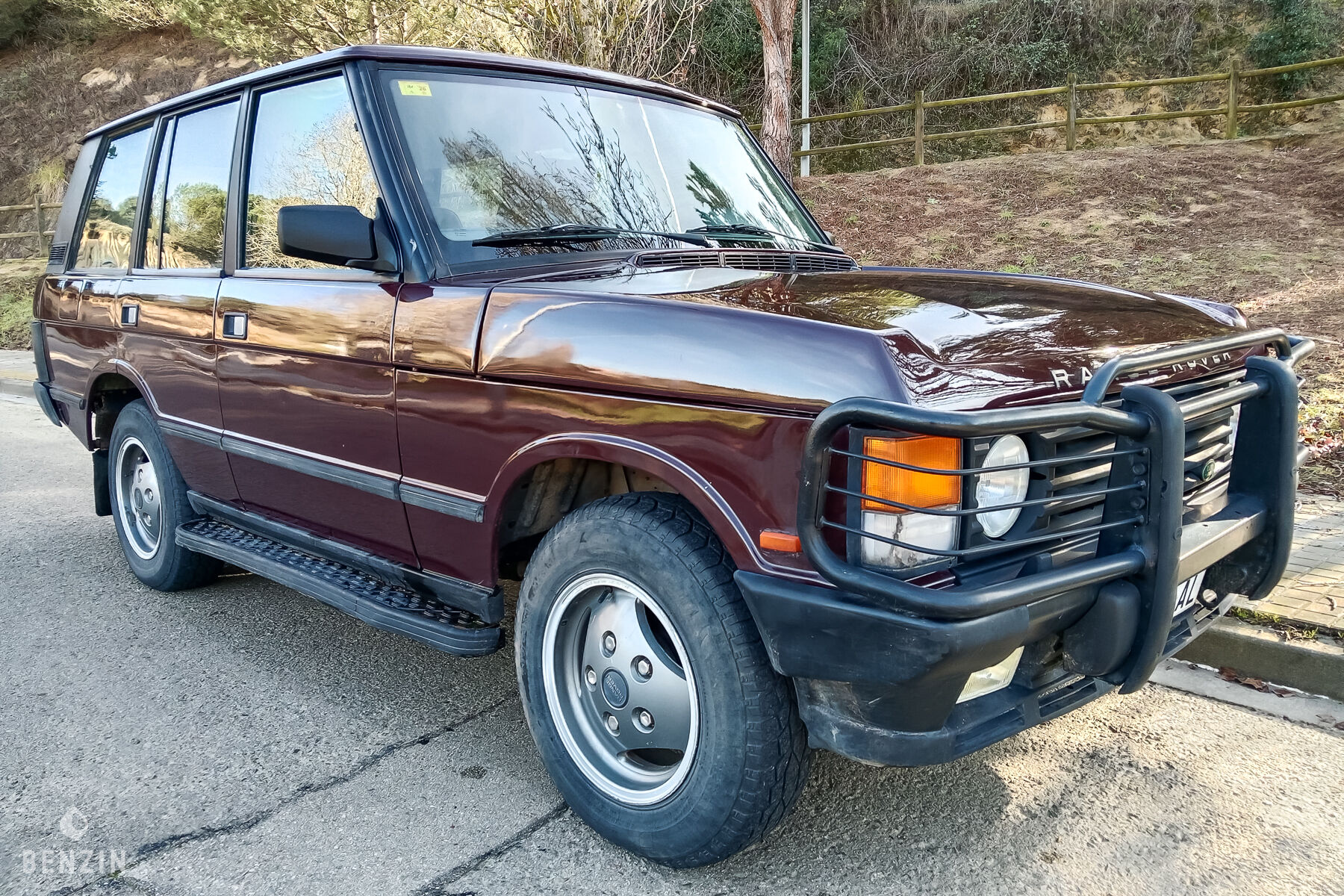
The model evolved regularly without changing its silhouette: automatic transmission at the start of the 1980s, four-door bodywork in 1981, a marked move upmarket with the Vogue and then Vogue SE versions, and continuous improvements in equipment. The 3.5-litre V8 with carburetors then received injection, before the arrival of the 3.9-litre and then the 4.2-litre on the most luxurious versions, notably the long-wheelbase LSE with air suspension. On the diesel side, the Range Rover first adopted the 2.4-litre Italian VM in the mid-1980s, then the 2.5 VM Turbo D, before receiving the much more convincing 200 Tdi and then 300 Tdi, which transformed its reputation as a long-distance travel tool. In 1994, when the P38 took over, the old model remained in the catalogue under the official name Range Rover Classic until 1996.
The Range Rover Classic also built up a rare sporting record and cultural aura for a luxury 4x4: victory in the first Paris-Dakar in 1979, further Dakar wins in the 1980s, success in the Camel Trophy and a lasting presence in the British countryside as well as in affluent neighbourhoods. In total, production exceeds 317,000 examples, an important figure for a vehicle that was so expensive and specialised at the outset. Today, the early two-door V8s, well-preserved Suffix cars, very complete Vogue SEs and the last 300 Tdis are among the most appreciated variants, while the VM diesels are still chosen mainly for their practical appeal or local rarity. They all share the same attraction: a very particular mix of genuine off-road ability, traditional engineering and presence that made the Classic an absolute benchmark among 4x4 collectors.
Technical data
| Specification | Range Rover 3.5 V8 | Range Rover 3.9 V8 | Range Rover 300 Tdi |
|---|---|---|---|
| Production years | 1970-1990 depending on version | 1989-1994 depending on version | 1994-1996 |
| Body | 2- or 4-door 4x4, tailgate | 4-door 4x4, tailgate | 4-door 4x4, tailgate |
| Engine | Aluminium petrol V8, 3,528 cc | Aluminium petrol V8, 3,947 cc | 4-cylinder turbo diesel, 2,495 cc |
| Fuel system | Carburetors then injection depending on year | Electronic injection | Direct injection |
| Power | around 135 to 165 hp depending on version | 182 hp | 111 hp |
| Transmission | Permanent four-wheel drive, manual or automatic gearbox depending on year | Permanent four-wheel drive, manual or automatic gearbox | Permanent four-wheel drive, manual gearbox |
| Curb weight | around 1,770 to 1,900 kg | around 1,950 kg | around 2,050 kg |
| 0 to 100 km/h | around 12 to 14 s | around 11 to 12 s | around 16 to 17 s |
| Top speed | around 155 to 170 km/h | around 177 km/h | around 155 km/h |
| Production | More than 317,000 examples across all versions |
Buyer’s guide
For regular use, the 200 Tdi and especially the 300 Tdi are generally the most recommended, as they retain the Classic spirit with a frugal, robust engine well known to specialists. For collectors, the early two-door cars, Suffix A/B/C and the V8 3.5 or 3.9 cars kept close to original are the most desirable, while the VM 2.4 and 2.5 Turbo D require more caution because of their sensitivity to cooling. The highly equipped late versions are appealing, but their appeal depends greatly on the condition of the electrical accessories, the ABS and, on some LSEs, the air suspension.
Points to watch
- Tailgate and opening panel corrosion : the steel lower tailgate rusts very often, and steel frames under aluminium panels can cause galvanic corrosion on the doors and around the fixed windows; this affects all years. Check the condition of the lower tailgate, paint bubbles, door frames and the rear roof window aperture.
- Chassis and body shell : the front floors under the carpet, the sills, the body mounts, the rear crossmember, the wheel arches and the windscreen scuttle are known trouble spots on the Classic, especially on cars that have lived outside or towed. The car must be seen on a lift and the suspension mountings and the front pillar feet should also be checked.
- Cooling and head gaskets on V8s : on both 3.5 and 3.9, any overheating must be taken very seriously; on 3.9s, hard-used blocks can then suffer from liner issues or pressurisation of the cooling system. Look for hardened hoses, mayonnaise-like residue, an ineffective viscous fan, a tired radiator and ask for invoices for cooling-system upgrades.
- VM 2.4 and 2.5 Turbo D engines : these diesels with separate cylinder heads do not like temperature swings and are known for cracked heads, gasket failures, hard starting and pressure build-up. On cars from 1986 to the early 1990s, check cold starting, temperature stability, absence of bubbles in the expansion tank and evidence of cooling-system maintenance.
- 300 Tdi timing : the early 300 Tdis may have suffered abnormal timing-belt wear if the Land Rover modification was not carried out. On 1994-1995 models, clearly ask whether the update kit was fitted and by whom, with the invoice to prove it.
- Transfer case and four-wheel drive : timing-chain noise, a seized Borg-Warner viscous coupling on some late versions, worn synchros on manual gearboxes and driveline play are not uncommon. In tight manoeuvres on grippy surfaces, a car that strains abnormally may reveal a locked viscous coupling; on the road, listen for prop-shaft clunks and axle whine.
- Comfort electrics : electric windows, electric seats, sunroof, central locking, air conditioning and cruise control are often temperamental, especially on Vogue SEs and the last “soft dash” interiors. Everything must be tested one by one, as tailgate wiring loom faults, switch failures or motor failures are common and repairs can become lengthy.
- ABS and air suspension : on later versions equipped with it, the ABS sensors, the modulator and, on LSEs, the air springs, compressor and valve block require particular vigilance. An ABS warning light on, a car sitting low after parking, or a compressor that runs too often are bad signs.
When buying
On a Range Rover Classic, inspection on a lift is essential, with the carpets removed or at the very least the floors checked from inside, so well can corrosion hide beneath the sound deadening and trim. The stamped chassis number must be noted and checked against the plate and the paperwork, and on a Suffix or a collector car, the consistency of the engine type and the main original components should also be checked. For a V8, a compression test and above all a cooling-system check are very useful; for a VM, the slightest suspicion of overheating should prompt a thorough inspection; for a 300 Tdi, proof of the timing belt update matters almost as much as the displayed mileage.
Land Rover Range Rover Classic — Sold
Frequently asked questions
How much does a Land Rover Range Rover Classic cost?
On Benzin a Land Rover Range Rover Classic has sold for 6 617 € on average, with a median price of 1 700 €. Based on the 3 sales completed on the platform.
What is a Land Rover Range Rover Classic worth?
The 3 Land Rover Range Rover Classic sold on Benzin changed hands for between 1 150 € and 17 000 €, depending on condition, mileage and version.
Do Land Rover Range Rover Classic sell well?
3 of the 13 Land Rover Range Rover Classic listed on Benzin found a buyer — 23 % of completed sales.
Is there a Land Rover Range Rover Classic for sale right now?
No Land Rover Range Rover Classic is for sale at the moment. Follow the model to be notified as soon as a new one is listed.
How do I buy a Land Rover Range Rover Classic on Benzin?
Every vehicle comes with a detailed photo report, its history and the public exchanges between seller and community. You bid online; if you win, Benzin secures the payment and supports you through to delivery.
How do I hear about the next Land Rover Range Rover Classic?
Follow the model from this page and you will get an e-mail as soon as a Land Rover Range Rover Classic is listed on Benzin.
Welcome to Benzin, the French online auction platform dedicated to sports cars, classics and youngtimers.
Discover detailed listings, bidders verified by credit card and payment secured in escrow. Fees among the lowest on the market, capped at €3,900. Buying and selling your car becomes a pleasure: join Benzin.
 English
 Français
 Español
 Italiano
 Deutsch
 Polski
 Magyar
