The Mitsubishi Lancer Evolution, often shortened to Evo, was born in 1992 to homologate a compact all-wheel-drive sedan derived from the Lancer for rallying, built around the turbocharged 4G63 four-cylinder and the expertise Mitsubishi had gained in the World Rally Championship. The first three generations, Evo I to III, stayed close to the original formula: compact body, advanced center differential and increasing power, with efficiency taking priority over comfort. In 1996, the Evo IV introduced a new Lancer platform and an engine mounted the other way round, then the Evo V and VI widened the body, stiffened the chassis and cemented the model’s reputation both on the road and on special stages. The image of the Lancer Evolution then became inseparable from the successes of Tommi Mäkinen, four-time World Rally Champion from 1996 to 1999, and the special series bearing his name.
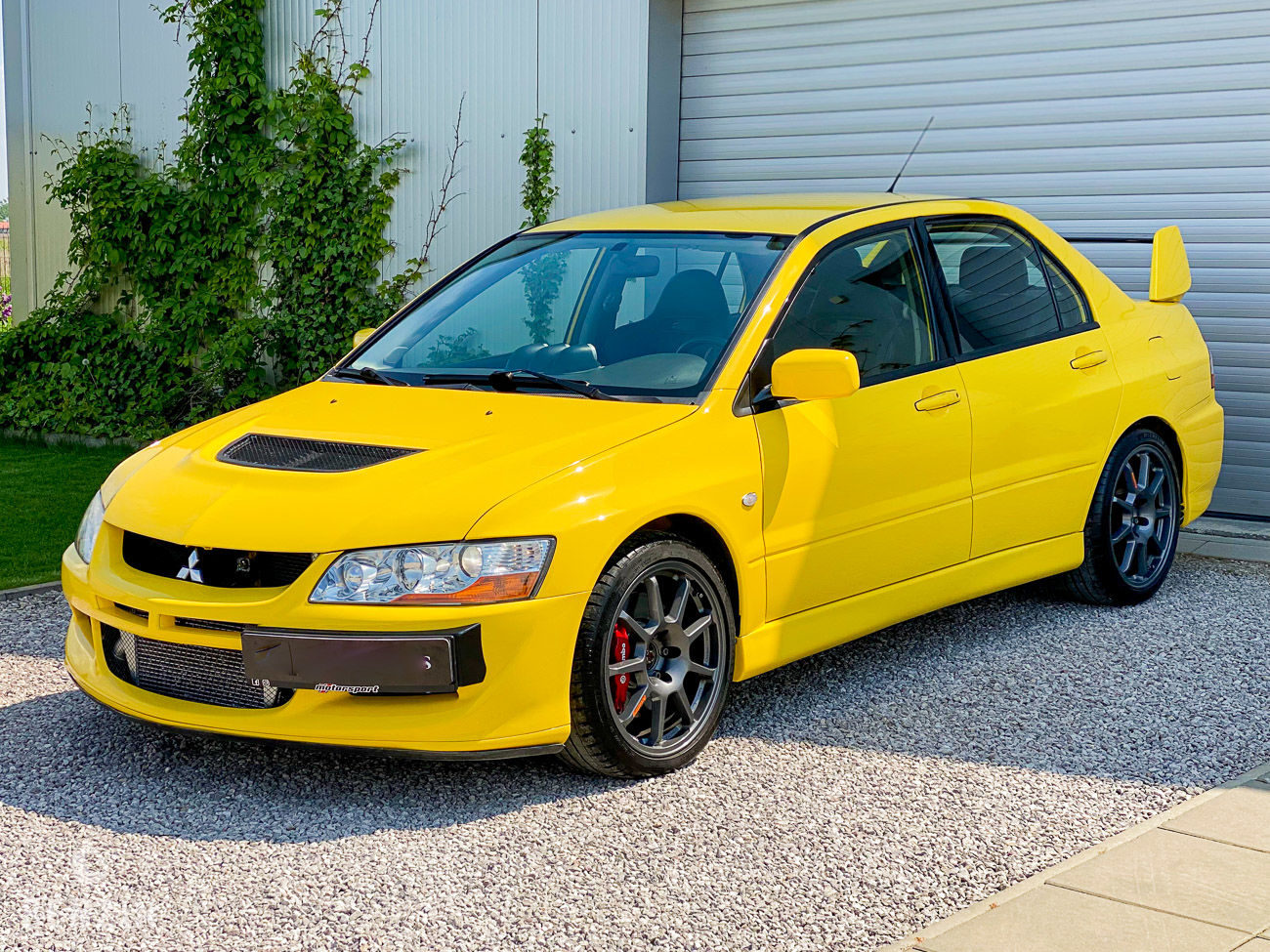
The Evo VII, VIII and IX, sold from 2001 to 2007, are the ones that truly spread the myth beyond Japan, especially in Europe, with Active Yaw Control, more sophisticated differentials and a stiffer platform. The Evo VIII for many marks the start of the modern era, while the Evo IX, the last generation with the 4G63 engine, adds MIVEC variable valve timing and is often considered one of the best compromises between mechanical brutality, engine response and chassis maturity. In some markets, Mitsubishi also offered MR, RS and GT versions, FQ series in the United Kingdom and several limited editions aimed at track use or collectors. These VIII and IX generations are now among the most sought-after when they are lightly modified, well documented and still close to their original configuration.
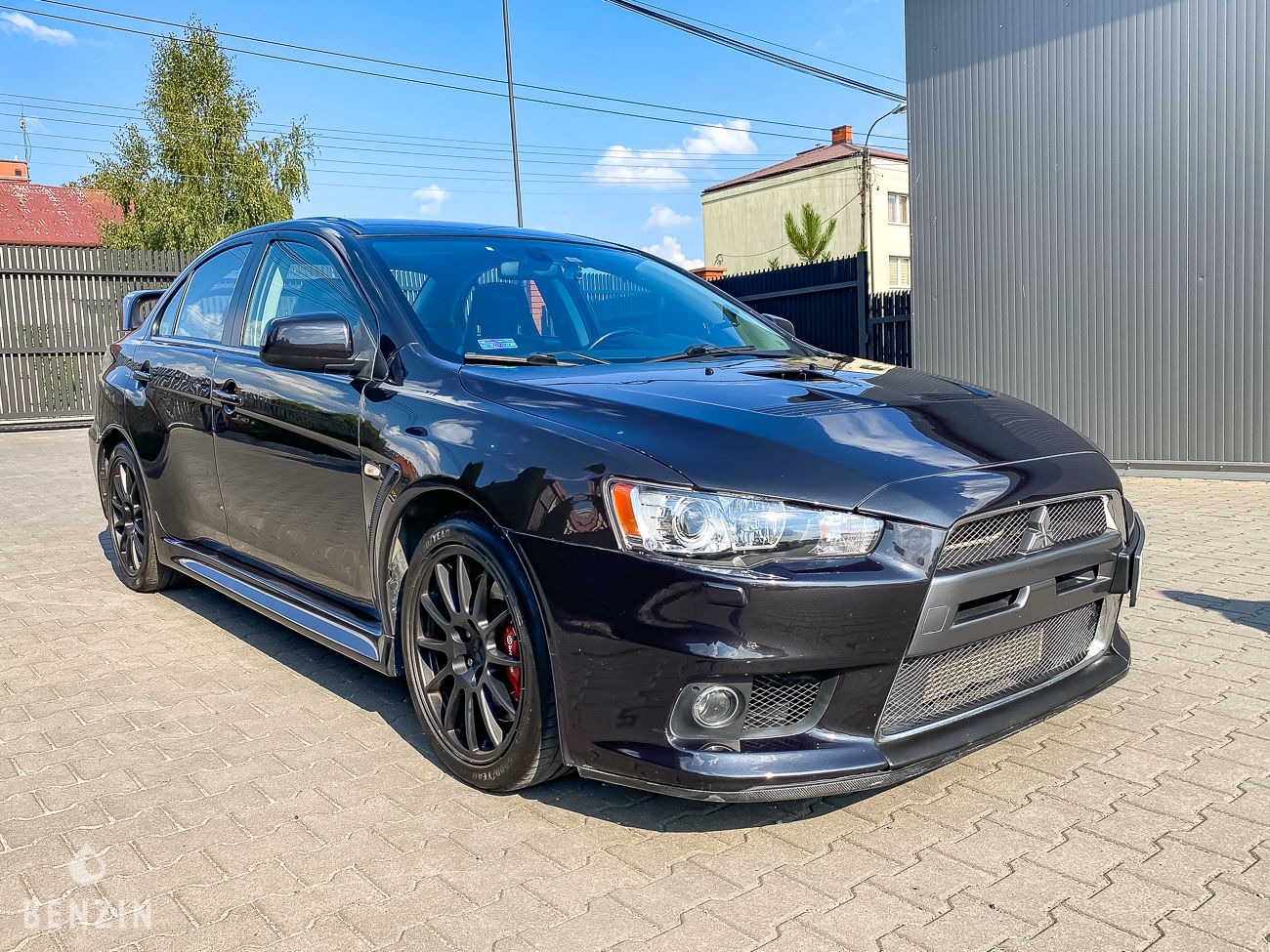
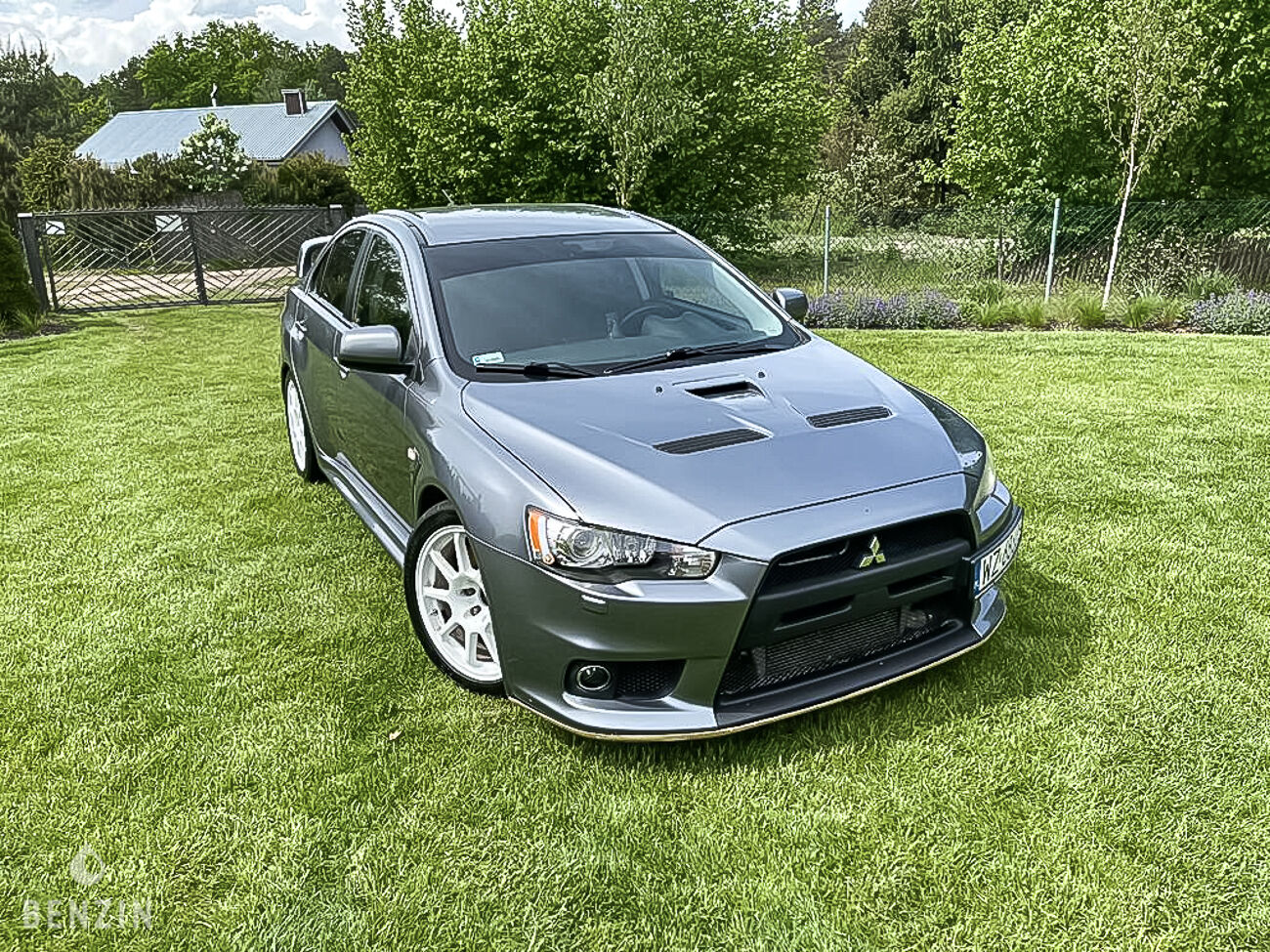
In 2007 came the Evo X, larger, heavier and more civilized, built on a new platform and dropping the 4G63 for the aluminum 4B11T, still turbocharged and paired with S-AWC all-wheel drive. It was available with a five-speed manual gearbox or a six-speed twin-clutch SST automated gearbox, the latter being particularly common on European cars and highly appreciated for its speed, but more expensive to maintain. Produced until 2016, the Evo X closes a lineage of ten generations that became an absolute benchmark among four-door sports cars, both in car culture and in the worlds of tuning, video games and track days. Across all Evo models, production numbers run into several tens of thousands, but strictly original, accident-free and lightly modified cars are now the hardest to find and the most valued by enthusiasts.
Technical sheet
| Feature | Lancer Evolution VIII | Lancer Evolution IX | Lancer Evolution X SST |
| Production years | 2003-2005 | 2005-2007 | 2008-2016 |
| Body style | 4-door sedan | 4-door sedan | 4-door sedan |
| Engine | 2.0 l turbo inline 4 4G63 | 2.0 l turbo inline 4 4G63 MIVEC | 2.0 l turbo inline 4 4B11T |
| Power | approx. 265 hp (Europe version) | approx. 280 hp (Europe version) | 295 hp (Europe version) |
| Drivetrain | All-wheel drive, 5-speed manual gearbox | All-wheel drive, 6-speed manual gearbox | All-wheel drive S-AWC, 6-speed SST gearbox |
| Curb weight | approx. 1,410 kg | approx. 1,400-1,450 kg | approx. 1,540-1,570 kg |
| 0-100 km/h | approx. 5.0 s | approx. 4.8-5.0 s | approx. 5.4 s |
| Top speed | approx. 245 km/h | approx. 250 km/h | approx. 242-250 km/h |
| Specifics | AYC/ACD depending on market, 4G63 highly prized for tuning | Final evolution of the 4G63, MIVEC, highly sought-after chassis | S-AWC, SST gearbox, 4B11T engine, more versatile use |
Buyer’s guide
For a pure driving enthusiast, the Evolution VIII and especially IX are the most desirable, with the IX often seen as the best balance in the 4G63 lineage. The Evo X is better suited to regular use and the SST is appealing if its maintenance is impeccable; conversely, heavily modified cars, poorly documented examples, imports without a clear file or cars repaired after a major crash are the ones to approach with the most caution.
Points to watch
- AYC/ACD pump : warning lights coming on, loss of torque split mode or stored faults, especially on VIII, IX and X that have been driven in salty climates; verify via diagnostics that the pump is working properly and ask whether it has already been replaced or protected against corrosion.
- Manual gearbox and synchros : crunching in 2nd or 3rd, hard engagement when cold or under heavy load on VIII and IX, more common on remapped cars or those launched hard; all gears should be checked and any gearbox rebuilds should be looked for.
- SST gearbox : jerks, slipping, limp mode or slow engagement on Evo X SST; oil and filter maintenance is crucial, and the absence of proof of specific SST oil changes is a real warning sign.
- Modified 4G63 / 4B11T engine : unstable idle, smoke, uneven compression or an unknown map on modified cars, especially with a large exhaust, intake, injectors or an E85 conversion; ask precisely who carried out the preparation, with which map, and whether there is an engine rebuild invoice or dyno sheet.
- 4G63 timing belt : on VIII and IX, the belt, pulleys and often the water pump must be replaced periodically; if the deadline is not proven in writing, it must be added immediately to the running budget.
- Transmission and differentials : rumbling, vibrations under load or clunks when getting back on the throttle can reveal a transfer case, an AYC rear differential or worn driveshafts, especially on cars used on track or with high grip; check for any abnormal noise during tight maneuvers and hard acceleration.
- Underbody corrosion and body repairs : lifting points, sills, rear wheel arches, subframes and suspension mounting points should be examined closely on cars coming from wet or salty countries; on this model, which is often crashed or driven hard, the quality of any straightening and the alignment of the shell matter as much as the mechanical condition.
- Exhaust and compliance : decat, straight-through exhaust, removal of emissions equipment or non-compliant parts are common on VIII, IX and X; beyond the noise, this can complicate the technical inspection and the registration of an imported car.
When buying
On a Lancer Evolution, the ideal file includes the chassis number, the history of registration countries, foreign inspection reports if it is an import, and for a non-French car the useful homologation documents such as the certificate of conformity when one exists. A diagnostic scan to read AYC/ACD/SST faults, a compression test on a modified engine, and an underbody inspection on a lift are particularly relevant. If the car has been modified, preparation invoices, proof of a dyno tune, and consistency between the parts fitted, the map and the claimed power are far more important than on an ordinary sports car.
2 of the 6 Mitsubishi Lancer EVO listed on Benzin found a buyer — 33 % of completed sales.
No Mitsubishi Lancer EVO is for sale at the moment. Follow the model to be notified as soon as a new one is listed.
Every vehicle comes with a detailed photo report, its history and the public exchanges between seller and community. You bid online; if you win, Benzin secures the payment and supports you through to delivery.
Follow the model from this page and you will get an e-mail as soon as a Mitsubishi Lancer EVO is listed on Benzin.
 English
 Français
 Español
 Italiano
 Deutsch
 Polski
 Magyar
